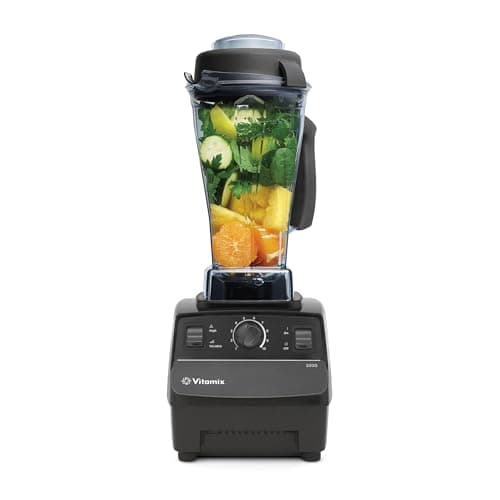
Buy the Vitamix 5200. It is for the person who wants one blender for the next decade and does not care about presets: a fully variable dial, a tall narrow 64 oz jar, a tamper in the box, and a seven-year full warranty that covers parts, labor and shipping both ways. If the price is the obstacle, the budget pick is the Vitamix VX1— the cheapest route into the brand, running the same 64 oz Classic container, and the only household Vitamix that publishes an actual watt figure instead of a horsepower claim.
Who each one is for, in one line
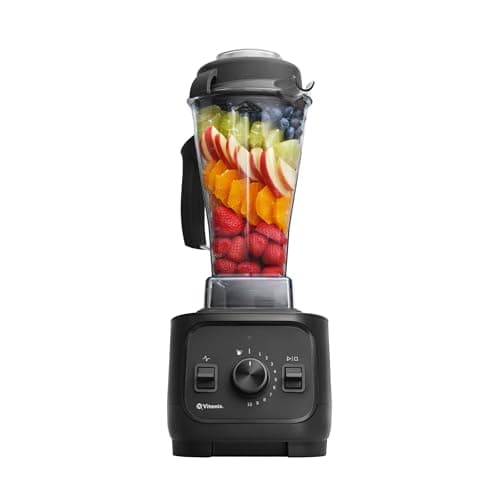
- Vitamix 5200— for the buy-once household that blends thick, low-liquid mixtures and wants the longest full warranty per dollar in the range.
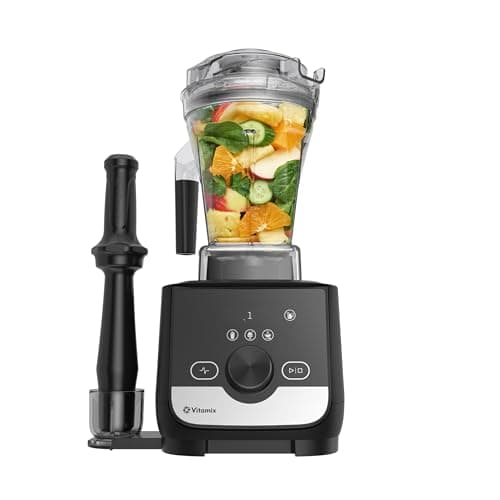
- Vitamix Ascent X3— for the kitchen with a wall cabinet above the worktop: a 48 oz low-profile jar, three programs plus self-clean, and ten years of full, transferable cover.
- Vitamix VX1— for the first-time Vitamix buyer who wants the 5200 jar and tamper for less, and can live with five years limited instead of seven years full.
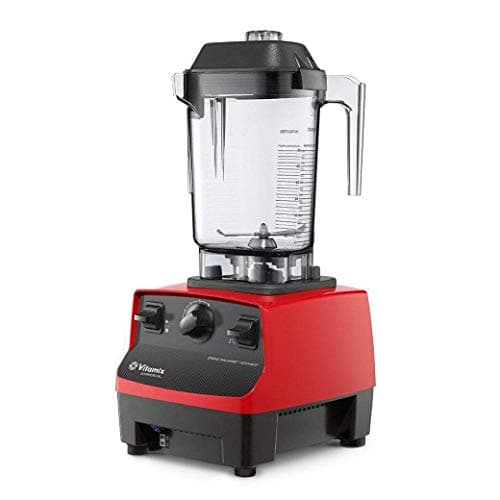
- Vitamix Drink Machine Advance— for a small bar or counter doing repeat drinks: six optimized programs with automatic shut-off, and a warranty written for business use rather than voided by it.
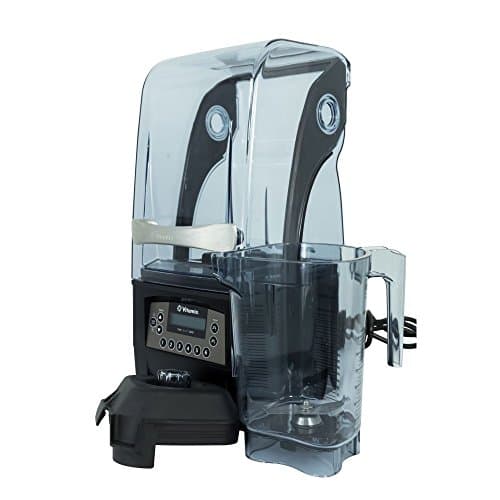
- Vitamix The Quiet One— for front-of-house service close to a customer. The wrong buy for a home kitchen, and the page says so below.
Why this page ranks on the warranty document, not the horsepower
Vitamix publishes horsepower for every machine it sells and a watt figure for almost none of them. The 5200 is sold as “2 HP”; its specification table gives 120 V at 11.5 amps and no watts at all. The Ascent X3 is the exception that proves the pattern — 2.2 HP and1,500 W, published side by side. Peak output horsepower is a motor-stall figure, not a figure for what the machine draws while it blends, so comparing two Vitamix models on it tells you very little.
The warranty document, by contrast, is specific, enforceable and different for every model in the range — and it is where the real money difference sits:
- 5200: seven years, FULL. Parts, labor and shipping in both directions.
- Ascent X3: ten years, FULL, and transferable. The longest term Vitamix writes, and it follows the machine if you sell it.
- VX1: five years, LIMITED.Parts, labor and standard two-way shipping, but original owner only. “Limited” is doing real work in that sentence.
- Drink Machine Advance and The Quiet One: three years on motor base parts, one year on labor, with the blade assembly and container covered for one year. That is a completely different shape of promise from the household terms, and it is the correct trade for a machine that will be run forty times a day — the household warranties are void for commercial use.
Our full method, including what disqualifies a pick, is on how we pick. If you want the warranty comparison across every brand rather than within this one, blender warranties compared has the documents side by side.
The two commercial machines, and why most people should not buy them
Vitamix’s commercial range outranks the household range on nameplate draw — The Quiet One pulls 15.0 A against the 5200’s 11.5 A — and it is still the wrong purchase for almost every home. Both commercial machines ship a 48 oz container rather than 64 oz, both replace the variable dial with fixed programs, and both drop you from seven or ten years of full cover to three years of motor base parts. You pay more and the promise behind the machine gets shorter.
The one genuinely interesting fact here is that the Advance container fitted to the much cheaper Drink Machine Advance is the same container Vitamix fits to The Quiet One. If the container is what you were after, it is available for a fraction of the money. The full reading of both machines is in our Quiet One review and in the best commercial blenders for a cafe.
What a Vitamix costs to run for a year
Less than a takeaway coffee, which is the answer every power argument in this category reaches once you do the sum. At 18.16¢ per kWhand this site’s standard assumption of 3 minutes a day, 365 days a year, the 5200 works out at about $4.57 a year, the VX1 at about $4.77, and the 1,500 W Ascent X3 at about $4.97. The spread across the entire household range is a matter of pennies. What a blender costs to run shows the arithmetic and how to substitute your own rate.
Note what those figures are derived from: Vitamix publishes no watts for the 5200, so the 1,380 W used above is 11.5 A × 120 V off its own nameplate — our arithmetic on their published numbers, shown so you can check it rather than hidden behind a rounded total.
Which Vitamix to skip
Skip all of them if your honest use is a smoothie four times a week. The warranty is most of what you are paying for here, and a hundred-dollar machine makes that smoothie indistinguishably well — the best blenders under $100 is the page for that, and is a Vitamix worth it works the question through without a sales pitch. If you are weighing the brand against the obvious rival, the alternatives to a Vitamix names three machines that match it on a stated strength for much less money.
What we have not done
We have not tested any of these machines. We own none of them, we have blended nothing, and we have run no timed trials. Every amperage, container size, program count and warranty term above is read off Vitamix’s own product page or warranty document, cited in full below. Prices come live from Amazon and carry the date they were checked; where there is no verified live price, you see none.
How to choose between Vitamix models without reading the marketing
1. Measure your worktop-to-cabinet clearance first
This decides more Vitamix purchases than power does. The VX1 stands 19.6 inches with the 64 oz container fitted, which does not go under a standard US wall cabinet. The Ascent X3’s 48 oz low-profile jar exists precisely for that problem. Measure before you shortlist, because a machine you have to lift out and lift back is a machine you use less.
2. Decide whether you want a dial or programs
The 5200 is a variable dial and nothing else — no presets, no timer, no self-clean cycle. That is why it handles thick low-liquid mixtures well: you can hold it at the speed the load needs. The Ascent X3 adds three programs and self-clean; the commercial machines replace the dial with fixed cycles and automatic shut-off, which is right for repeatability and wrong for improvising.
3. Read the word in front of “warranty”
“Full” and “limited” are not decoration. The 5200 and the Ascent X3 carry fullwarranties covering parts, labor and two-way shipping; the Ascent term is also transferable to a second owner. The VX1’s five years are limited and original-owner-only. Divide the price by the covered years and the ranking on this page falls out of the arithmetic.
4. Check whether a tamper is in the box
All three household machines here include one, and on a tall narrow jar it is the single accessory that turns a stalled, cavitating load into a blended one. The commercial pair do not list a tamper, because a drinks menu does not need one. What a blender tamper is used for explains the mechanism.
5. Do not pay for a commercial machine to get a quieter kitchen
Vitamix publishes no decibel figure for any machine in this range, including the one named The Quiet One. If noise is the problem you are solving, buy on the enclosure and the room, not on the model name — the best quiet blenders covers why nobody in this category publishes a number.
6. Buy the jar you will actually fill
64 oz is a family pitcher. If you blend for one, you will be running a 64 oz jar with 12 oz in it, which blends worse than a smaller vessel and takes longer to wash. The best blenders for one person makes that case properly.