Before the shopping advice: most disappointing frozen margaritas are a ratio problem, not a power problem. A jar loaded with ice and a splash of liquid will defeat a $600 machine, because there is nothing fluid in there for the blades to move. Fix the ratio and a hundred-dollar blender makes a good frozen drink. Do not fix it, and no wattage in this catalog saves you. The Vitamix 5200 tops this list on published specifications, but it is the second thing this page wants to tell you.
The ratio, first
A frozen cocktail is a suspension of ice crystals in a small amount of liquid, and the liquid is what carries the ice into the blades. Start from roughly two parts ice to one part total liquid by volume and adjust from there — thinner if the machine is struggling, thicker once it is clearly moving. If the blender is roaring while the surface of the mix stays still, that is cavitation, and adding liquid an ounce at a time fixes it faster than any button on the front panel.
The other half of the ratio is batch size, and it is the variable nobody adjusts. Blenders are worse at small loads than large ones, because a small load sits below the blades where there is nothing to circulate — but they are also worse at overfilled ones. Manufacturers publish a maximum liquid fill precisely for this reason, and the numbers are lower than people assume: Blendtec publishes a maximum liquid fill of up to 36 oz for the WildSide+ jar, and Ninja publishes 64 oz of maximum liquid in a 72 oz pitcher. Those are ceilings on a frozen batch, not suggestions. Two full cocktails at a time is a load every machine here handles comfortably; six at once is where the trouble starts.
If your frozen drinks come out slushy on top and watery at the bottom, that is not the blender failing. That is a drink that was blended too long, warmed, and then allowed to stand. The full method — ice type, order, run time and the fixes for a too-thin or too-thick result — is in the frozen drinks guide, and it will cost you nothing.
Why this page exists
The research behind this site checked what currently answers this search, and there is no purpose-built page for it on page one — the results are general “best blender” lists that mention frozen drinks in a sentence, and recipe pages that mention a blender in a sentence. Nobody has written the page that takes the question seriously. That gap is the reason this page is here, and it is why the ratio section comes before the products instead of after them.
The four, side by side
For frozen work the decisive published facts are not just the motor. They are the maximum fill the manufacturer states, whether a tamper is included, and how long the warranty runs — because a jar of ice is the load that shortens a blender’s life fastest.
Estimated running cost assumes 3 minutes of blending a day, 365 days a year, at the US average residential rate of 18.34 cents per kWh (US EIA). The Vitamix figure uses the nameplate rating Vitamix publishes, 11.5 A x 120 V, because Vitamix publishes no watt figure; the Hamilton Beach figure uses the 3.7 A rating plate in its manual rather than the 700 peak watts on the box.| Machine | Published motor | Published fill | Warranty | Est. cost to run |
|---|
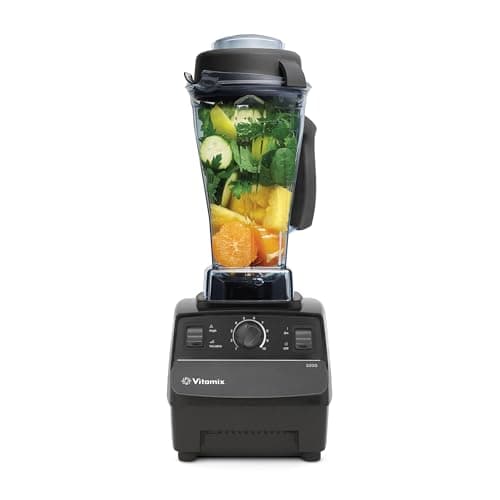
| Vitamix 5200 | 2 HP; 11.5 A at 120 V, no watts published | 64 oz container | 7 years | $4.62 / yr |
|---|
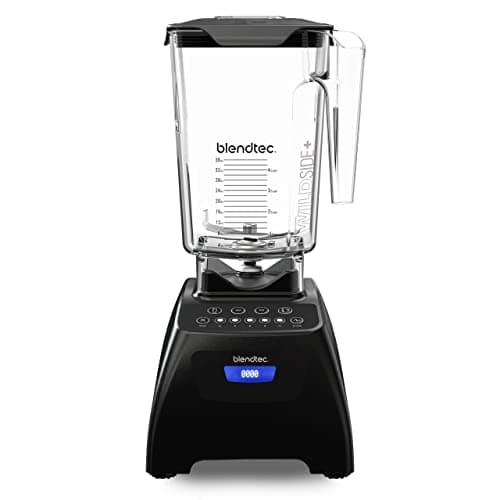
| Blendtec Classic 575 | 1,560 W, unqualified | 36 oz max liquid (WildSide+) | 2 years | $5.22 / yr |
|---|
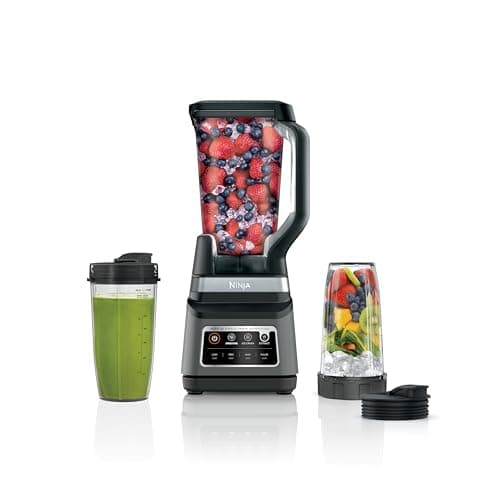
| Ninja Professional Plus DUO BN751 | 1,200 W continuous / 1,400 W peak | 64 oz max liquid (72 oz jar) | 1 year | $4.02 / yr |
|---|
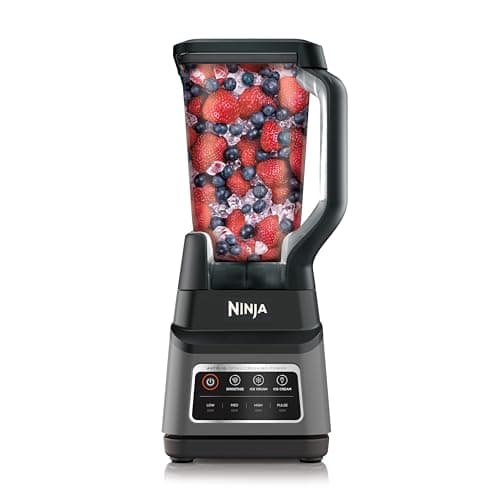
| Ninja Professional Plus BN701 | 1,200 W continuous / 1,400 W peak | 64 oz max liquid (72 oz jar) | 1 year | $4.02 / yr |
|---|
1. Vitamix 5200 — the tamper is the frozen-drink feature
A frozen cocktail is the one drink where a tamper earns its place in the box. The mix is deliberately low on liquid, so it bridges above the blades constantly, and a tamper is the tool that pushes the bridge back down while the machine keeps running. Everything else on this list asks you to stop, take the lid off, scrape the sides with a spatula and start again — which works, but does it by melting the drink you are trying to keep frozen.
The fully variable dial is the second reason. A frozen drink wants a slow start to get the mix circulating and then a fast finish to shear the ice fine, and a dial gives you that curve continuously rather than in three fixed jumps. Add the seven-year full warranty — parts, labor and shipping both ways — and this is the machine that is guaranteed to still be doing this in 2033.
Against it: no presets, no timer, no self-clean, a tall jar that may not clear a standard 18-inch cabinet gap, and no published decibel figure for a machine that is genuinely loud. You are paying for a motor and a warranty. If you make two frozen drinks a summer, that is a great deal of warranty to buy for the purpose.
2. Blendtec Classic 575 — the most watts, and a two-year warranty
Blendtec publishes 1,560 watts, the highest unqualified watt figure in this catalog, and pairs it with a blunt, fixed blade that cannot be installed wrong and is far safer to wash than a sharp removable assembly. The preset cycles stop on their own, which is a real advantage when you are making drinks for other people and would rather not stand over a jar counting seconds. The WildSide+ jar is short enough to clear a standard cabinet gap that several rivals do not.
Two things to be clear-eyed about. First, Blendtec’s own warranty schedule puts the Classic 575 at two years of parts and labor — not the eight years widely repeated online, which belongs to the Designer and Professional lines. If you were buying this for the warranty, read the schedule before you buy. Second, Blendtec publishes a maximum liquid fill of up to 36 oz for the WildSide+ jar and no total capacity figure at all, so the 90 oz number that circulates is not a manufacturer number. Thirty-six ounces is a real ceiling on how many frozen drinks come out of one run.
3. Ninja Professional Plus DUO BN751 — pitcher plus cups
The same published 1,200 W continuous motor and the same 72 oz pitcher as the BN701, with single-serve cups added to the box. For frozen drinks specifically, the cups are more useful than they look: a single frozen daiquiri made in a small vessel blends better than the same drink lost in the bottom of a 72 oz jar, because the load actually reaches the blades. One machine, two batch sizes.
The honest caveat is that this is a BN701 with cups at a premium. If the cups end up in a cupboard you have paid extra for nothing, and the warranty is one year either way. There is also no tamper here, so a thick frozen mix means stopping and scraping — the thing the Vitamix charges you to avoid.
4. Ninja Professional Plus BN701 — the cheapest sensible answer
If you want one jar and no accessories, this is the same motor and the same 64 oz of usable liquid without the cup premium. It publishes both a continuous and a peak wattage, which makes it genuinely comparable against everything else here, and it is the machine on this page most people should actually buy for occasional frozen drinks. One-year warranty, no tamper, and the stacked blade tower is more surfaces to wash than a single fixed blade.
Alcohol works against the drink, not for it
Ethanol lowers the freezing point of whatever it is mixed into. The practical consequence in a blender jar is that a heavy pour makes a frozen drink less willing to hold its structure: the same ice, the same machine and a double measure of spirit gives you something that slumps into slush faster and never quite mounds on the spoon. No amount of motor fixes that, because it is chemistry rather than mechanics.
The fix is to hold the alcohol and move the other two variables. More ice, colder glasses, serve the moment the blending stops. If a frozen drink refuses to set up, adding more spirit to strengthen it is the one adjustment guaranteed to make the texture worse. This is also why the frozen version of a cocktail is usually built with a slightly larger volume of mixer than the shaken version — the extra non-alcoholic volume is doing structural work.
The specs that do not decide this
Noise.Not one of these four manufacturers publishes a decibel figure, so there is nothing to compare and we will not invent a reading we did not take. Every noise cell in our catalog says “not published”, and it will keep saying that until someone publishes something. These are all loud machines; beyond that, the honest answer is that the data does not exist.
Preset buttons.A frozen-drink or smoothie program is a timer with a pulse pattern attached. It is a genuine convenience — the Blendtec cycles and Ninja’s Auto-iQ programs both stop on their own, which is worth something when you are pouring for other people — but it is not a capability the machine lacks without it. A pulse button and thirty seconds of attention does the same job.
Peak wattage.Comparing 1,400 peak watts against 1,560 unqualified watts against 2 horsepower is comparing three different measurements taken under three different conditions. The only genuinely comparable figures on this page are Ninja’s published continuous rating and the nameplate amperage on the Vitamix, and neither predicts a better margarita. There is more on why in the guide to what wattage actually means.
The decision rule
If you make frozen drinks more than a few times a month and you like them thick, buy the Vitamix — the tamper is the feature and the seven-year warranty covers a load that genuinely wears machines out. If you make them for a party twice a summer, buy the Ninja BN701 and spend the difference on the tequila; the drink will be indistinguishable and the ratio advice above is doing most of the work anyway. The Blendtec is the answer if cabinet clearance is the constraint, provided you have read its two-year warranty schedule and accepted it.
What none of these machines fix
Separation. Every blended frozen drink separates as it warms — the ice melts, the heavier liquid sinks and you get slush on top of syrup within a few minutes. That is physics, not a defect, and no motor prevents it. Pre-chill the glasses, blend last, serve immediately, and blend a second batch rather than making one enormous jug at the start of the evening.
Dilution is the other one. Every extra second of blending adds heat from the blades and melts more ice, so a drink blended for ninety seconds to get it “really smooth” arrives thinner than one blended for thirty. If the mix is not moving, the answer is more liquid or a smaller batch — not more time.