HUB 07 · Guides
How Much Does a Blender Cost?
Somewhere between under $50 and over $400, and the honest answer is that most people should spend near the bottom of that range. Here is what each bracket actually buys, the three things more money genuinely adds, the four things it does not, and a rule for deciding where to stop.
We earn a commission if you buy through our links. It does not change the price you pay, and it does not decide our picks — our selection criteria are published in full. How this works.
A blender costs anywhere from under $50 to over $400, and the single most useful thing to know is that the curve flattens early. The jump from the under-$50 bracket to the $100–$200 bracket changes what the machine can do. The jump from $200 to $400 mostly changes how long it is covered for and whether a tamper came in the box. Beyond that you are buying a warranty document, not blending performance.
We publish live Amazon prices on every machine on this site rather than typing numbers into prose, because a written price is wrong within a week and a wrong price is worse than no price. So this page does not tell you what any particular blender costs today — the cards further down do that, dated. What it does is explain what each bracket contains and what moving up one actually gets you, which is the part that does not change week to week.
What each price bracket buys
Under $50 — one job, done adequately
This bracket is personal bullet blenders and basic full-size jug machines. You get a motor in the 600–700 watt class, a plastic jar, a one-year warranty if any, and no tamper. What it genuinely does: a drinkable smoothie with liquid added, a protein shake, a milkshake, a small batch of salsa. What it does not do: thick low-liquid work of any kind, a family-size batch in one pass, or survive daily heavy use for a decade.
It is also the right purchase for more people than the category likes to admit. If what you want is a banana-and-frozen-berry smoothie four mornings a week, a machine from the under-$50 ranking makes that smoothie in a way you will not be able to distinguish from a machine that costs ten times more.
$50–$100 — the value bracket, and where most people should stop
Here you get a full-size pitcher around 72 oz, a published motor figure in the 1,000–1,200 watt range, usually a preset program or two, and a genuine ability to crush ice and blend frozen fruit. The warranty is still one year. There is still no tamper.
This is the bracket with the steepest value curve on the whole page: almost everything a home kitchen asks of a blender happens here. The ranked answer is on the under-$100 ranking, and the two machines most buyers land between are compared head to head on Ninja BL610 vs BN701— where, as it happens, the newer and more powerful of the two is frequently the cheaper one.
$100–$200 — better jars, better controls, same one-year term
More money here buys a dishwasher-safe pitcher, a glass jar instead of plastic if you want one, more presets, a quieter housing, and in some cases single-serve cups alongside the full jar. What it does not yet buy is a longer warranty or a tamper. If you are choosing a jar material in this bracket, the trade-offs are on glass vs plastic blender jars; the ranked answers are at under $150 and under $200.
$200–$300 — the awkward bracket
This is the hardest money to spend well. You are above the ceiling of what a mass-market brand puts in a blender and below the floor of the premium machines, so what is available is either a loaded mid-range machine or an entry-level premium one. The honest guidance is to look hard at whether you want the features of the former or the warranty and tamper of the latter, because a machine that splits the difference tends to deliver neither. See the under-$300 ranking.
Over $300 — a tamper, a decade of cover, and a repairable machine
The premium bracket. What the money buys, concretely: a tamper that makes thick low-liquid loads possible, a tall narrow or wide short jar shaped to beat cavitation, a warranty between two and ten years depending on the model, and a manufacturer that sells replacement parts so a failure in year eight is a repair rather than a landfill. Our high-power ranking covers this bracket, and the brand-level question is settled on is a Vitamix worth it.
One warning specific to this bracket: the warranty term is model-specific, not brand-specific, and the internet gets it wrong constantly. Blendtec’s own schedule puts the Classic 575 at two years; the eight-year figure belongs to its Designer and Professional lines. Vitamix runs seven years full on the 5200, five years limited on the VX1, and ten years full on the Ascent X3. Those are four different promises inside two brands. Read the document for the exact model, or read blender warranties compared, where we already have.
The three things more money genuinely buys
1. A tamper — the only real capability gap in the category
A thick mixture with little liquid in it cavitates: the blade spins an air pocket and the food above it never moves. This is not a power problem and more watts do not solve it. A tamper — a tool you push down through the lid while the machine runs — does. It is the single feature that separates what a premium machine can physically do from what a budget one cannot, and it is almost entirely absent below the $300 bracket.
If you will make nut butter, frozen desserts with no added liquid, or genuinely thick smoothie bowls, this is worth paying for and nothing else on this page is. If you will not, it is worth nothing. See best blenders for nut butter and best blenders for smoothie bowls.
2. Years of warranty, and the word in front of them
A one-year term is the norm up to about $200. Above it, terms of five, seven and ten years appear — and the adjective matters as much as the number. Vitamix’s full warranties cover normal wear and tear from ordinary household use, not just defects in material and workmanship, and can be transferred to a new owner. Its limited term covers the original owner only. One word, two very different promises.
There is a sum worth doing here, and it is the one piece of arithmetic on this page that should actually move your decision: take the live price of each machine you are considering, divide it by its warranty years, and compare the results. A one-year machine at the bottom of the range and a ten-year machine at the top of it often land closer together than the sticker prices suggest — and sometimes the cheap one still wins, which is why you run the numbers rather than assuming. What the terms imply about actual service life is on how long blenders last.
3. Documentation and parts
Premium brands publish full specification tables, owner’s manuals and warranty documents, and sell replacement jars, blade assemblies and motor bases. Budget brands often do neither — and sometimes the documentation disappears after the fact. One of the most-recommended cheap blenders of the last decade now has no manufacturer product page at all; its specifications survive only on replacement-part listings. That is not a reason to avoid the bracket, but it is a thing the money buys that nobody puts on the box.
The four things more money does not buy
- Comparable watts. Brands publish peak watts, continuous watts, horsepower and nameplate amperage interchangeably, so a 1,500 W figure and a 1,200 W figure are frequently not the same measurement. Vitamix publishes no watt figure at all for the 5200. Paying more does not get you more watts in any comparable sense; see blender wattage explained.
- Quiet. Almost nobody in this category publishes a decibel figure, including the premium brands, and high-power machines are loud by construction. If quiet is the requirement, it is a separate search:best quiet blenders.
- Ice crushing. Every full-size machine from the $50 bracket upward handles ice and frozen fruit with liquid added. This is the most over-sold capability in the category. The ranked answer, including the cheap machines that do it fine, is on best blenders for crushing ice.
- Lower running cost. A blender used 3 minutes a day, 365 days a year costs roughly $3.35 to $5.02 a year in electricity across the entire price range. The spread between the cheapest and most expensive machine on this site is under a dollar a year. The arithmetic in full is on how much a blender costs to run.
The costs that are not the sticker price
Three of them, in rough order of how often they catch people out.
Replacement jars.A cracked or clouded pitcher is the most common failure on a blender that is otherwise fine, and a premium replacement container can cost as much as an entire budget blender. Check that the brand sells one for your model before you buy — if it does not, a cracked jar is a new machine.
Extra containers. Premium bases often accept smaller or larger containers, sold separately. That flexibility is real, but buying a machine on the assumption you will add a bigger jar later means budgeting for the jar now, not discovering it later.
Electricity.Small enough to ignore — see the fourth item above — but we publish it rather than wave it away, at the EIA average residential rate retrieved September 2026.
So how much should you spend?
Answer the questions in order and stop at the first yes.
- Will you make nut butter, no-liquid frozen desserts, or genuinely thick bowls? Then you need a tamper, which means the over-$300 bracket. This is the only answer on the page that forces a premium purchase.
- Do you want to buy once and keep it a decade?Then you are buying a warranty document, and you should compare terms rather than features — run the price-per-warranty-year sum above on the specific models you are weighing.
- Do you blend for three or more people at a time?Then you need a full-size pitcher of 64 oz usable or more, which starts in the $50–$100 bracket. Capacity, not power, is the constraint; see what size blender do I need.
- Is it one or two smoothies, shakes or soups a day?Then the $50–$100 bracket is the whole answer, and the under-$50 bracket is probably enough. Spend the difference on fruit.
And one question that is not about money: are you sure you want a jug blender at all? For soup made in the pan, a stick blender is cheaper, smaller and better suited — the comparison is on blender vs immersion blender, and the first-principles version of this whole decision is in the blender buying guide.
The hardware
The hardware this guide is about
The products this guide refers to, with prices pulled live from Amazon and dated on every card. Full rankings live in the roundups linked above.
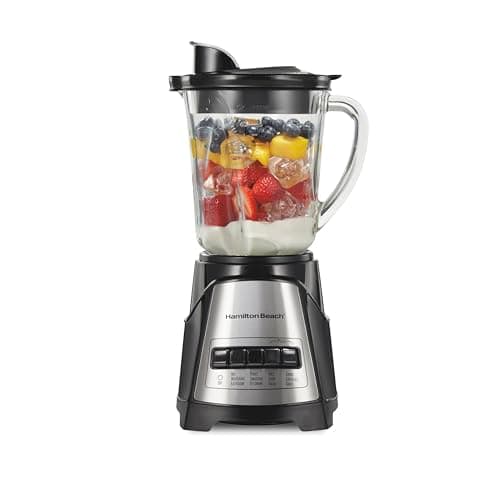
The smallest budget
Hamilton Beach Power Elite Wave Action
The cheapest machine here and the most honest about its own numbers: Hamilton Beach defines what its peak wattage means and prints the real nameplate amperage next to it.
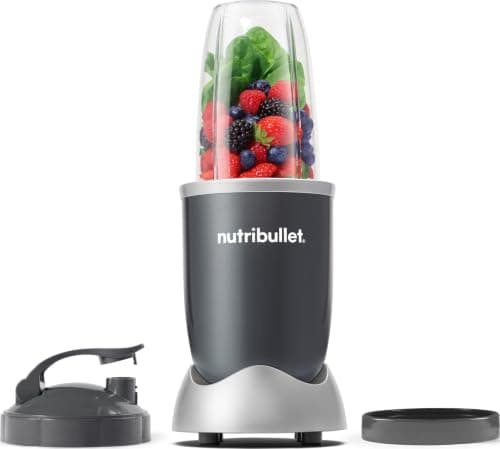
One modest shake
NutriBullet 600
The entry point, and the only machine here that ships a genuinely small cup. 600 watts is enough for the job it is actually bought for.
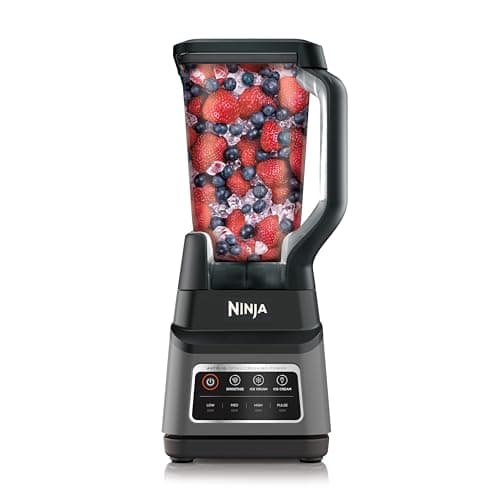
Most kitchens
Ninja Professional Plus BN701
The one brand here that publishes both a continuous and a peak wattage instead of only the flattering one. A large pitcher and real power for about a fifth of the premium price.
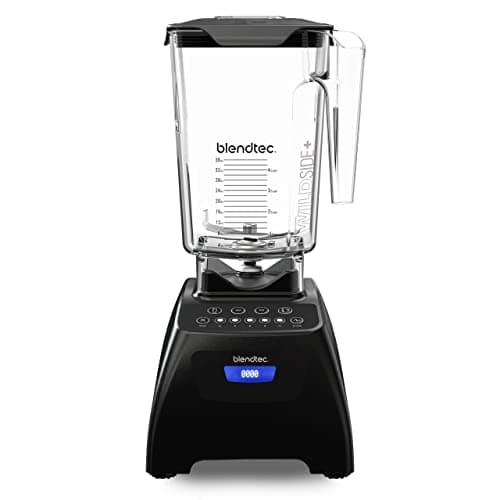
Cabinet clearance
Blendtec Classic 575
A 1,560-watt motor and a blunt, unremovable blade, in a jar short enough to fit under a cabinet. The warranty is two years, not the eight years the internet keeps repeating.
Buying once
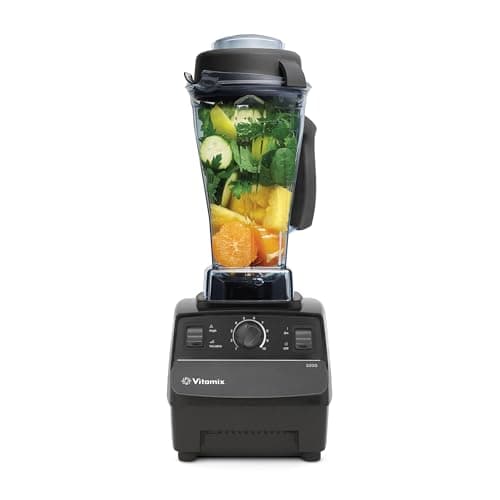
Vitamix 5200
The seven-year warranty is the product. A machine with a fully variable dial, a tall narrow jar and a tamper, backed longer than almost anything else at any price.
Buying once, under a cabinet
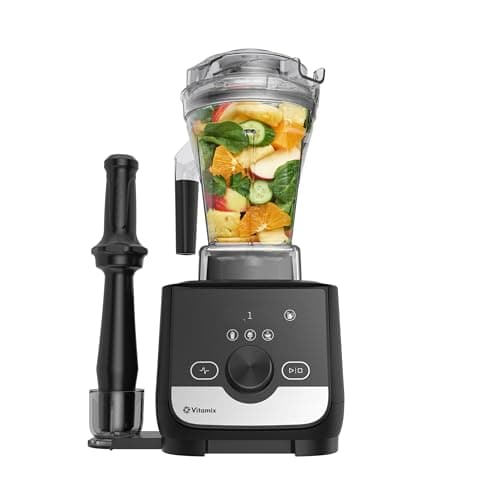
Vitamix Ascent X3
Ten years of full warranty, a tamper in the box, and the only full-size machine here that fits under a standard cabinet. The trade is a 48 oz jar instead of 64, at the highest price in the catalog.
#ad · As an Amazon Associate we earn from qualifying purchases.
Questions
Frequently asked
How much does a good blender cost?
A genuinely good everyday blender — full-size pitcher, published motor figure, able to crush ice and blend frozen fruit — sits in the $50–$100 bracket, and that is where the value curve is steepest. Above roughly $300 you are buying a tamper, a long warranty and repairability rather than better everyday blending.
Is an expensive blender worth it?
Only for three specific reasons: you need a tamper for thick low-liquid loads, you want a warranty measured in years rather than one year, or you want a machine the maker still sells parts for. If none of those apply, an expensive blender makes the same smoothie as a cheap one. We argue it out in full on is a Vitamix worth it.
Why are Vitamix blenders so expensive?
Principally the warranty and the repairability. Vitamix’s terms run five to ten years depending on the model, its full warranties cover normal wear and tear rather than defects alone, the longer terms can be transferred to a new owner, and it sells replacement parts for machines long out of production. The motor matters too, but the document is a bigger part of the price than most buyers realize.
How much should I spend on a blender for smoothies?
For drinkable smoothies with liquid added, the $50–$100 bracket covers it completely, and under $50 is enough for one or two servings at a time. Spend more only if your smoothies are thick bowls that need a tamper. The ranked answer is on best blenders for smoothies.
Do more expensive blenders last longer?
They are covered longer, which is not quite the same claim. We do not publish a lifespan figure for any machine because no manufacturer publishes one. What is documented is the warranty term — one year on most machines under $200, and five to ten years at the top of the range — and whether the maker sells the parts to repair it. Both are set out on how long blenders last.
How much does a blender cost to run each year?
Between about $2.01 and $5.02 a year at 3 minutes a day, 365 days a year, depending on the motor, at the EIA average residential rate retrieved September 2026. That is the whole range across every machine on this site, which is why running cost should not influence which blender you buy. The sum is shown in full on how much a blender costs to run.
Keep reading
Related
- GuidesThe hub this guide sits in.
- How much does a blender cost to run?The electricity question, with the arithmetic shown in full.
- Blender buying guideThe full decision from first principles, not just the budget.
- Blender warranties comparedEvery brand's term, read off its own document.
- Best blenders under $100The bracket with the steepest value curve, ranked.
- Vitamix Ascent X3 reviewWhat the top of the range buys: ten years, a tamper, 17 inches.
Receipts
Sources
- Vitamix — 7-Year Full Warranty terms
- Vitamix — 10-Year Full Warranty terms (Ascent)
- Vitamix — Ascent X3 product page, specification list and in-box contents
- Blendtec — warranty schedule by model
- SharkNinja — Ninja Professional Plus BN701 specification table
- Hamilton Beach — Power Elite use and care manual (PDF), rating plate and peak-power definition
- US Bureau of Labor Statistics — Consumer Price Index, major appliances and small appliance categories
- US EIA, Electric Power Monthly — average residential price, US total
We do not run a testing lab and we do not pretend to. Specifications come from the manufacturer's own published documents and from published standards; prices come from the live Amazon API. Where a figure is not published, the page says “not published” rather than guessing. Read the full method.