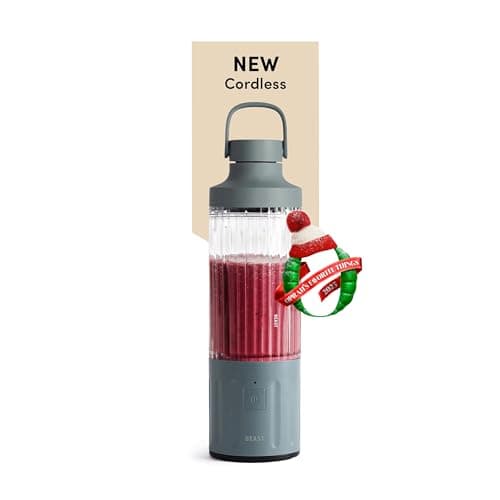
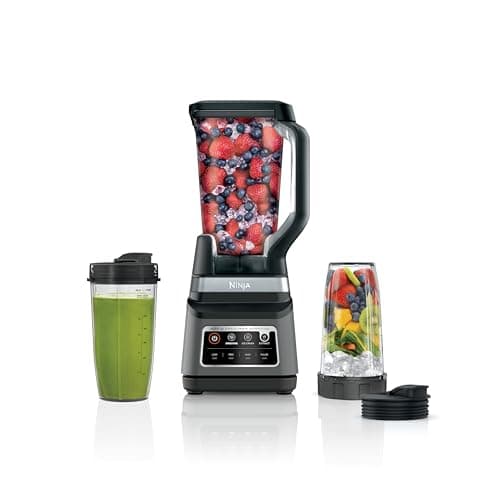
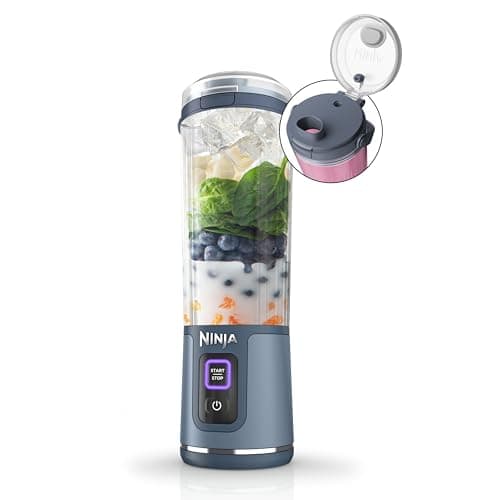
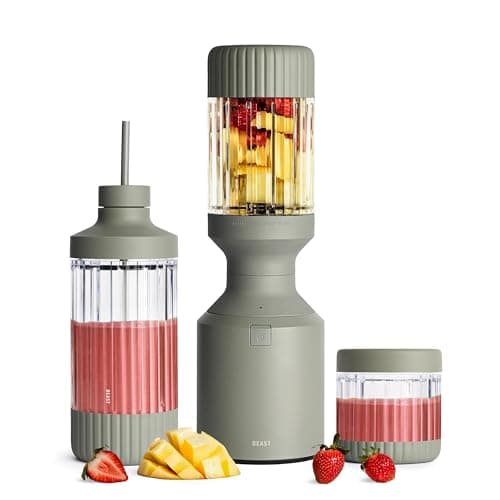
The closest alternative is the Beast Mega 1200— for the buyer who wants the NutriBullet format with better paperwork: the same 1,200 W single-serve approach, a vessel capacity published in millilitres rather than implied, and two years of warranty instead of one. The budget alternative is the Ninja Blast BC151, which is also the only cordless machine here — it makes up to 18 oz and publishes no wattage at all, and both of those facts are on SharkNinja’s own spec table.
What a NutriBullet is known for
Three things, and the right alternative depends on which one you were buying:
- The inverted cup. You fill a cup, screw a blade assembly onto it, and run the whole thing upside down on the base. The load sits onthe blades, so gravity feeds it and a thick mixture cannot form the air pocket that stalls a tall pitcher. This is a genuinely good design and it is why a 900 W NutriBullet handles thick smoothies that frustrate bigger machines.
- The price, and the cup ecosystem. Cheap to buy, with cups, lids and blade assemblies widely available. For most buyers this is the real draw.
- Published power, plainly stated.NutriBullet gives a watt figure for every machine — 250 W, 600 W, 900 W, 1,200 W — with no peak-versus- continuous games. That is more candor than most of this category manages.
What it is not known for is the warranty: one year, and NutriBullet’s terms exclude cups and accessories by name. On a format where the cup is the vessel and the threaded gasket is the part that wears, that exclusion is the gap every machine below is aimed at. Separately, nutribullet.com’s own pages currently mark both the Pro 900 and the 600 as discontinued — replaced by the nutribullet Turbo and the 700 W Personal Blender respectively — which affects how easily you will find spares in three years.
Who each alternative is for, in one line
- Beast Mega 1200— for the same format with honest capacity figures and two years of cover on the whole machine.
- Beast GO Cordless— for blending away from a socket with a published battery spec: 13 thirty-second cycles per charge, two-year warranty.
- Ninja Professional Plus DUO BN751— for the buyer who has outgrown single-serve and wants cups anda 72 oz family pitcher off one base.
- Ninja Blast BC151— the budget alternative: cordless, 2.4 lbs, 18 oz, and the cheapest route out of the brand.
The “alternative” that is not one
The Magic Bullet comes up constantly in this search, and it is worth saying plainly: it is not an alternative to a NutriBullet in the sense people mean. Its product page is published on nutribullet.com— same brand family, same warranty terms, same one-year-excluding-cups cover. If you are looking elsewhere because of the NutriBullet warranty or the discontinued models, the Magic Bullet does not move you. If you simply want a cheaper machine in the same ecosystem, it is a fine choice at 250 W, and the NutriBullet vs Magic Bullet comparison goes through it. We would rather tell you than let you discover it after you buy.
Matching the alternative to your reason
If you wanted a longer warranty— Beast, on both machines: two years, USA and Canada, household use, on the whole product rather than one year with cups carved out. That is the single clearest upgrade available from this format.
If you wanted published numbers you can check— Beast again. The Mega 1200 publishes a 1000 ml (33 oz) vessel and states its 1200 W as the equivalent of 1.6 horsepower; the GO Cordless publishes its battery as 3 cells at 11.1 V and declines to invent a wattage for it, which is the honest thing to do. NutriBullet publishes watts clearly, so this is a narrow win rather than a wide one.
If you wanted to go cordless— the Beast GO publishes a usable battery figure (13 blending cycles of 30 seconds per charge, under two hours to recharge) where the Ninja Blast publishes a 7.4 V base and a specification table that reads 0 watts and 0 peak watts. The Blast is lighter at 2.4 lbs and cheaper; the GO tells you more about what it will do. Best portable blenders ranks the two properly.
If you outgrew single-serve— the BN751 DUO, which puts cups and a 72 oz pitcher on one 1,200 W continuous base. This is the most common honest reason to leave the format: a cup caps you at roughly 24 oz of drink and no amount of power changes it. The Combo vs DUO comparison covers the two machines that answer this.
What the alternatives cost to run
Nothing worth comparing. At 18.16¢ per kWh and 3 minutes a day, 365 days a year, the 1,200 W Beast Mega and the 1,200 W BN751 both come to about $3.98a year — the same as a 1,200 W NutriBullet Ultra. Neither cordless machine has a figure, because neither maker publishes a wattage and we will not derive one from a battery voltage. The arithmetic.
The decision rule
Stay with NutriBullet if the price and the cup supply are what you wanted; the format is good and the watt figures are honest. Move to Beast if the warranty or the discontinued-model problem is what sent you looking. Move to a Ninja DUO if the real issue is that one cup is not enough. And do not move to the Magic Bullet expecting a different company.
For the format itself, best bullet blenders ranks every single-serve machine in this catalog including the NutriBullets, and Beast vs NutriBullet settles the closest head-to-head on this page one-on-one.
What we have not done
We have not tested any of these machines, NutriBullet included, and we have invented no fault for it — everything said about it above is quoted from its own product and warranty pages. Every wattage, vessel capacity, battery figure, weight and warranty term below is read off the manufacturer’s own document, cited in full.
How to leave the NutriBullet ecosystem without downgrading
1. Decide whether you are replacing the machine or the format
If a single 24 oz cup still suits you, you want a better single-serve machine. If it does not, no single-serve machine will fix it and you want a pitcher. This one question eliminates three of the four picks above either way.
2. Read the warranty exclusions, not the term
“One year” with cups and accessories excluded covers the motor base, which is the part least likely to fail on this format. Two years with nothing carved out is a materially different promise even though the number only doubled.
3. Check the model is still in production before you buy a spare-parts habit
This applies to whichever brand you choose. Cups, lids and gaskets are consumables in this format, and a discontinued line makes them slowly harder to buy. Both of NutriBullet’s cheaper machines are currently marked discontinued on its own site.
4. Treat a missing wattage as missing information, not as a small motor
Two cordless machines here publish no watt figure at all. That does not make them weak; it makes them undocumented, and the honest response is to buy them for portability rather than for power.
5. Match the vessel to the drink
A 1000 ml Beast vessel, a 32 oz NutriBullet cup and an 18 oz Ninja Blast are three different machines in practice. Work out the size of the drink you actually make before comparing anything else.
6. Expect to replace a gasket, whichever you buy
The threaded seal between the cup and the blade is the one consumable the whole format shares. It is the commonest cause of leaks, and it is excluded from more warranties than it is covered by — why is my blender leaking covers the diagnosis.