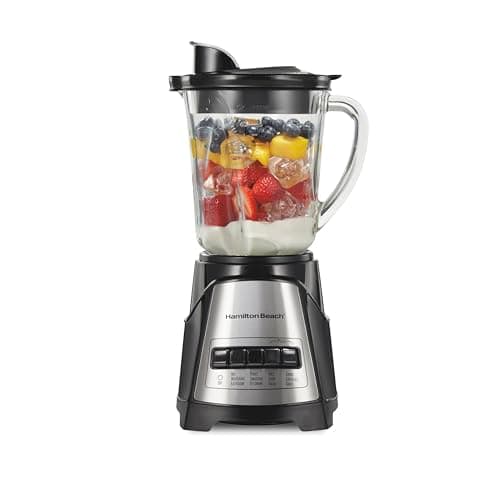
If you want the quietest capable machine, the Hamilton Beach Power Elite is the pick: a 444 W continuous draw is a fraction of a high-power blender’s, and its enclosed glass jar is the least shrill vessel here. If you only make single servings, the 250 W Magic Bullet is almost certainly the quietest motor in this list — because it is the weakest. And if you specifically want quiet soup, an immersion blender like the Breville Control Grip is the genuinely quiet way to do it.
Read this before you trust any “quiet blender” ranking, including ours.Not one manufacturer in this catalog publishes a decibel figure for any model. NutriBullet markets the Ultra as its “quietest” single-serve blender and still prints no number. So any site handing you a tidy “68 dB” league table either measured it themselves — and should say how — or invented it. We did neither. This page ranks on the two things that are published and that genuinely correlate with noise: how much power the motor draws, and how enclosed the vessel is. That is inference, not measurement, and we would rather tell you that than sell you a fake number.
How blender noise actually works
Three things drive how loud a blender feels, and you can reason about all three from published specs. Motor draw:a motor pulling 1,500 W is doing far more work — and making far more noise — than one pulling 300, all else equal. Vessel: an open, wide jar radiates sound; an enclosed personal cup or a pot with a stick blender in it muffles it. The load: ice and dense frozen fruit are what make any blender scream, because the blades are slamming into solids. A weaker machine on a soft load is quiet; a strong machine on ice is loud, and no design trick fully fixes that.
The uncomfortable trade sits right there: the machines that are quiet are usually the ones that are weak, because low noise and low power are the same fact stated twice. A genuinely powerful blender that is also genuinely quiet would be worth a premium — but nobody publishes the measurement that would let you verify the claim, so nobody can honestly sell you one. Keep that tension in mind as you read the ranking.
The ranking, and the basis for it
1. Hamilton Beach Power Elite — quietest capable machine
The best balance of quiet and useful. Its rating plate is 3.7 A — about 444 W continuous — which is a fraction of what a high-power blender draws, and the 40 oz glass jar is enclosed and dense rather than a thin open pitcher. It will make smoothies, shakes, batters and soups at a noise level a 1,500 W machine cannot approach. The honest catch is the same low power that makes it quiet: it will stall on a dry frozen load. If “quiet enough to run early without waking the house” matters more than raw muscle, this is the one, and the full read is in the review.
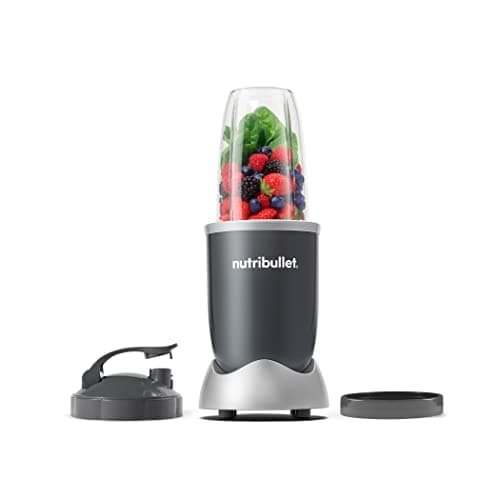
2. NutriBullet 600 — quiet single servings
At 600 W in a small, enclosed inverted cup, the 600 is inherently quieter than any full-size machine, and the sealed cup muffles what noise there is. It is the right tool for one modest shake — soft fruit, powder, a few frozen berries with liquid — and it runs for seconds, not minutes, which is its own kind of quiet. Load it with dry frozen fruit and it gets loud and strains; that is the line.
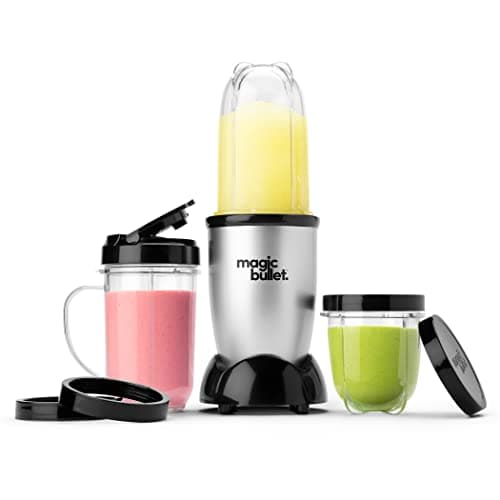
3. Magic Bullet — quietest motor, least capable
By the power argument, the 250 W Magic Bullet is almost certainly the quietest motor in this list — and it is quietest for exactly the reason it is the least capable. It is a chopper that also makes a soft shake, and if your needs genuinely stop there, it is both the cheapest and the quietest way to meet them. It will not crush ice or blend a frozen load at any volume. Buying it for quiet is fine; buying it expecting blender results is the mistake the review warns about.
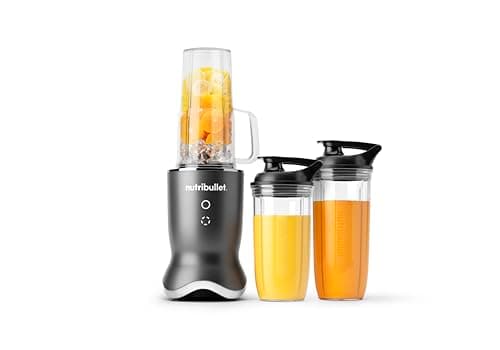
4. NutriBullet Ultra — the “quietest” claim, unverified
Included precisely because NutriBullet markets it as its quietest single-serve blender — and publishes no decibel figure to back it. At 1,200 W it is also the most powerful bullet here, which by the physics above works against quietness, not for it. It may well be quieter than its siblings through insulation or motor design; we simply cannot verify a claim with no number attached, and neither can you. If a quiet single-serve machine is the goal, the lower-power 600 is the safer bet than paying an Ultra premium for an unverifiable label. The Ultra review takes that claim apart in detail.
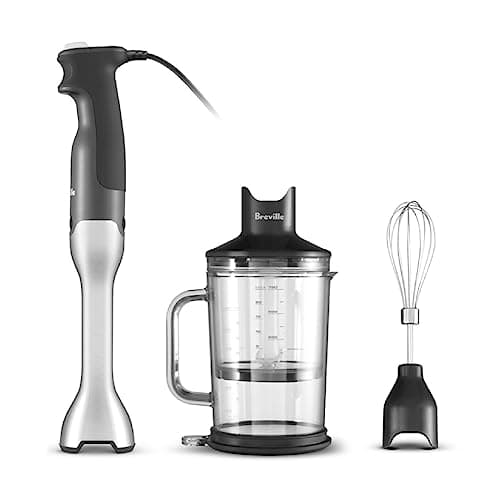
5. Breville Control Grip — the quiet way to blend soup
If the loud job you actually want to tame is soup, the answer is not a quieter countertop blender — it is a different tool. At 280 W, submerged in a pot, an immersion blender is the genuinely quiet way to blend hot liquid, and the Control Grip’s vented bell keeps it from suction-locking and roaring against the pan base. It will not do a frozen smoothie; it is not that kind of machine. But for the specific noise complaint of blitzing soup, it is the quietest sensible route, and it is safer with hot liquid than any sealed jar.
The honest bottom line.There is no such thing as a verified “quiet high-power blender” in this catalog, because nobody publishes the measurement. If quiet is your priority, accept less power (Power Elite, NutriBullet 600, Magic Bullet), or change the tool for the job that is actually loud (an immersion blender for soup). And run any blender for the shortest time on the softest load you can — that does more for noise than any purchase.
What we would need to rank this properly
A decibel reading at a fixed distance, on a defined load, for each machine — the same figure taken the same way, so the numbers could share a column. No manufacturer here publishes it, and we do not own the machines or a sound meter, so we do not fake it. If that changes — if a brand starts publishing a measured dB figure — this page will rank on it and say so. Until then, treat noise as an inference from power and vessel, exactly as above, and weight your decision on the things that are measured: warranty, capacity, and what the machine can actually do.