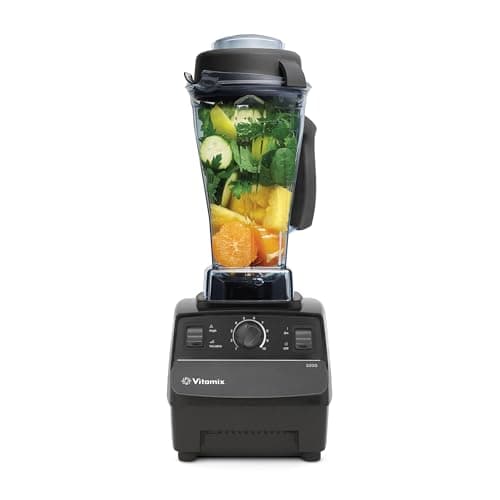
Buy the Vitamix 5200if you want to mill flour from whole grain. It is not the most powerful machine here and it does not have the longest warranty — it wins because Vitamix sells a 32 oz Dry Grains Container built for exactly this job, and publishes a compatibility list that covers the 5200’s own series. For a spoonful of spice or a single pot of coffee, skip the full-size machines entirely and buy the NutriBullet Pro: a small sealed cup puts the walls close enough to the blade that the powder cannot escape it, which is the whole problem with dry grinding.
Every other roundup on this site ranks machines on wet loads, where liquid carries solids back into the blade. Dry grinding removes the liquid and with it the entire mechanism that makes a blender work. That inverts the usual order badly enough that the newest, best-warranted, most powerful Vitamix in our catalogue finishes fourth here — and the reason is a published list, not an opinion.
Why dry grinding is a different machine problem
In a smoothie, the blade throws liquid outward, the liquid falls back down the middle, and the whole load circulates through the cutting zone over and over. That circulation is the product. Take the liquid away and nothing circulates: the blade carves a crater in the grain, flings the lightest particles to the top of the jar, and keeps spinning in air underneath them. You get scorched flour at the bottom and whole berries at the top.
A tamper does not fix this, which surprises people who have read our nut butter ranking. A tamper works by pushing food down into a stalled vortex. In dry work there is no vortex to restore — pushing dry grain into a spinning blade just packs it harder. What actually works is one of two things: a vessel whose walls are close enough to the blade that particles have nowhere to hide, or a container shaped and bladed for dry work in the first place.
That is why the two ends of this ranking look so different. Small sealed cups win on small batches by geometry alone. Full-size machines win on large batches only if the maker sells the right jar for them. If the cup-against-jar decision is the one you are actually making, we argue it on its own terms on Vitamix vs NutriBullet.
The container question, answered first
Of the five machines ranked here, the only purpose-built dry-grinding container we can point at a live manufacturer page for is Vitamix’s 32 oz Dry Grains Container. Its own product page says it “grinds whole grains into fresh flours, mixes batter, and even simulates the kneading process to prepare dough”, and — the part that decides this ranking — it publishes which blenders it fits: the Legacy Series and the Explorian Series. The same page’s related-product list names the 5200’s product URL directly.
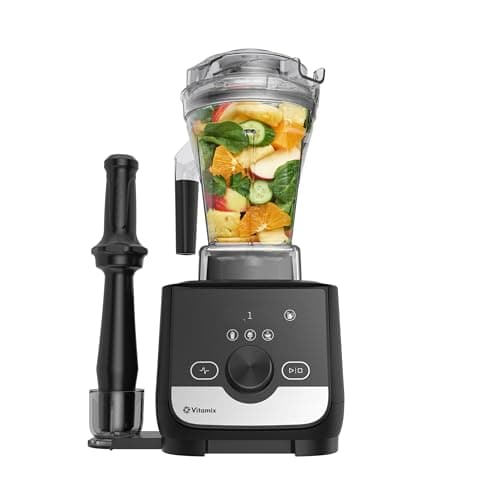
Vitamix’s 5200 page classifies that machine as C-Series: Classic, in the Legacy Series. So the dry container covers it. The Ascent X3is an Ascent Series machine, and Ascent is not on that compatibility list. The X3 is the better blender by almost every measure we publish — ten years full warranty against seven, a published 1,500 W rating, a 17-inch height that clears a cabinet — and for this one job it finishes behind a machine that costs less and is covered for less time, because you can buy the correct jar for one of them and not for the other.
We are stating what the manufacturer publishes, not what is physically impossible. If Vitamix extends that compatibility list, this ranking changes. Until it does, the list is the evidence and we are not going to guess past it.
Who each pick is for
- Vitamix 5200 — for the person who wants to mill flour from whole grain at home, in batches, and is willing to buy the dry container as a separate purchase.
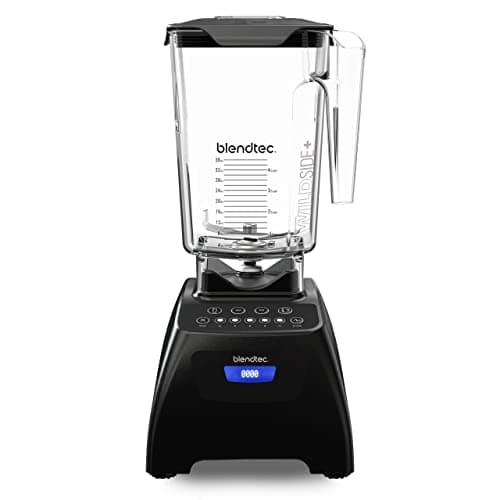
- Blendtec Classic 575 —for the person grinding larger dry batches in pulses who also needs the shortest full-size machine here to fit under a cabinet. Which Blendtec jar you have changes the usable volume more than you would expect — see FourSide vs WildSide.
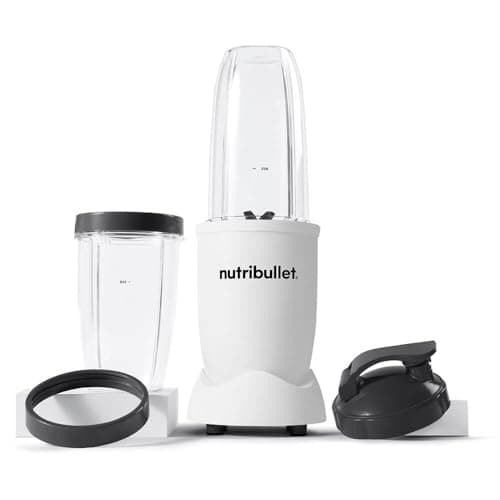
- NutriBullet Pro (900 W) —for the person grinding spices, flax, oats or coffee a few tablespoons at a time — which is most people asking this question.
- Vitamix Ascent X3 — for the person who wants one machine for everything and accepts that dry grinding will happen in the wet jar, in small amounts, as a compromise.
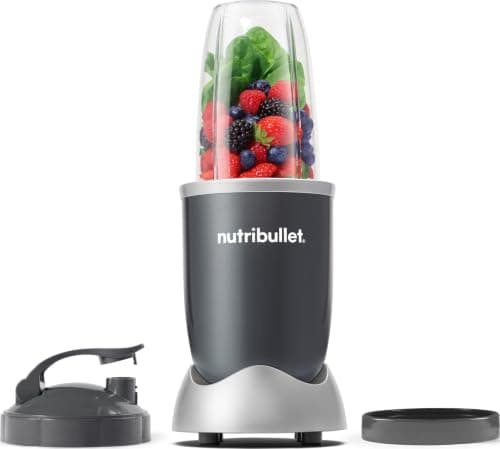
- NutriBullet 600 — for the person who wants to grind a spoonful of something and spend the least possible money doing it.
The five, side by side
Manufacturer figures only. Every cell traces to the source list at the foot of this page; where a maker publishes nothing, the cell says so rather than carrying an estimate. | Published motor | Vessel | Dry container published? | Warranty |
|---|
| Vitamix 5200 | 2 HP; 11.5 A at 120 V. No watt figure published | 64 oz, tall and narrow | Yes — 32 oz Dry Grains Container, Legacy Series | 7 years, full |
|---|
| Blendtec Classic 575 | 1,560 W peak per Blendtec’s page | Wide and short, blunt wing blade | Not published for this model | 2 years |
|---|
| NutriBullet Pro (900 W) | 900 W | Sealed single-serve cup, walls close to the blade | No — the standard cup is the vessel | 1 year |
|---|
| Vitamix Ascent X3 | 1,500 W | 48 oz, the smallest full-size jar here | No — Ascent is not on the dry container’s list | 10 years, full |
|---|
| NutriBullet 600 | 600 W | Sealed single-serve cup | No — the standard cup is the vessel | 1 year |
|---|
What goes wrong, by ingredient
Whole grain into flour.The hardest thing on this list and the only one that genuinely needs a dry container. Wheat berries are hard, dense and dry, and milling them generates real heat — which is part of why Vitamix sells the dry container as a separate product rather than as a note in the manual. In a wet jar you will get coarse meal, a hot motor and a hazed container. See glass vs plastic blender jars for why the hazing matters more than it sounds.
Spices.The easiest, if the batch is small. Cumin, coriander, peppercorns and dried chilli all break down readily; the problem is quantity. Two tablespoons in a 64 oz jar will sit outside the blade’s reach permanently. Two tablespoons in a bullet cup are trapped against the blade, which is the whole reason the Pro outranks the Ascent here.
Coffee.Possible, uneven, and a smaller disaster than the internet suggests — but a blender chops rather than mills, so you get a mixture of dust and chunks instead of a uniform grind. That matters enormously for espresso and barely at all for cold brew. The full answer, with the pulse technique and the brew methods it suits, is on can you grind coffee in a blender.
Nuts and seeds, dry. Flax, sesame and almonds ground to a meal rather than a butter. Short pulses only: the oil comes out fast, and once it does you have crossed over into nut butter, which is a different page and a different technique.
Protein powder and dry mixes.Not really grinding — this is blending a powder that is already ground, which every machine here does. If that is the actual job, the cheaper answer is on protein powder in a blender.
What we are not going to tell you
We have not milled flour in any of these machines, and we publish no grind-fineness figure, particle-size claim or time-to-flour number for any of them, because no manufacturer publishes one and we have no lab. What we can do is read which containers each maker sells, which series each container fits, what motor figure each brand publishes and what its warranty document actually says — and then reason from the physics of a load with no liquid in it. That is the whole basis of this ranking, and the method is published in full.
Four checks before you buy a blender to grind with
1. Does the maker sell a dry container for the exact model?
Not for the brand — for the model, or at least for the series the model belongs to. Vitamix publishes that list for its dry container, and it does not cover the whole Vitamix range. This is the single question that separates a machine which mills flour from a machine which makes coarse meal and gets hot doing it.
2. Is the vessel small enough for the batch?
Dry grinding has a minimum useful load, and it is larger than people expect. A 64 oz jar needs enough grain in it to reach the blade and keep reaching it; a 48 oz jar needs less, and a bullet cup needs a couple of tablespoons. Match the vessel to the batch rather than buying capacity you then cannot fill. The general version of that argument is on what size blender do I need.
3. Can you control the speed, or only pick a programme?
Dry work wants a slow start and short bursts. A fully variable dial — which the 5200 has and most machines under $200 do not — lets you begin below the speed at which light particles get flung to the lid. A preset that ramps straight to maximum does the opposite. Pulse is the next best thing, and most machines here have it.
4. Will the jar survive it?
Dry grinding is abrasive in a way wet blending is not. Hard dry particles at speed will scuff a plastic container, and a scuffed container stays cloudy for the rest of its life. If the machine you are buying has one jar and you also want it for smoothies, accept that the jar will look older than the motor. Whether the maker sells a replacement is worth checking before rather than after — how long blenders last covers which brands publish parts.
And the honest alternative
A dedicated burr grinder does coffee better than any blender in this list, and an inexpensive spice mill does spices better than any of them. If grinding is the main thing you want from this purchase, buy the dedicated tool and a cheap blender. If grinding is an occasional job for a machine you are buying anyway — which is the usual case — then this ranking is the order to buy in.