HUB 07 · Guides
Can You Use a Blender Without Liquid?
Short answer: yes, for dry and hard ingredients, in short bursts - one manufacturer prints a chart of them. No, for anything you want smooth, and the reason is the vortex rather than the motor. Here is what each maker has actually published, including the number none of them will state.
We earn a commission if you buy through our links. It does not change the price you pay, and it does not decide our picks — our selection criteria are published in full. How this works.
Yes — for dry, hard ingredients, in short bursts. Hamilton Beach prints a chart of them in the manual for a blender that costs less than a takeaway dinner. No — for anything you want smooth. And the reason is not that the motor cannot cope. It is that liquid is the only thing moving the food back down into the blade, and without it the blade spins in a hole it has carved for itself.
What liquid is actually doing in there
A blender blade does not chase food around the jar. It stays where it is and waits for the food to come to it, and what brings the food to it is a vortex — the downward spiral that pulls the surface of the mixture into the middle and down onto the blades. Liquid is what makes that spiral possible. It is heavy enough to be thrown outward and fluid enough to fall back inward, and the circulation is the whole mechanism.
Take the liquid out and the circulation stops. The blade keeps turning at full speed, the food above it stops moving, and you get a smooth-walled cavity with a spinning blade at the bottom and an untouched dome of ingredients sitting over it. That is cavitation, and it is the single most common reason a blender appears to be running perfectly while doing nothing at all. What pulse does on a blender covers the fix for it.
So the honest version of the question is not “will the machine survive it?” It is “will anything happen?” For hard dry food that shatters on contact — coffee beans, peppercorns, hard cheese, dry bread — plenty happens, because the pieces are thrown about and keep meeting the blade on the way down. For anything soft, sticky or thick, nothing happens, and it will not start happening if you leave it running longer.
What each manufacturer has actually published
This is the part of the question nobody seems to answer, so we went and read what the makers themselves say. Three brands in our catalog have engineered a specific answer to low-liquid blending, and all three answers are different. Not one of them is “add water”.
Hamilton Beach: a chart of dry foods, with quantities and times
The Power Elite is the cheapest full-size machine we cover, and its use and care manual contains the most explicit manufacturer sanction for dry blending we have found anywhere. Its Processing Foods chart gives quantities and blending times for coffee beans, parmesan cheese, baking chocolate, nuts, chopped vegetables, cookie crumbs and superfine sugar. Those are dry jobs, on a 700 W peak machine with a 40 oz glass jar, printed by the manufacturer with numbers attached.
That matters more than any forum answer, because it establishes the baseline: dry blending is not an abuse of a blender. It is a documented use of one, on a budget model, with the maker’s own quantities. The same chart is worth reading for what it leaves out — it never lists ice, which is a separate and interesting absence.
Vitamix: a different container, with a blade that spins the vortex backwards
Vitamix’s answer is the most revealing of the three, because it is an admission by design. Vitamix sells a separate 32 oz Dry Grains Container for dry work, with specially designed blades that grind whole grains into fresh flours, mix batter, and simulate the kneading process. The mechanism is published on the same page, and it is the sentence to take away from this article: the dry blades are built to create a reverse vortex, “pushing dry ingredients away from the blades to prevent packing”.
Read that against the wet container and the point lands. A normal blender jar pulls food towardthe blade, which works because liquid keeps it flowing. Dry flour does not flow — it packs, and packed flour against a blade is a blade in a plug. So Vitamix reverses the direction, pushing dry material out and up so it keeps falling back through. One machine, two containers, two opposite flow patterns, because dry and wet are genuinely different problems.
The practical consequence for anyone with a standard jar: you can grind dry food in it, and it will work on hard things and pack on powdery things, and that is not a defect of your technique. It is the container doing what it was designed to do. Vitamix’s own compatibility list for the dry container is also worth checking before you buy one — the page says it fits all full-size Classic C- or G-Series machines while the specification list names the Legacy and Explorian Series, and the page does not reconcile the two. Best blenders for grinding grains and spices ranks machines on exactly this question.
Blendtec: a jar with a lid you turn while it runs
Blendtec’s answer to a mixture too thick to circulate is not more liquid and not a different blade — it is the Twister jar, sold explicitly for the thickest blends, with a lid carrying arms that reach down the jar wall. You turn the lid counter-clockwise while the cycle runs, and in Blendtec’s own words, “this twisting motion forces the ingredients from the sides of the jar back into the blade”. The foods it names are the obvious low-liquid ones: bread and cookie crumbs, nut butters, hummus, baby food.
Vitamix solves the same problem with a tamper you push down through the lid opening, which is the same idea driven by your arm instead of a mechanism — what a tamper is for covers it. Both tools exist for one reason: when there is not enough liquid to circulate the load, something has to move the food back into the blade, and on most machines that something is you.
The number nobody publishes
We went looking for a minimum liquid quantity — a cup, a ratio, anything — and no manufacturer in our catalog publishes one. Not Vitamix, not Blendtec, not Hamilton Beach, not NutriBullet. Recipes give liquid amounts; specifications do not. We are not going to invent a ratio to fill the gap, because a number with no document behind it is worth less than the honest statement that there is no number.
What the documents do support is a rule of thumb you can reason about rather than memorize: if the mixture is not moving, more liquid or a different tool — never more time. Running a stalled load is the thing that converts a blending problem into a repair problem.
When dry blending goes wrong, it goes wrong in three ways
Heat
A motor turning a blade against a packed load draws more current and sheds more heat than one spinning a vortex, and there is no liquid in the jar acting as a heat sink. On a personal blender that heat goes straight into a small plastic cup and the seal underneath it. If you smell anything, stop immediately— that smell is usually the motor, and it does not improve with persistence.
The jar
Dry grinding is abrasive. Hard, dry particles thrown at speed against a plastic wall scuff and cloud it in a way that soup never will, which is the real argument for grinding in glass if you have the option — the Hamilton Beach’s 40 oz glass jar is genuinely better suited to this job than its price suggests. Glass vs plastic blender jars is the longer argument.
Your warranty
Worth knowing before you experiment: Vitamix’s warranty terms state that abuse, misuse, negligent use or alteration of the machine voids the warranty, and coverage depends on following the owner’s manual. Using the wet container for a job the manufacturer sells a different container for is not obviously covered. That is not a reason never to grind peppercorns; it is a reason not to make flour in a jar that was not built for it.
So, practically: what you can and cannot do dry
Works dry, in short pulses:coffee beans, whole spices, hard cheese, dry bread for crumbs, cookies for crumbs, nuts for a coarse chop, granulated sugar to superfine. Hamilton Beach prints times for most of that list. Pulse rather than run — each stop lets the load fall back onto the blade, which is the only circulation you get without liquid.
Needs a dedicated container: flour from whole grains. This is the packing case Vitamix built a different blade for, and a standard wet jar will drive it into a plug around the blade.
Needs a tamper, a Twister lid or a scrape: nut butter, hummus, thick dips, anything that climbs the wall and stays there. Nut butter in a blender is the worked example.
Needs liquid, no exceptions: smoothies, soups, sauces, ice. On a jar of cubes in particular, a splash of liquid is the difference between crushed ice and a stalled motor, and that is true on every machine at every price.
Do not put in dry at all: the list on what you should not put in a blender does not get safer without liquid — several items on it get worse.
The hardware
The hardware this guide is about
The products this guide refers to, with prices pulled live from Amazon. Prices last checked October 31, 2026. Where we have no verified live price we show none rather than a stale number. Full rankings live in the roundups linked above.
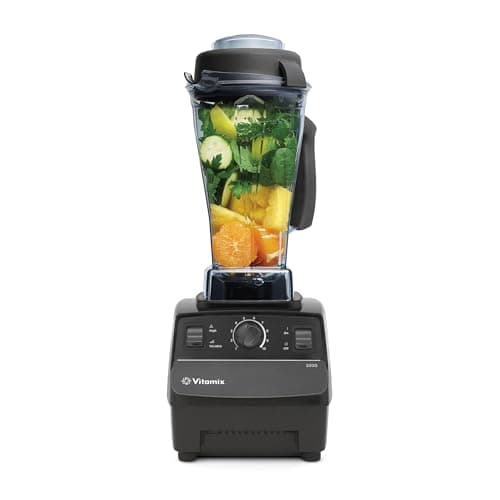
Buying once
Vitamix 5200
The seven-year warranty is the product. A machine with a fully variable dial, a tall narrow jar and a tamper, backed longer than almost anything else at any price.
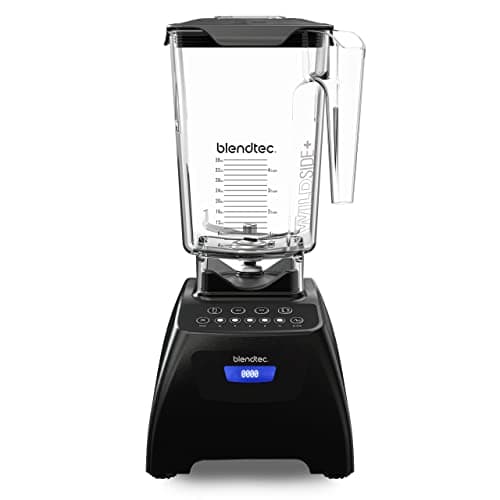
Cabinet clearance
Blendtec Classic 575
A 1,560-watt motor and a blunt, unremovable blade, in a jar short enough to fit under a cabinet. The warranty is two years, not the eight years the internet keeps repeating.
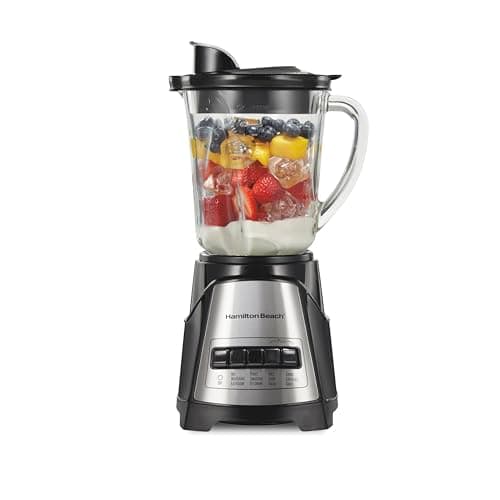
The smallest budget
Hamilton Beach Power Elite Wave Action
The cheapest machine here and the most honest about its own numbers: Hamilton Beach defines what its peak wattage means and prints the real nameplate amperage next to it.
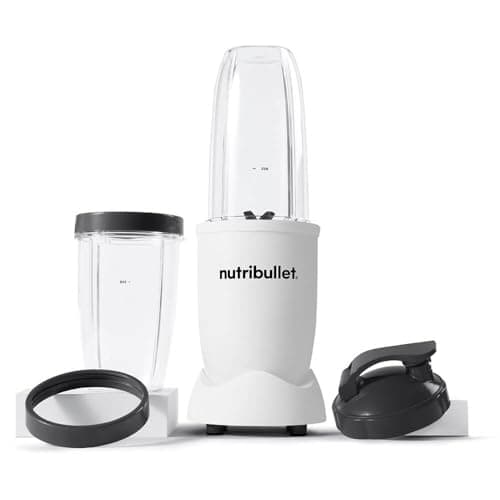
Everyday shakes
NutriBullet Pro (900 W)
The default bullet blender, and a good one. Note that NutriBullet's own product page contradicts itself about which cups are in the box.
#ad · As an Amazon Associate we earn from qualifying purchases.
Questions
Frequently asked
Can you use a blender without liquid?
Yes, for dry and hard ingredients in short bursts, and at least one manufacturer sanctions it in print: the Hamilton Beach Power Elite manual’s Processing Foods chart gives quantities and times for coffee beans, parmesan, baking chocolate, nuts, chopped vegetables, cookie crumbs and superfine sugar. For anything you want smooth, no — without liquid there is no vortex, so the blade carves a cavity and the food above it never moves.
Do blenders need water to work?
They need a fluid load, which is not the same as water. Enough oil, yogurt, fruit juice or melted anything will circulate a load perfectly well. What they cannot do is move a dry, powdery or sticky mass back into the blade on their own, which is why Vitamix sells a container with reversed-flow blades and Blendtec sells a jar with a lid you turn during the cycle.
How much liquid does a blender need, minimum?
No manufacturer in our catalog publishes a minimum. We looked at Vitamix, Blendtec, Hamilton Beach and NutriBullet; recipes carry liquid amounts, specifications do not, and we are not going to invent a ratio. The workable rule from the documents is behavioral rather than numeric: if the load has stopped moving, add liquid or change tool — never add time.
Will blending without liquid damage the motor?
Running a stalled load will heat it, and there is no liquid in the jar to carry that heat away. Short pulses on hard dry food are a documented use; minutes of continuous running against a packed load is the case that burns things out. Vitamix’s warranty also states that abuse, misuse or negligent use voids coverage and that following the owner’s manual is a condition of it.
Can you grind flour in a normal blender jar?
Poorly, and Vitamix has effectively said why. Its dry grains container uses blades designed to create a reverse vortex — “pushing dry ingredients away from the blades to prevent packing”. A standard wet jar pulls material toward the blade, which is exactly what you do not want with flour, because packed flour against a spinning blade is a plug. Best blenders for grinding grains and spices ranks the machines that handle it.
Can a personal or bullet blender be used dry?
For small hard jobs, yes, and the narrow cup actually helps — nothing can orbit out of the blade’s reach the way it can in a wide jar. The caution is thermal: a small plastic cup, a sealed blade assembly and a motor working against a packed load is a short route to a hot gasket. Keep it to bursts. Beast vs Ninja compares two small-cup brands on exactly the figures each one is willing to publish.
Why does my blender spin without blending anything?
That is cavitation: the blade has carved an air pocket and is turning inside it while the food sits above, untouched. Too little liquid is the usual cause; too much ice or frozen fruit is the other. Stop, push the load down with a tamper or a spoon with the machine OFF, add a splash of liquid, and use pulse rather than a continuous run.
Keep reading
Related
- All guidesThe hub this guide sits in.
- Best blenders for grinding grains and spicesThe ranked version of the dry-blending question, with the container compatibility worked out.
- What does pulse do on a blenderThe fix for cavitation, which is what a dry jar does within about two seconds.
- What is a blender tamper used forVitamix's version of Blendtec's twisting lid - moving the load back into the blade by hand.
- Can you grind coffee in a blenderThe one dry job Hamilton Beach prints a time for, in full.
- Nut butter in a blenderThe low-liquid load that climbs the wall and stays there.
- What you should not put in a blenderA list that does not get safer when you leave the liquid out.
- Beast vs NinjaTwo brands that each publish the figure the other one leaves out.
Receipts
Sources
- Hamilton Beach — Power Elite use and care manual (PDF): the Processing Foods chart, which gives quantities and blending times for coffee beans, parmesan, baking chocolate, nuts, chopped vegetables, cookie crumbs and superfine sugar, and the manual's definition of peak power
- Hamilton Beach — Power Elite blender product page (700 W peak, 40 oz glass jar)
- Vitamix — 32 oz Dry Grains Container product page: 'Specially designed blades grind whole grains into fresh flours, mix batter, and simulate the kneading process', the reverse vortex 'pushing dry ingredients away from the blades to prevent packing', and the published compatibility list
- Vitamix — 5200 product page and specification table (64 oz wet container, tamper)
- Vitamix — 7-Year Full Warranty terms, including the clause that abuse, misuse, negligent use or alteration voids the warranty
- Blendtec — Twister Jar product page: 'For the Thickest Blends', and 'This twisting motion forces the ingredients from the sides of the jar back into the blade'; names bread and cookie crumbs, nut butters, hummus, baby food and single-serve smoothies
- Blendtec — Classic 575 product page
- NutriBullet — Pro product page (900 W, 32 oz cups)
We do not run a testing lab and we do not pretend to. Specifications come from the manufacturer's own published documents and from published standards; prices come from the live Amazon API. Where a figure is not published, the page says “not published” rather than guessing. Read the full method.