Skip to content
BasketBlade

HUB 06 · Comparisons

Bullet Blender vs Ninja

This is a form-factor question wearing a brand name. An inverted single-serve cup and a full-size pitcher solve different problems, and the wattage gap between them tells you less than it looks like it does.

By Stephen V.Updated How we pick
#ad

We earn a commission if you buy through our links. It does not change the price you pay, and it does not decide our picks — our selection criteria are published in full. How this works.

The short answer

Quick picks

#ProductBest forScorePrice
01
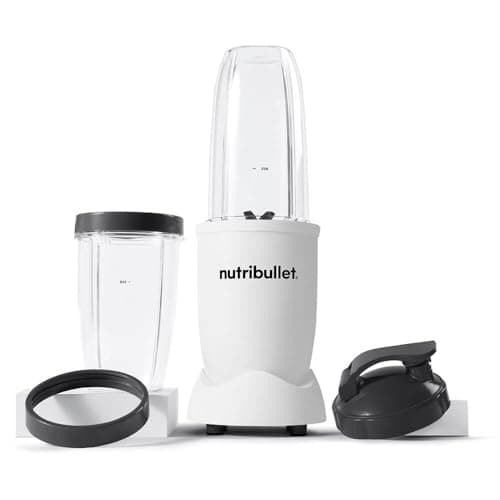
NutriBullet NutriBullet Pro (900 W)
NutriBullet Pro (900 W)

The default bullet blender, and a good one. Note that NutriBullet's own product page contradicts itself about which cups are in the box.

Everyday shakes
7.4
$69.99Amazon
02
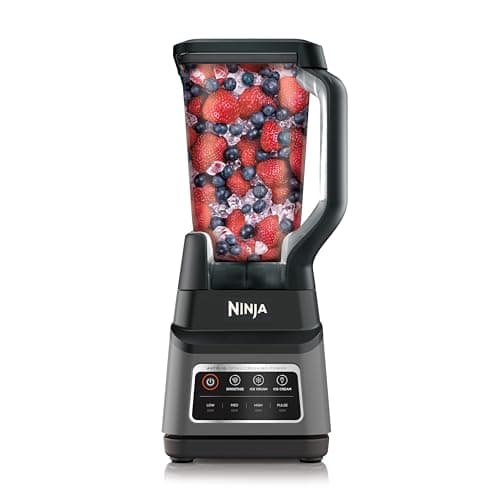
Ninja Ninja Professional Plus BN701
Ninja Professional Plus BN701

The one brand here that publishes both a continuous and a peak wattage instead of only the flattering one. A large pitcher and real power for about a fifth of the premium price.

Most kitchens
7.6
$99.95Amazon
03
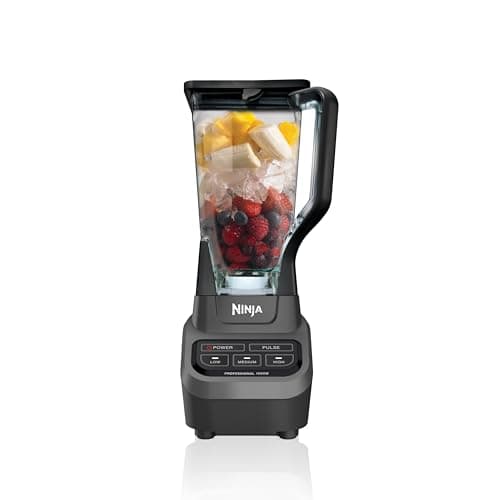
Ninja Ninja Professional Blender BL610
Ninja Professional Blender BL610

The default budget recommendation of the last decade, and now a machine whose own manufacturer no longer publishes a spec page for it. Cheap and capable; poorly documented.

Spending as little as possible
6.2
$99.00Amazon

#ad · Prices pulled live from the Amazon Product API, last checked Aug 18, 2026. Where we have no verified live price we show none — we would rather leave a gap than print a number that has gone stale. Scores are our own, compiled from published specs; they are not test results.

If you blend one serving and drink it from the vessel, buy the bullet. If you blend for more than one person or want one machine covering everything, buy the Ninja pitcher. The wattage gap — 900 W against 1,000 to 1,200 W — matters far less than it looks, because the bullet’s inverted cup puts gravity on the blades’ side in a way a pitcher cannot.

Why the bullet beats its own spec sheet

A bullet blender screws its cup onto the base upside down. The blade therefore sits at the top of the ingredients with all of the food pressing down onto it, and the cup is narrow enough that there is nowhere for anything to escape to. A pitcher blender has the opposite arrangement: the blade is at the bottom, the food is above it, and the machine has to create a vortex to drag everything down.

That is why a 900 W NutriBullet handles a cup of frozen fruit more capably than the number suggests against a 1,000 W pitcher. It is not that the motor is under-rated — it is that the geometry does part of the work the motor would otherwise have to do. It is also why loading order is reversed in a bullet cup: hard and frozen ingredients go in first, liquid last, so that everything ends up correctly placed once inverted.

The limit is equally structural. A narrow cup gives a thick, low-liquid load nowhere to move, so it stalls where a wide pitcher would keep going. And you cannot scale it: a 32 oz cup is one serving, and refilling it three times is worse than owning a pitcher.

Running cost assumes 3 minutes a day, 365 days a year at 17.45¢ per kWh (US EIA, Electric Power Monthly — average residential price, US total, retrieved July 2026). Motor and capacity figures are in each manufacturer’s own words.
MachinePublished motorVesselWarrantyCost / year
NutriBullet Pro (900 W)900 W, no qualifier publishedTwo 32 oz cups, inverted1 year, excludes cups$2.87
Ninja Professional Plus BN7011,200 W continuous / 1,400 W peak64 oz max liquid1 year$3.82
Ninja Professional Blender BL6101,000 W (motor-base part listing)72 oz pitcher1 year$3.18

One note on the BL610 row: SharkNinja has withdrawn the product page for that model, so the 1,000 W figure comes from the listing for its replacement motor base and the 72 oz pitcher figure from the compatible replacement pitcher part. Those are still manufacturer documents, which is why we publish them — but a machine whose own page is gone is worth knowing about before you buy.

The three questions that decide it

1. How many people are you blending for?

One: bullet. Two or more, or one person who batches: pitcher. This single question settles most cases, and everything below is a tie-breaker.

2. Do you drink it, or cook with it?

A bullet cup is a drinking vessel with a blade on it. That is the entire proposition, and it is a good one — blend, twist off, put a lid on, leave. If what you want out of the machine is soup, sauce, a batch of frozen drinks or nut butter, a cup is the wrong shape and a pitcher is the right one. And a sealed bullet cup must never see hot liquid at all: here is why.

3. How thick is your usual load?

Thin to medium — powder, liquid, soft fruit, a handful of frozen berries — the bullet is genuinely fine and quicker to clean. Thick and low-liquid — smoothie bowls, nut butter, a frozen brick with a splash of milk — neither of these machines is right, and the answer is a machine with a tamper. See the high-power ranking.

NutriBullet Pro — the default bullet, and a good one

900 watts, two 32 oz cups, and the inverted-cup advantage above. Replacement cups, lids and blade assemblies are widely sold, which matters because the gasket in the blade assembly is the usual failure point. NutriBullet’s one-year warranty excludes cups and accessories, so treat those as consumables rather than covered parts. Full detail in the Pro review.

Ninja Professional Plus BN701 — the pitcher to compare it against

1,200 watts published as a continuous figure, 64 oz of stated maximum liquid, and Auto-iQ programs that stop by themselves. It is the machine that makes the case for the pitcher form factor: a family batch in one go, with a documented motor rating rather than a bare peak number. One year of warranty is the honest weakness.

Ninja Professional Blender BL610 — the cheapest way into a pitcher

1,000 watts and a 72 oz pitcher at the lowest price of the full-size Ninjas, and for most everyday blending the gap to the BN701 is smaller than the price gap. The caution is documentation: SharkNinja has withdrawn its product page, so every figure we publish comes from parts listings rather than a live spec sheet. See the BL610 review.

The short version.The bullet is not a worse blender than the Ninja — it is a different tool with a smaller job, and within that job the inverted cup makes it more capable than its wattage suggests. Pick by serving size first, vessel second, thickness third. And if you genuinely want both, a machine like the Ninja DUO puts a pitcher and cups on one base — see the combo page.
In detail

The picks, in full

01
NutriBullet NutriBullet Pro (900 W)

Everyday shakes

NutriBullet Pro (900 W)

Blend-and-go cupCups not covered by warranty
7.4/10

The default bullet blender, and a good one. Note that NutriBullet's own product page contradicts itself about which cups are in the box.

Warranty
3.5
Frozen
7.5
Convenience
9.5
Cleaning
8
Value
8.5

What it gets right

  • Inverted cup design puts gravity on the blades' side, which is genuinely why bullet blenders handle frozen fruit better than their wattage suggests
  • You drink from the vessel you blended in — the entire reason to own one
  • Replacement cups, lids and blade assemblies are widely sold, which matters because the gasket is the usual failure
  • 900 W is real power for a single serving

What it doesn't

  • One-year warranty, and it explicitly excludes the cups and accessories — the parts that actually fail
  • Two 32 oz cups and nothing smaller, so a single modest shake is blended in a vessel bigger than it needs
  • Sealed cup: not for hot liquid, and the manual says so

What it costs to run

About $2.87 a year in electricity, at 3 minutes a day, 365 days a year and 17.45¢ per kWh.

NutriBullet publishes '900 watts of power' with no peak or continuous qualifier, and lists a 900 W motor base in the box contents. We take it at face value and note the absence of a qualifier. The full arithmetic is published.

Skip this if…

you make anything thick — nut butter, low-liquid smoothie bowls, dough. The narrow cup gives a thick mixture nowhere to move and the motor nowhere to cool.

$69.99on Amazon

$99.9930% off

Price last checked Aug 18, 2026. Prices move constantly — Amazon's at checkout is the one that counts.

#ad · we may earn a commission from this link to NutriBullet Pro (900 W)

02
Ninja Ninja Professional Plus BN701

Most kitchens

Ninja Professional Plus BN701

Publishes continuous watts1-year warranty
7.6/10

The one brand here that publishes both a continuous and a peak wattage instead of only the flattering one. A large pitcher and real power for about a fifth of the premium price.

Warranty
4
Thick loads
6.5
Frozen
8
Capacity
9
Value
9.5
Convenience
8.5

What it gets right

  • Publishes a continuous wattage as well as a peak one, which almost nobody else in this list does — it makes the machine genuinely comparable
  • 64 oz of usable liquid capacity, enough for a family batch in one go
  • Auto-iQ programs stop on their own, which matters more than it sounds when you are doing something else
  • Costs roughly a fifth of the premium machines and does the everyday smoothie job

What it doesn't

  • One year of warranty against Vitamix's seven — the clearest expression in this whole category of what the price difference actually buys
  • No tamper, so a thick low-liquid load has to be managed by stopping and scraping
  • Stacked blade assembly is more surfaces to wash than a single fixed blade

What it costs to run

About $3.82 a year in electricity, at 3 minutes a day, 365 days a year and 17.45¢ per kWh.

Ninja publishes both figures separately — 1,200 watts continuous and 1,400 watts peak. We use the continuous number for the running-cost arithmetic because that is what the motor actually draws in use. The full arithmetic is published.

Skip this if…

you make nut butter or thick smoothie bowls regularly — without a tamper you will spend the session stopping, scraping and restarting, and the one-year warranty is not much comfort under that kind of load.

$99.95on Amazon

$109.999% off

Price last checked Aug 18, 2026. Prices move constantly — Amazon's at checkout is the one that counts.

#ad · we may earn a commission from this link to Ninja Professional Plus BN701

03
Ninja Ninja Professional Blender BL610

Spending as little as possible

Ninja Professional Blender BL610

Cheapest capable full-sizeManufacturer page withdrawn
6.2/10

The default budget recommendation of the last decade, and now a machine whose own manufacturer no longer publishes a spec page for it. Cheap and capable; poorly documented.

Warranty
4
Documentation
3
Frozen
7.5
Value
9.5
Convenience
7

What it gets right

  • Consistently the least you can spend on a full-size machine that genuinely handles frozen fruit
  • Simple three-speed control with no programs to learn
  • Very widely sold, so replacement jars and blade assemblies are easy to find

What it doesn't

  • SharkNinja has withdrawn the product page, so the capacity and other figures circulating for it cannot be confirmed against a manufacturer source — we will not repeat them as specs
  • One-year warranty
  • No tamper, and the stacked blade tower makes washing fiddly

What it costs to run

About $3.18 a year in electricity, at 3 minutes a day, 365 days a year and 17.45¢ per kWh.

SharkNinja no longer publishes a product page for the BL610. The 1,000 W figure comes from their own listing for the model's replacement motor base, which is a manufacturer source even though it is not a spec sheet. Treat it as weaker evidence than the BN701's published table. The full arithmetic is published.

Skip this if…

you want documented specifications — this is the one machine in our list whose manufacturer no longer publishes a page for it, and on a site built around sourcing that is a real mark against it.

$99.00on Amazon

$109.9910% off

Price last checked Aug 18, 2026. Prices move constantly — Amazon's at checkout is the one that counts.

#ad · we may earn a commission from this link to Ninja Professional Blender BL610

How we picked

Blenders we claim to have tested: 0

Every site in this category tells you they blended twenty smoothies. We have not blended any, and we say so. Here is what we do instead: read the manufacturer's manual and spec sheet, record the published motor rating, jar capacity and warranty term, verify the warranty against the manufacturer's own warranty document, work out what the machine costs to run for a year and show the arithmetic, and cite all of it so you can check the work. Prices come live from Amazon's API and disappear rather than go stale.

The scores above are judgments from that documented research — not test results. The full rubric, including what disqualifies a product, is published in full.

Questions

Frequently asked

Is a bullet blender as good as a Ninja?

For one serving, yes — and its inverted cup makes it handle frozen fruit better than the wattage gap suggests, because gravity presses the load onto the blade. For a batch, for hot food, or for thick low-liquid mixtures, the pitcher wins clearly.

Why does a 900 W bullet keep up with a 1,000 W pitcher?

Geometry. The cup goes on the base upside down, so the blade sits above the load with everything pressing onto it, and the narrow walls give nothing anywhere to escape to. A pitcher has to build a vortex to drag food down to a blade at the bottom.

Can a bullet blender replace a full-size blender?

Only if you blend one serving at a time and never blend hot. A 32 oz cup will not do a family smoothie, a batch of frozen drinks or soup, and a sealed blend-and-go cup should never be used for hot liquid at all.

Does Ninja make a bullet blender?

Ninja sells single-serve machines and cup attachments, and the Professional Plus DUO BN751 pairs a full-size pitcher with single-serve cups on one base. That is the honest answer to wanting both form factors without owning two machines.

Keep reading

Receipts

Sources

We do not run a testing lab and we do not pretend to. Specifications come from the manufacturer's own published documents and from published standards; prices come from the live Amazon API. Where a figure is not published, the page says “not published” rather than guessing. Read the full method.