Skip to content
BasketBlade

HUB 02 · Countertop Blenders

The Best Commercial Blenders for a Cafe

Every household warranty in our catalog is void the moment the machine earns money, and one manufacturer publishes the exact threshold it uses to decide. Four foodservice machines ranked on what a counter actually runs into: warranty validity, published daily volume, noise, and how much counter they eat.

By Stephen V.Updated How we pick
#ad

We earn a commission if you buy through our links. It does not change the price you pay, and it does not decide our picks — our selection criteria are published in full. How this works.

The short answer

Quick picks

#ProductBest forScorePrice
01
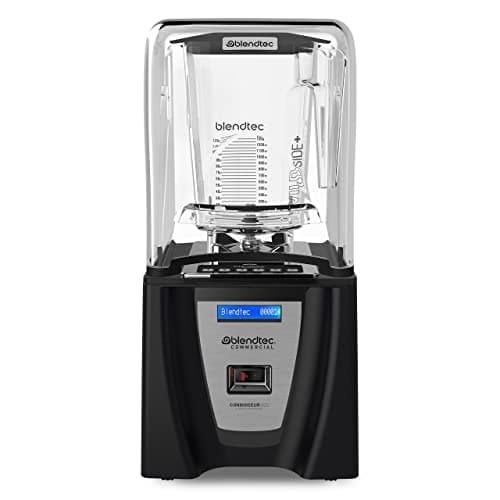
Blendtec Blendtec Connoisseur 825
Blendtec Connoisseur 825

The one machine in this catalog whose maker publishes a daily volume figure for it: 150+ blends a day, programmed so a new hire cannot blend it wrong. The sound enclosure is the reason it works front of house.

A busy smoothie counter
8.2
$1,098.09Amazon
02
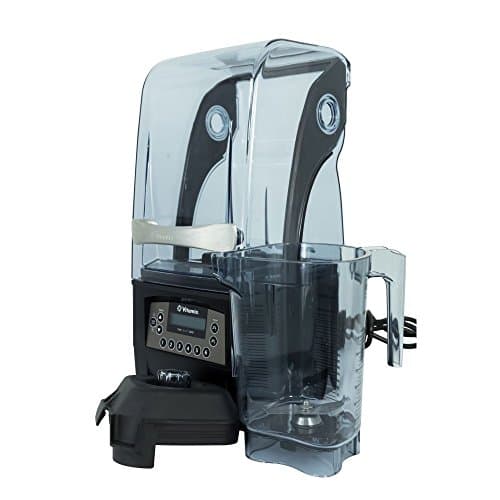
Vitamix Vitamix The Quiet One
Vitamix The Quiet One

Six buttons, thirty-four settings and a patented noise-reduction shell. A 15-amp machine in a 48-ounce jar, built for a counter where the blender sits three feet from a paying customer.

Front-of-house, close to the customer
8.1
$1,158.05Amazon
03
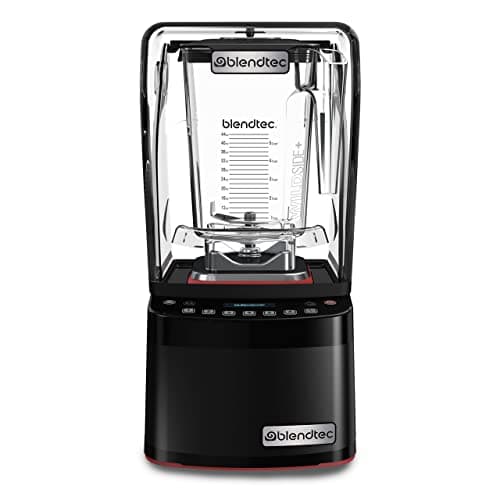
Blendtec Blendtec Stealth 885
Blendtec Stealth 885

Blendtec's quiet-room machine: the same 1800 W motor as the 825 in a shell the maker says runs 'at a sound level comparable to a normal conversation', with a USB port for loading your own recipes.

A quiet room with a fixed menu
8.1
$1,297.64Amazon
04
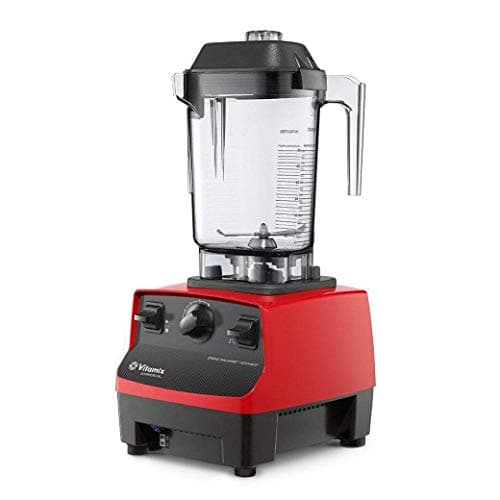
Vitamix Vitamix Drink Machine Advance
Vitamix Drink Machine Advance

The cheapest way into a warranty that survives commercial use. Smaller motor, six programs, no noise treatment — and roughly half the price of everything else here.

A first commercial machine
7.8
$474.96Amazon

#ad · Prices pulled live from the Amazon Product API, last checked October 31, 2026. Where we have no verified live price we show none — we would rather leave a gap than print a number that has gone stale. Scores are our own, compiled from published specs; they are not test results.

Buy the Blendtec Connoisseur 825. It is the only machine on this page whose manufacturer publishes a daily volume figure for it — 150+ blends — and the sound enclosure that makes a blender usable in front of seated customers comes with the machine rather than as a line item. The Vitamix The Quiet One is the pick if the blender sits within three feet of a paying customer and the room is quiet. The Vitamix Drink Machine Advance is the cheapest way to own a warranty that survives commercial use, at roughly half the price of everything else here.

Before you spend four figures, check whether you need to. Blendtec publishes the threshold it uses to decide that a blender has been used commercially: more than 3,000 cycles in a year. That is about eight blends a day. Under that number, a household machine is still inside its own warranty terms and a commercial machine is an expensive way to be slightly faster. Over it, you are running an out-of-warranty appliance in a business, and the first motor failure is yours to pay for.

The line between a home blender and a cafe blender is published

This is the fact the rest of the category will not put in front of you, and it is the only reason this page exists as something other than a list of expensive blenders.

Vitamix’s household warranty — the seven-year term that sells the 5200, and the ten-year term on the Ascent line — is, in its own words, extended by Vitamix to the owner of this Machine for personal household use only. A later clause is blunter: it does not apply to products used for commercial, rental or re-sale purposes, and a third says it does not apply to Machines that have been used commercially or in non-household applications. Three separate sentences, all saying the same thing. The warranty you paid a premium for stops at the moment you charge someone for the smoothie.

Blendtec says the same thing and then does something almost nobody does: it publishes the test. Its residential schedule states that commercial use is also not covered, and then tells you how it decides — a machine with more than 3,000 cycles in a yearis presumed to have been used commercially. Divide it out. Three thousand cycles across 365 days is 8.2 blends a day. Across a six-day trading week it is about 9.6. That is one number, from one manufacturer, and it is the clearest answer in the category to the question “do I actually need a commercial blender?”

Two consequences follow, and they point in opposite directions. If your cafe sells half a dozen blended drinks on a good day, a household machine remains inside its terms, and the best high-power domestic blenders will serve you for a quarter of the money. If you sell more than that, the household warranty is already gone whether or not anyone has told you, and the three-year commercial term on every machine below is not a downgrade from seven years — it is the first warranty you have actually owned.

The criteria, in the order they matter for a counter

1. A warranty written for a business

Everything above is this criterion. All four machines here carry three years, and in both Vitamix cases that term covers motor base parts, with labor and the container covered for one year — the headline figure is not the whole figure, and the Vitamix commercial pages say so plainly. Blendtec states a flat three-year warranty on both commercial models without that split. The difference is worth more than any spec on this page, because the failure you are insuring against is a motor that has done twenty thousand cycles, and the labor to replace one is not trivial. Blender warranties compared puts every household term in this catalog in one table for contrast.

2. A published duty volume — which only one maker gives you

A cafe buyer needs to know how many drinks a day the machine is built for. Exactly one machine here answers: the Connoisseur 825, at 150+ recommended daily blends, on Blendtec’s own page. Vitamix publishes no equivalent figure for either commercial machine, and Blendtec does not repeat it on the Stealth. We will not infer one — a number invented for the other three would be exactly the kind of fabricated spec this site exists to avoid. What it means practically: the 825 is the only machine on this page you can size against a service rate before you buy it.

3. Noise, and how far the machine sits from a seated customer

In a cafe this is not a comfort question, it is a trading question — a blender running every ninety seconds beside a four-top is the reason the four-top leaves. Three of these four machines are sold partly on noise, and not one of them publishes a decibel figure. Blendtec’s Stealth claims it operates at a sound level comparable to a normal conversation, which is at least a picture you can hold. Vitamix calls The Quiet One’s treatment Patented Noise Reduction and the machine one of unparalleled sound reduction, which is an adjective. The Connoisseur 825 says its enclosure cuts down on blender noise, helping ensure an undisrupted atmosphere. The Drink Machine Advance states no noise treatment at all.

The useful distinction is architectural rather than numerical. The Blendtecs put the quiet in a sound enclosure— a hinged box around the jar — which works well, and adds width and a lid you have to open. Vitamix builds the damping into the machine, which keeps the footprint to 8.5 inches but means the whole unit, not an accessory, is what you are buying. If you have ever wondered why a domestic machine is so much louder than either, why blenders are so loud covers the mechanism, and the quietest domestic blenders is the home version of this ranking.

4. Programs, because the operator changes every shift

A home blender is used by one person who learns it. A cafe blender is used by whoever is on, including the person on their second day, and the drink has to taste the same. That is what preprogrammed cycles are for, and it is the biggest practical difference between these machines and the domestic range: the 825 lists 50 cycles plus pulse, the Stealth lists 42 plus a USB port and up to 14 custom programs you write yourself, The Quiet One has six buttons driving 34 optimized settings, and the Drink Machine Advance has six programs with automatic shut-off.

A caution on those counts, because we would rather you heard it here. Blendtec’s own Stealth page states 50 preprogrammed cycles in its feature list and 42 in the model section, on the same page. We have quoted each page as it stands and flagged the contradiction rather than picking the flattering number. Treat the exact cycle count on any Blendtec commercial machine as approximate until the unit is in front of you.

5. Jar size, which decides throughput more than the motor does

Both Vitamix commercial machines run a 48-ounce container. That is smaller than the 64-ounce jar on a domestic Vitamix 5200, and it is the constraint that shows up at 9am rather than the horsepower. The Blendtecs do not publish a jar capacity on their product pages at all; the listings we link bundle 96-ounce and 90-ounce WildSide+ jars respectively, but that is a seller’s description and we are not going to print it as a specification.

The practical point stands regardless of the exact number: a 48-ounce jar makes two large smoothies, and a queue of six is three fills, three lids and three rinses. Buy a second jar whatever you choose. It is the cheapest throughput you will ever buy, and it is how every busy counter actually runs — blend, swap, rinse the first one while the second runs. If your menu runs to thick, low-liquid items — nut butters, hummus, acai bases — read what each maker publishes about blending without liquid before you choose the jar, because the tool for that job is a container, not a bigger motor.

6. Footprint, height and the circuit behind the counter

Three of these four machines publish real dimensions, which is more than most of the domestic range manages. The Drink Machine Advance is the narrowest at 7.52 inches wide and the lightest at 11.5 lbs. The Stealth is 8.6 inches wide, 9.0 deep and 17.3 tall at 18.1 lbs. The Quiet One is 8.5 wide and 18.0 tall — and publishes the number that actually decides whether it fits, 24.5 inches with the lid open. Almost nobody prints that, and it is the measurement that stops a machine going under a shelf. Blendtec publishes no dimensions at all for the Connoisseur 825.

Then the circuit. The Quiet One draws 15.0 A and the Connoisseur 825 draws 15 amps— on a standard 15 A circuit, each of those is the whole circuit. The Drink Machine Advance draws 11.5 A, which leaves real headroom. If you are putting a blender next to an espresso machine and a grinder on one run, that difference is not academic; it is whether the breaker holds through the morning. Blender wattage explained covers why amperage is the honest number and advertised watts usually are not.

7. What we could not verify, named rather than quietly skipped

Two makers that belong in this comparison are not ranked, and the reason is ours rather than theirs. Hamilton Beach Commercialsells the Tempest and Rio lines straight into this market, and on the day we built this page its entire website was serving a maintenance notice — no product pages, no spec sheets, nothing to cite. Waring Commercialsells the MX1000XTX Xtreme into exactly this slot, and its product page would not resolve for us at all. Retailer listings for both are easy to find and we are not going to use them: a distributor’s spec table is not a manufacturer document, and the retailer figures for these two models visibly disagree with each other on wattage, RPM and warranty length. When those pages come back they are worth your attention — both brands sit below the machines ranked here on price.

We also do not publish an NSF certification claim for any machine on this page. Foodservice machines are routinely NSF listed and these very likely are, but neither Vitamix commercial page nor either Blendtec page states it, and if a health inspection depends on the listing you should get it from the manufacturer rather than from us.

What we have not done

We have not run any of these machines, in a cafe or anywhere else. We own no commercial blender, we have blended nothing, timed nothing and measured no sound level. Everything above is read off manufacturer documents, plus arithmetic we show our working for — the 3,000-cycle division, and the volts-times-amps conversions behind the wattage figures on the cards. Where a maker publishes nothing, the spec line says “not published” rather than filling the gap. How we pick is the full method.

There is also no annual running-cost figure on this page, which regular readers will notice is unusual for us. Our running-cost arithmetic assumes three minutes a day of household use, and that assumption is simply wrong for a counter doing fifty drinks. No manufacturer here publishes a duty figure we could substitute, so rather than print a number that looks precise and means nothing, we have left it out.

In detail

The picks, in full

01
Blendtec Blendtec Connoisseur 825

A busy smoothie counter

Blendtec Connoisseur 825

Maker publishes a daily duty figureSound enclosure includedProgrammed, not operator-dependentNo jar capacity on the spec pageNo decibel figure published
8.2/10

The one machine in this catalog whose maker publishes a daily volume figure for it: 150+ blends a day, programmed so a new hire cannot blend it wrong. The sound enclosure is the reason it works front of house.

Warranty
8
Frozen
9.5
Thick loads
9
Documentation
6
Value
7
Convenience
9.5

What it gets right

  • Blendtec publishes a recommended daily volume for it — 150+ blends — which is the number a cafe actually needs and almost nobody prints
  • Fifty preprogrammed cycles plus pulse, so the drink is the same whoever is on shift and the operator does not have to judge a stop time
  • The sound enclosure ships with the machine rather than as an accessory, which is the difference between a blender you can run beside a seated customer and one you cannot
  • Rated for countertop or in-counter installation, so it can be dropped into a bar top rather than occupying it
  • Three years of commercial warranty — a term that stays valid when the machine is earning money, unlike every household blender in this catalog

What it doesn't

  • Blendtec does not publish a jar capacity, dimensions or a weight on the product page; the listing we link bundles a 96 oz WildSide+ jar, but that is the seller's description, not a manufacturer specification
  • No decibel figure anywhere — 'cuts down on blender noise' is the whole claim, and you cannot plan a room layout around a phrase
  • The 3.8 peak horsepower number is explicitly disclaimed in Blendtec's own footnote as not the operational figure
  • Blendtec's own site is inconsistent about cycle counts across its commercial range (50 on this page, 42 on the Stealth's), so treat the exact number as approximate
  • It is a four-figure purchase before you have bought a spare jar, and a spare jar is not optional in a cafe

What it costs to run

About $5.97 a year in electricity, at 3 minutes a day, 365 days a year and 18.16¢ per kWh.

Blendtec publishes 'Motor: 1800 Watt, 15 amps' on the Connoisseur 825's own page. It is a nameplate figure, and the same page's footnote warns that the 3.8 peak horsepower rating 'does not denote the operational horsepower of a blender'. The full arithmetic is published.

Skip this if…

…you are making fewer than about eight drinks a day — at that volume a household machine is still within its own warranty terms, and this costs three to four times as much to do the same job slower than you need.

$1,098.09on Amazon

Price last checked October 31, 2026. Prices move constantly — Amazon's at checkout is the one that counts.

#ad · we may earn a commission from this link to Blendtec Connoisseur 825

02
Vitamix Vitamix The Quiet One

Front-of-house, close to the customer

Vitamix The Quiet One

Patented noise reductionFull electrical rating publishedLid-open height published48 oz jar — smallest hereLabor covered for 1 year, not 3
8.1/10

Six buttons, thirty-four settings and a patented noise-reduction shell. A 15-amp machine in a 48-ounce jar, built for a counter where the blender sits three feet from a paying customer.

Warranty
7
Frozen
9
Thick loads
9
Documentation
8.5
Value
6.5
Convenience
8.5

What it gets right

  • Vitamix publishes the full nameplate — 120 V, 50-60 Hz, 15.0 A — so the real draw can be worked out rather than guessed from a marketing watt figure
  • Six buttons driving thirty-four settings means the operator presses a drink, not a speed, which is what consistency across a shift actually requires
  • The published lid-open height of 24.5 inches is the number that decides whether it fits under your shelf, and almost no maker prints it
  • Noise reduction is engineered into the machine rather than added as a separate enclosure, so the footprint stays small — 8.5 inches wide
  • At 19.2 lbs it is heavy enough to stay put on a wet counter without being a two-person lift

What it doesn't

  • A 48-ounce container is the smallest on this page — a batch of four large smoothies is two passes
  • The warranty is three years on motor base parts but only one year on labor, and one year on the container and blade assembly, so the headline term is not the whole term
  • No decibel figure for a machine sold entirely on being quiet, which is a strange omission
  • It is priced like the Blendtecs without their programmable-cycle depth or published daily-volume rating
  • Vitamix does not list an NSF or other foodservice certification on this page, so if your inspector asks for one you will need to request it

What it costs to run

About $5.97 a year in electricity, at 3 minutes a day, 365 days a year and 18.16¢ per kWh.

Vitamix publishes no watt figure for The Quiet One. It publishes 120 V, 50-60 Hz, 15.0 A, and 120 x 15.0 = 1,800 W is our arithmetic from that nameplate rating, shown so it can be checked. It is a maximum draw, not a continuous operating figure. The full arithmetic is published.

Skip this if…

…you batch for a queue — 48 ounces is the smallest jar on this page and the two Blendtecs ship with jars nearly twice the size, which matters more than motor power once there are six people waiting.

$1,158.05on Amazon

Price last checked October 31, 2026. Prices move constantly — Amazon's at checkout is the one that counts.

#ad · we may earn a commission from this link to Vitamix The Quiet One

03
Blendtec Blendtec Stealth 885

A quiet room with a fixed menu

Blendtec Stealth 885

Quietest claim in the catalogCustom programs via USBDimensions and weight publishedNo decibel figureBlendtec's own page contradicts itself on cycle count
8.1/10

Blendtec's quiet-room machine: the same 1800 W motor as the 825 in a shell the maker says runs 'at a sound level comparable to a normal conversation', with a USB port for loading your own recipes.

Warranty
8
Frozen
9.5
Thick loads
9
Documentation
7
Value
6
Convenience
9

What it gets right

  • The only machine here whose maker makes a specific noise claim you can picture — a sound level comparable to a normal conversation — rather than an adjective
  • A USB port and BlendWizard let you write your own cycles and store up to fourteen of them, so a signature drink becomes a button rather than a training problem
  • Blendtec publishes real dimensions and a weight for it, which the Connoisseur 825's page does not — you can plan the under-counter clearance before you buy
  • Same 1800 W motor platform as the 825, so the capability is not being traded away for the quieter shell
  • Three-year commercial warranty, valid in a business, which no household machine's warranty is

What it doesn't

  • No decibel figure anywhere, so 'comparable to a normal conversation' cannot be checked or compared against another maker's number
  • Blendtec's own Stealth page says 50 preprogrammed cycles in its features list and 42 in the model section — the maker is inconsistent with itself on the same page
  • Jars are a separate decision; the listing we link bundles a 90 oz WildSide+ jar, but Blendtec does not state a capacity on the product page
  • No published daily-blend figure for this model, unlike the 825, so the duty guidance has to be inferred from the shared motor
  • It is the most expensive machine on this page, and the premium buys quiet rather than throughput

What it costs to run

About $5.97 a year in electricity, at 3 minutes a day, 365 days a year and 18.16¢ per kWh.

Blendtec publishes 'Motor: 1800 Watt, 120V/220V available' on the Stealth's own page. No amperage is given for this model, and the page's peak-horsepower footnote applies to the range rather than to a figure printed for the 885. The full arithmetic is published.

Skip this if…

…noise is not your constraint — the Connoisseur 825 is the same motor with a published daily-volume rating for less money, and you are paying here specifically for a room where a blender cannot be heard over the conversation.

$1,297.64on Amazon

Price last checked October 31, 2026. Prices move constantly — Amazon's at checkout is the one that counts.

#ad · we may earn a commission from this link to Blendtec Stealth 885

04
Vitamix Vitamix Drink Machine Advance

A first commercial machine

Vitamix Drink Machine Advance

Commercial warranty at the lowest price hereFull electrical rating published7.5 inches wide — narrowest hereNo noise treatment at allSmallest motor on the page
7.8/10

The cheapest way into a warranty that survives commercial use. Smaller motor, six programs, no noise treatment — and roughly half the price of everything else here.

Warranty
7
Frozen
7.5
Thick loads
7.5
Documentation
8.5
Value
8.5
Convenience
7.5

What it gets right

  • It is roughly half the price of the other three and still carries a warranty written for a business rather than a household
  • 7.52 inches wide and 11.5 lbs — the narrowest, lightest machine here, which matters on a cart or a crowded service line
  • Six programs with automatic shut-off cover the drinks a cafe actually repeats, without the training overhead of a fifty-cycle menu
  • Vitamix publishes the full nameplate rating, so the draw can be checked against your circuit before you add a second machine behind the counter
  • An 11.5 A draw leaves headroom on a 15 A circuit that the 15 A machines on this page do not

What it doesn't

  • 2.3 peak output horsepower against 3 for The Quiet One and 3.8 claimed for the Connoisseur — it is the slowest machine here on a jar of ice
  • No noise treatment of any kind is stated, so it is the loudest option on a page where two rivals are sold on being quiet
  • Same 48-ounce jar as The Quiet One, so it does not buy back any batch size for the money saved
  • One year on labor and one year on the container, like the rest of the Vitamix commercial range — the three-year figure covers motor base parts only
  • No daily-blend rating published, so there is no manufacturer guidance on how hard it can be pushed

What it costs to run

About $4.57 a year in electricity, at 3 minutes a day, 365 days a year and 18.16¢ per kWh.

Vitamix publishes no watt figure for the Drink Machine Advance. It publishes 120 V, 50-60 Hz, 11.5 A, and 120 x 11.5 = 1,380 W is our arithmetic from that nameplate rating, shown so it can be checked. It is a maximum draw, not a continuous figure. The full arithmetic is published.

Skip this if…

…the blender lives within earshot of seated customers — nothing on this page is louder, and the two machines sold on silence cost roughly twice as much for exactly that reason.

$474.96on Amazon

Price last checked October 31, 2026. Prices move constantly — Amazon's at checkout is the one that counts.

#ad · we may earn a commission from this link to Vitamix Drink Machine Advance

Buying for a cafe: the decisions in order

First, count your blends

Everything turns on one number, and you already have it. Count the blended drinks you sell on an average day, then multiply by your trading days. Under roughly 3,000 a year — eight a day — Blendtec’s own threshold says you are still a domestic user in warranty terms, and the honest advice is to buy a strong household machine and keep the difference. Over it, the premium is not for speed, it is for a warranty that exists and a motor built for the duty. How long blenders last is the longer version of that argument with the domestic numbers in it.

Second, decide where the machine stands

If it is behind a wall or in the back, buy on power and jar size and ignore the noise premium entirely — the Drink Machine Advance does that job for half the money. If it is on the service counter facing the room, noise becomes the primary specification and you are choosing between an enclosure (Blendtec) and built-in damping (Vitamix). Measure the gap under your shelf before you choose: an enclosure needs clearance to open, and The Quiet One needs 24.5 inches with its lid up.

Third, decide whether the menu is fixed

A fixed menu of six drinks is a programs question, and both Vitamix machines answer it with six buttons. A changing menu, or a signature drink you want identical every time, is what the Stealth’s USB port and stored custom cycles are for. A cafe with high staff turnover gets more from programmed cycles than from any amount of horsepower, because the variable you are trying to remove is the operator, not the ice.

Fourth, budget for the second jar and the consumables

A spare container is not an accessory in a commercial setting, it is the throughput. Budget for one at the time of purchase, and note that on both Vitamix machines the container and blade assembly carry a one-year warranty rather than the three-year motor base term — a jar is a wearing part in this duty and they are priced accordingly. Cleaning between flavors is the other hidden cost of a busy counter; how to clean a blender covers the thirty-second method, and what each manufacturer says about the dishwasher matters more here than at home, because a commercial kitchen has a dishwasher and the temptation to put everything through it.

Fifth, check the circuit before the delivery arrives

Two of these four machines are rated at 15 amps. A standard 15 A circuit will run one of them and nothing else of consequence. If the blender shares a run with an espresso machine, a grinder or a toaster, have an electrician look at it before the blender turns up — this is the most common and most avoidable surprise in a small cafe fit-out, and far cheaper to find out in advance.

And if you decide you do not need one

That is a legitimate outcome of this page, and probably the right one for a cafe blending a handful of drinks a day. Read is a Vitamix worth it and Blendtec vs Vitamix on the domestic side, and go in knowing the one thing this page exists to tell you: whichever household machine you buy, its warranty is written for a kitchen, not a counter, and the manufacturer has said so in print.
How we picked

Blenders we claim to have tested: 0

Every site in this category tells you they blended twenty smoothies. We have not blended any, and we say so. Here is what we do instead: read the manufacturer's manual and spec sheet, record the published motor rating, jar capacity and warranty term, verify the warranty against the manufacturer's own warranty document, work out what the machine costs to run for a year and show the arithmetic, and cite all of it so you can check the work. Prices come live from Amazon's API and disappear rather than go stale.

The scores above are judgments from that documented research — not test results. The full rubric, including what disqualifies a product, is published in full.

Questions

Frequently asked

What is the best commercial blender for a cafe?

The Blendtec Connoisseur 825, on the combination of a published 150+ recommended daily blends, 50 preprogrammed cycles, a sound enclosure included with the machine and a flat three-year commercial warranty. The Vitamix The Quiet One is the alternative where the blender sits close to seated customers, and the Vitamix Drink Machine Advance is the cheapest machine here carrying a warranty valid in a business.

Do I really need a commercial blender for a coffee shop?

There is a published threshold, and it is the most useful number in the category. Blendtec presumes commercial use above 3,000 cycles in a year— about eight blends a day — and its residential warranty does not cover commercial use. Vitamix’s household warranty is for “personal household use only” with no threshold stated at all. Under eight drinks a day, a domestic machine is within its terms. Above it, you are running an uninsured appliance.

Does using a home blender in a business void the warranty?

Yes, explicitly, for both brands we could check. Vitamix’s terms say the warranty “does not apply to products used for commercial, rental or re-sale purposes” and “does not apply to Machines that have been used commercially or in non-household applications”. Blendtec’s residential schedule says “commercial use is also not covered” and names 3,000 cycles a year as the point at which it presumes it. This is not a technicality buried in a PDF — it is on the public warranty pages.

How quiet are commercial blenders, in decibels?

No manufacturer on this page publishes a decibel figure, which is remarkable given that two of the machines are sold primarily on being quiet. The closest thing to a usable claim is Blendtec’s, that the Stealth operates “at a sound level comparable to a normal conversation”. Vitamix describes The Quiet One’s treatment as patented noise reduction without a number. We will not estimate one. Quiet domestic blenders has the same problem and says so.

Why aren't Hamilton Beach Commercial or Waring machines ranked here?

Because we could not reach a manufacturer document for either on the day we built this page. Hamilton Beach Commercial’s site was serving a maintenance notice site-wide, and Waring Commercial’s MX1000XTX product page would not resolve. Retailer listings exist for both and disagree with each other on wattage, RPM and warranty length, which is exactly why we do not rank from them. Both brands sell below the machines above and are worth revisiting.

Are these blenders NSF certified?

Quite possibly, but none of the four manufacturer pages we used states it, so we do not claim it. Foodservice machines in this class are commonly NSF listed; if an inspection depends on it, ask the manufacturer or distributor for the listing in writing before you buy, rather than taking it from a review page — including this one.

What size blender jar does a cafe need?

Both Vitamix commercial machines use a 48-ounce container, smaller than a domestic Vitamix 5200’s 64 ounces, and about two large smoothies per fill. Blendtec does not publish a jar capacity on either commercial product page. The answer that matters more than the number: buy a second jar. Swapping jars while the first one soaks is how a counter keeps up, and it is cheaper than a bigger machine. What size blender do I need works through the same question for a household.

What do professional kitchens actually use?

Restaurant kitchens and cafes buy differently — a kitchen wants food prep capability and does not care about noise, a cafe wants programmed drinks and silence. What blenders professional kitchens use covers the duty-cycle side of that question without ranking machines; this page is the cafe-facing half, with picks.

Keep reading

Receipts

Sources

We do not run a testing lab and we do not pretend to. Specifications come from the manufacturer's own published documents and from published standards; prices come from the live Amazon API. Where a figure is not published, the page says “not published” rather than guessing. Read the full method.