HUB 07 · Guides
What Blenders Do Professional Kitchens Use?
Vitamix and Blendtec, mostly - but not the machines they sell you. Commercial blenders are a separate line with duty-cycle ratings, sound enclosures and, surprisingly, shorter warranties than the household models.
We earn a commission if you buy through our links. It does not change the price you pay, and it does not decide our picks — our selection criteria are published in full. How this works.
Mostly Vitamix and Blendtec— but not the machines either company sells to households. Both run entirely separate commercial ranges, and the differences are not cosmetic: commercial units publish a recommended number of blends per day, draw up to a full 15 amp circuit, come with sound enclosures, and carry shorter warranties than the home models. That last point is the one worth taking home, and it is the opposite of what most people would guess.
What a commercial blender actually publishes
Take Blendtec’s Connoisseur 825, from its own commercial collection. Its product page publishes a motor of 1,800 watts and 15 amps, a figure for recommended daily blends of 150 or more, 30 preprogrammed cycles plus pulse, a countertop or in-counter installation choice, and a three-year warranty.
Three of those four numbers do not exist on any household machine in our catalogue. No home blender we have sourced publishes a duty-cycle figure of any kind — a recommended number of blends per day is exactly the specification a cafe needs and a household never asks for. Nothing here is rated at 15 amps, which is the entire capacity of a standard US kitchen circuit; the nearest is Vitamix’s 5200 at 11.5 amps. And 30 programmed cycles is a menu, not a feature list — a commercial machine is programmed around the drinks a particular shop sells.
It is worth saying what the blender is notdoing in those kitchens, too. A juice bar selling cold-pressed juice runs a juicer alongside it, because the two machines make different things out of the same fruit — the distinction is on blender vs juicer.
Vitamix runs the same split, with a separate commercial site and range standing apart from the household Classic, Explorian and Ascent lines.
The warranty inversion, and what it tells you
Blendtec covers that commercial machine for three years. Vitamix covers the household 5200 for seven years, full— parts, labour and shipping both ways — and the household Ascent X3 for ten. A machine built for 150 blends a day is covered for less than a third as long as a machine built for one.
That is not a contradiction. It is the clearest possible statement of what a warranty term actually measures: expected hours of use, not build quality. One hundred and fifty blends a day for three years is something like a hundred and sixty thousand blends. Two blends a day for seven years is about five thousand. The commercial term is the far more demanding promise, and the household term is partly a marketing instrument aimed at a buyer comparing numbers on a shelf.
It is also why we keep saying warranty length is a model-level fact rather than a brand-level one, and why reading the actual document is the whole job — blender warranties compared does that for every machine on this site.
The four things a commercial machine has that a home one does not
- A published duty cycle. The recommended-blends-per-day figure is the single most useful specification in the category and household buyers never get it. It is how a shop knows which model to buy.
- Electrical headroom.Up to 15 amps against 11.5 on the biggest household machine we hold, which also means a commercial unit may want a circuit of its own. That is a kitchen-wiring question, not a shopping one.
- Noise management.Sound enclosures exist on commercial units because a cafe cannot have a 1,800 W motor screaming over the counter forty times an hour. It is notable that this is the one part of the category where noise is engineered at all — not one manufacturer in our household catalogue publishes a decibel figure for any machine, as we complain about on best quiet blenders.
- Programmed cycles tuned to a menu. Thirty or more fixed cycles so that any staff member makes the same drink the same way. At home this is a solution to a problem you do not have.
Should you buy one for your kitchen?
Almost certainly not, and for four separate reasons.
The warranty is shorter. You would be paying several times the price of a household premium machine for a third of the cover, and household use is not what those three years were written for.
Household warranties generally assume household use.Vitamix’s full terms are written around normal wear and tear from ordinary household use — a phrase that cuts both ways. Buying a commercial machine for home does not get you the home warranty, and using a home machine commercially does not keep it.
The size and noise are real.In-counter installation options, a sound enclosure and a 15-amp draw are not features in a domestic kitchen, they are obstacles — and height is already the constraint that decides a lot of home purchases, as best blenders for small kitchens sets out.
You would not use the capability.A household blender that makes two drinks a day is using a fraction of a premium machine’s capacity, let alone a commercial one’s. Running cost will not save you either: at 3 minutes a day, 365 days a yeareven an 1,800 W motor comes to roughly $6.02 a year at the EIA average residential rate retrieved September 2026, against about $4.62for the 5200 — the gap is pennies, as it always is. The arithmetic is on how much a blender costs to run.
What to take from the professional spec sheet instead
The useful lesson is not which machine to buy; it is which questions a professional buyer asks that a household buyer does not. They ask how many times a day it is rated to run, how it is serviced, whether parts are stocked, and what the cover actually covers. They do not ask about peak wattage, because a duty cycle makes that number irrelevant.
Apply the same questions at home and you arrive at the household premium machines from the other direction: a tamper for thick loads, a term you have read, and a maker that sells parts. That is the case made on is a Vitamix worth it, and the ranked answer is on best high-power blenders. The brand-level survey, including who makes what, is on best blender brands.
What we are not claiming
We have not worked in a professional kitchen for the purposes of this page, we have not surveyed restaurants, and we publish no figure for market share or for what any particular chef uses. What this page rests on is what the two manufacturers publish about their own commercial lines, and the documented household terms we have already read. Where we have no document, we say so rather than filling the gap — the method is published in full.
The professional questions, applied to a home purchase
How often will it actually run?
Be honest, because the answer sets the budget. Two blends a day is a modest machine’s workload, and no amount of commercial-grade specification improves a daily smoothie. How much does a blender cost maps spending onto use.
Is there a tamper?
The one genuine capability gap between brackets, and the only reason a home kitchen needs a premium machine. Commercial units address thick loads the same way.
Are parts stocked and published?
The question a professional buyer asks first and a household buyer never asks. It decides whether a failure in year six is a repair or a replacement.
What does the document say, not the box?
Commercial pages publish a duty cycle and a term. Household pages publish peak watts. Read for the former wherever you can find it, and treat a wattage figure as the marketing number it usually is — blender wattage explained shows why.
The hardware
The hardware this guide is about
The products this guide refers to, with prices pulled live from Amazon and dated on every card. Full rankings live in the roundups linked above.
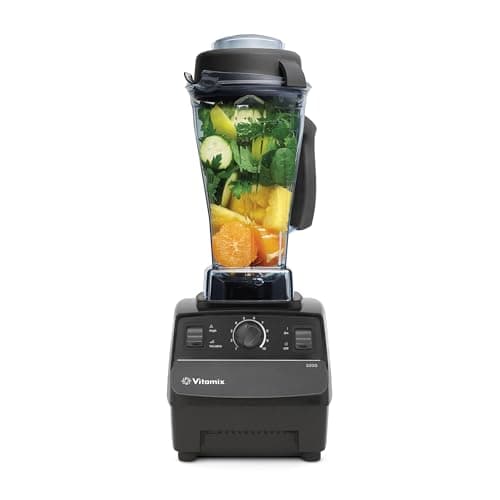
Buying once
Vitamix 5200
The seven-year warranty is the product. A machine with a fully variable dial, a tall narrow jar and a tamper, backed longer than almost anything else at any price.
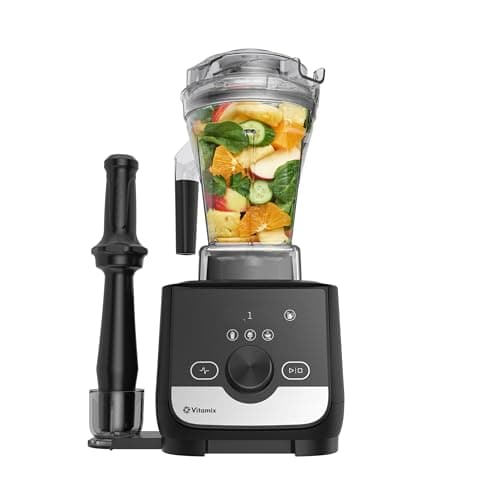
Buying once, under a cabinet
Vitamix Ascent X3
Ten years of full warranty, a tamper in the box, and the only full-size machine here that fits under a standard cabinet. The trade is a 48 oz jar instead of 64, at the highest price in the catalog.
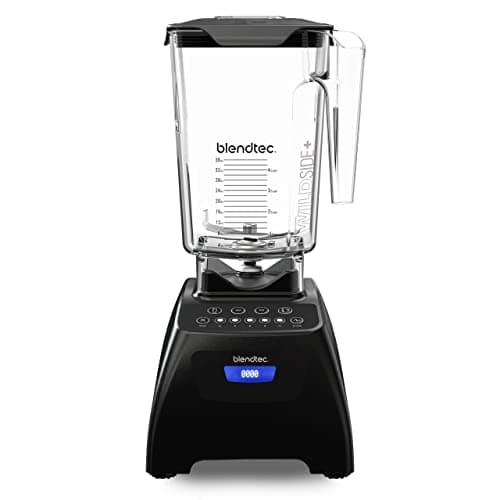
Cabinet clearance
Blendtec Classic 575
A 1,560-watt motor and a blunt, unremovable blade, in a jar short enough to fit under a cabinet. The warranty is two years, not the eight years the internet keeps repeating.
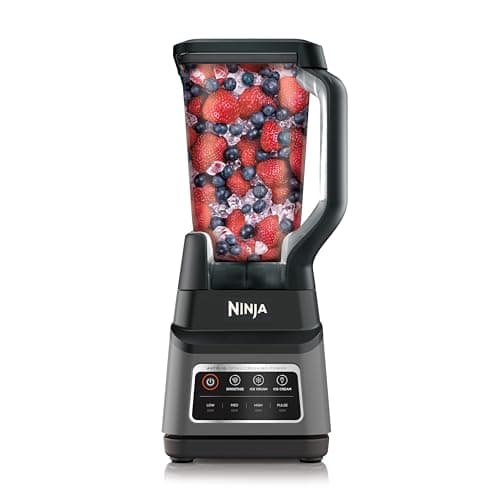
Most kitchens
Ninja Professional Plus BN701
The one brand here that publishes both a continuous and a peak wattage instead of only the flattering one. A large pitcher and real power for about a fifth of the premium price.
#ad · As an Amazon Associate we earn from qualifying purchases.
Questions
Frequently asked
What blender do professional chefs use?
Overwhelmingly Vitamix and Blendtec, but from their commercial ranges rather than the household models. Those machines publish things household models do not — Blendtec’s Connoisseur 825 lists 1,800 watts and 15 amps, 150-plus recommended blends a day and 30 programmed cycles. We publish no survey of restaurant kitchens and make no market-share claim.
Is a commercial blender better than a home blender?
For a shop, yes: it is rated for repeated use all day and comes with a sound enclosure and programmed cycles. For a home, it is mostly worse value — it costs several times a premium household machine and Blendtec’s commercial term is three years against seven on a household Vitamix 5200 and ten on the Ascent X3.
Why do commercial blenders have shorter warranties?
Because a warranty term is a bet on hours of use, not a statement of quality. Three years at 150-plus blends a day is a far larger number of blends than seven years at two a day. The household term partly exists to be compared on a shelf.
Can I use a commercial blender at home?
Physically yes, with caveats worth checking first: a 15-amp motor may want a dedicated circuit, in-counter models need installation, and the warranty you get is the commercial one, not the longer household term. For almost every domestic kitchen it is a worse purchase than a premium household machine.
Does using a home blender in a business void the warranty?
Read your own document, because it is where this is decided — household terms are typically written around normal wear and tear from ordinary household use, which is language about domestic use. That is one reason commercial lines exist separately. Every term we have read is set out on blender warranties compared.
Which home blender is closest to a commercial one?
The household premium machines from the same two brands, because they share the design language that matters: a fully variable speed, a tamper and a jar shaped to recirculate. The ranked answer is on best high-power blenders, and the Vitamix line is settled on Ascent X3 vs 5200.
Keep reading
Related
- GuidesThe hub this guide sits in.
- Best blender brandsWho makes what, at the brand level.
- Best high-power blendersThe household machines closest to the commercial design.
- Is a Vitamix worth it?The same questions asked about a domestic budget.
- Vitamix Ascent X3 vs 5200Ten years against seven, inside one household line.
- Blender vs juicerThe other machine a juice bar owns, and what it is for.
Receipts
Sources
- Blendtec — Connoisseur 825 commercial blender: 1800 watts / 15 amps, 150+ recommended daily blends, 3-year warranty
- Blendtec — commercial blenders collection
- Vitamix — commercial range (separate product line from the household machines)
- Vitamix — 5200 product page and specification table
- Vitamix — 7-Year Full Warranty terms
- Vitamix — 10-Year Full Warranty terms (Ascent)
- Blendtec — warranty schedule by model
- US EIA, Electric Power Monthly — average residential price, US total
We do not run a testing lab and we do not pretend to. Specifications come from the manufacturer's own published documents and from published standards; prices come from the live Amazon API. Where a figure is not published, the page says “not published” rather than guessing. Read the full method.