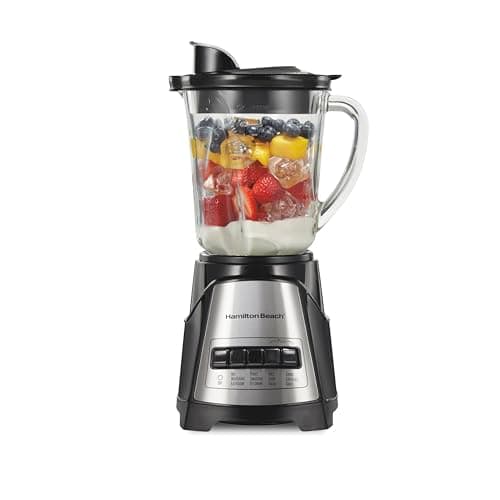
Buy the Hamilton Beach Power Elite. For a short-let kitchen it is the right answer for three reasons a home buyer would not weigh: it carries three years of US warranty(five in Canada) where the famous names carry one, its 40 oz jar is glassso it does not cloud or keep yesterday guest’s garlic, and it is cheap enough that replacing it is a decision rather than an event. The budget pick is the Magic Bullet 11-piece set, the least money in this catalog, for a studio where a guest wants a shake — with the honest caveat below about what 250 watts is. Live prices and the date they were checked are in the table above.
Who each one is for, in one line
- Hamilton Beach Power Elite— for most rentals: a glass jar, three years of cover, and nothing in the box to lose.
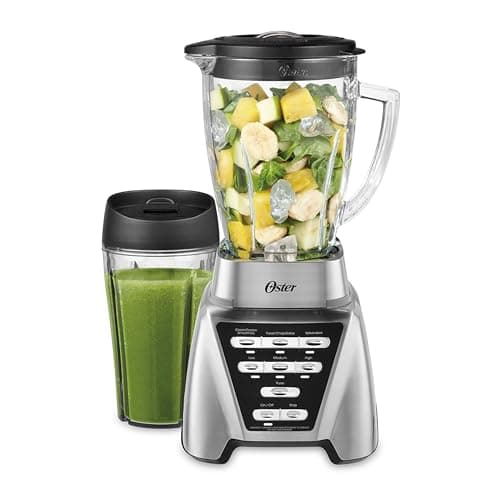
- Oster Pro 1200 with glass jar— for a bigger property that wants a second three-year machine, accepting that Oster’s remedy is replacement and this model is delisted.
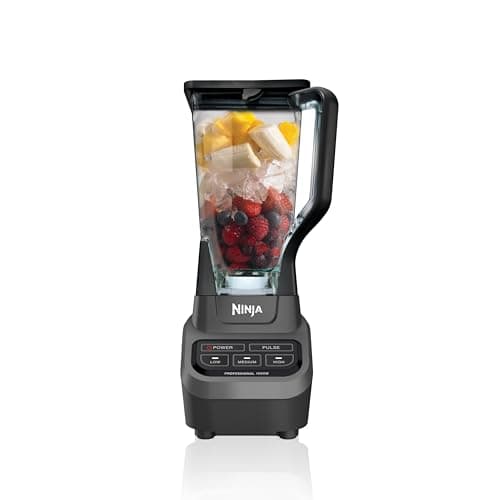
- Ninja Professional Blender BL610— for the host whose guests expect a recognizable brand and a 72 oz jar, and who values easy spare parts over a long warranty.
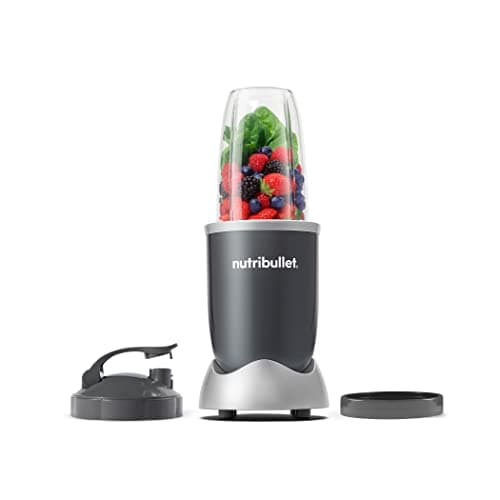
- NutriBullet 600— for a one-bedroom where a single shake is the whole use case: the only 18 oz cup in this catalog.
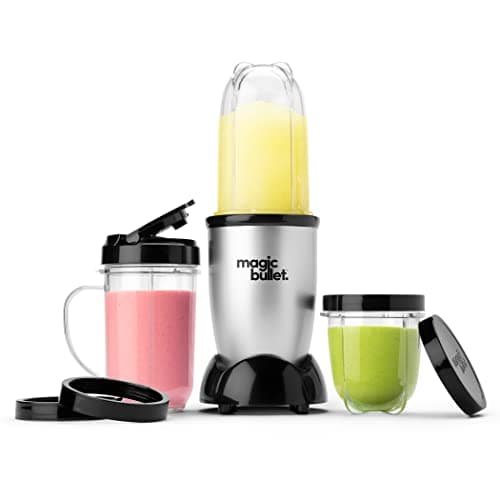
- Magic Bullet 11-piece set— the budget pick: the cheapest machine here, for soft shakes and dressings only.
A rental changes three of the criteria
Replaceability beats capability.A guest will run a machine dry, lock the jar on wrong, put a lid in the dishwasher that should not go there, and occasionally take a cup home. The question is not “can this blend frozen mango?” but “what happens the week it stops?” At the bottom of the market the answer is: you buy another one, between guests, with no conversation.
Warranty terms you can actually use.A three-year warranty on a $40 machine is not about the money, it is about not having to decide. Hamilton Beach writes three years on blenders and Oster writes three on kitchen blenders — and Oster’s remedy is replacement rather than repair, which for a host is a feature, not a flaw. A replacement arrives; you do not ship a motor base anywhere.
Fewer loose parts.Every tamper, extra cup, drinking lid and chopper attachment is something that walks off or ends up in the wrong drawer. The best rental machine has a base, a jar and a lid. That is one of the reasons the combo machines and the two-cup machines do not appear on this page even though they rank highly elsewhere — best blenders with cup attachments is where those belong.
Glass is the right call here, and for an unusual reason
In a home kitchen, glass versus plastic is mostly about clouding and odor. In a rental it is about the next guest. A plastic jar that has had curry paste or garlic in it holds the smell, and the person who notices is the person leaving a review. Glass does not hold odor, does not cloud, and goes through a dishwasher cycle without anxiety.
The costs are real: glass is heavy and glass breaks, and a 40 oz glass jar in a shared kitchen will eventually meet a tiled floor. That is a replacement-jar purchase, not a new machine — which is another argument for buying into widely stocked models. Glass vs plastic blender jars weighs it properly, and best blenders with glass jars is the full roundup.
Two of these have no live manufacturer page, and for a host that matters less
We flag it everywhere on this site, so we will flag it here. SharkNinja has withdrawn the BL610’s product page — its 1,000 W figure comes from the brand’s own replacement-motor-base listing and its 72 oz pitcher figure from a replacement-pitcher listing that says 71 oz on the same page. Oster’s page for this exact Pro 1200 returns HTTP 410 Gone, so the “1200” in its name is not a figure we can trace to a manufacturer document at all, and we leave that cell empty.
For a home buyer choosing a machine to keep for a decade, that is a real mark against both. For a host, the practical consequence is narrower: it is a spare-parts question over a three-year term, and both models are still very widely sold, which is the thing that actually determines whether you can get a jar in a week.
The one thing to tell guests, which is also the one thing that breaks these
Every machine on this page will stall on a jar packed with frozen fruit and no added liquid, and the way motors in this band die is a guest holding the switch on while nothing moves. The Power Elite’s real continuous draw is 3.7 amps— Hamilton Beach prints the rating plate in its own manual and defines its 700 “peak” watts as the first-seconds figure, which is more candor about wattage than any premium brand in this catalog manages. At 3.7 A, a dry frozen load is simply out of range.
A laminated card by the machine saying “add liquid first, pulse, do not run more than a minute” costs nothing and will outlast several blenders. Can you use a blender without liquid explains why, and why does my blender smell like burning is what the failure looks like when it happens.
Personal blenders in a rental: a split verdict
The NutriBullet 600 earns its place in a small property because its 18 oz short cupis the only genuinely single-serving vessel in this catalog, and a guest making one drink does not need 64 oz. 600 W is enough for banana, yogurt, powder and a handful of frozen berries, which is the honest definition of what a guest makes.
The catch is the sealed cup, which is a part that leaves with people and is explicitly excludedfrom NutriBullet’s one-year warranty along with every other accessory. Budget for replacement cups and gaskets as a running cost, not an incident. And never leave a bullet machine out with an instruction to blend hot soup in it — a cup that screws onto a blade is a pressure vessel. Can personal blenders handle hot liquids is the specific answer, and blending hot liquids safely is the general one.
About the Magic Bullet, honestly
It is the budget pick because it is the cheapest machine in this catalog by a wide margin, it comes with eleven pieces so there is a cup for most small tasks, and in a studio where a guest makes a milkshake or a dressing it is entirely adequate. It is also 250 watts— a quarter of a mainstream bullet blender — it will not crush ice, it will not blend frozen fruit, and Magic Bullet publishes no ounce figure for any of its cups. Put one in a listing described as having “a blender” and somebody will try to make a frozen smoothie in it and be disappointed. Describe it as what it is.
What these cost to run for a year
At 18.16¢ per kWh and this site’s standard assumption of 3 minutes a day, 365 days a year, the BL610 comes out at about $3.31 a year, the NutriBullet 600 at about $1.99, the Power Elite at about $1.47 on its rating-plate draw and the Magic Bullet at about $0.83. The Oster has no sourceable wattage so it has no running-cost line. A rental’s blender is not a line item on a utility bill, and anyone telling you otherwise is selling something. What a blender costs to run shows the arithmetic.
Which to skip
Skip the Power Elite if your property markets smoothies as an amenity — at 3.7 A a packed frozen jar is beyond it. Skip the Oster if you need a machine whose maker still publishes its specifications, or if a delisted model’s spare parts worry you over three years. Skip the BL610 for the same documentation reason, and because it is a one-year machine. Skip the NutriBullet 600 in a property that sleeps more than two. Skip the Magic Bullet anywhere you would describe the kitchen as well equipped.
And if the property is a premium let where the kitchen is part of the pitch, this is the wrong page — best blenders under $200is where a published continuous wattage and a 64 oz jar come into range, and best blenders for daily use is the criterion a serious kitchen should use.
What we have not done
We have not tested these machines, we own none of them, and we have hosted nothing. Every wattage, jar size and warranty term above is read off the manufacturer’s own product page, use-and-care manual or warranty schedule, cited below — including the two cases where the manufacturer page has been withdrawn, which we report rather than paper over. Prices come live from Amazon with the date they were checked.
How a host should choose
1. Buy the warranty term, then the jar
Three years at the bottom of the market is the single best-value feature in this whole category, and in a rental it is the one you will actually use. Check whether the remedy is repair or replacement: for a host, replacement is better.
2. Count the loose parts and subtract
Base, jar, lid. Every additional cup, tamper or attachment is a thing to lose. A machine that ranks higher in a home kitchen because it ships three vessels ranks lower here for the same reason.
3. Choose a model that is still widely stocked
Not for the specs — for the jar. The ability to buy a replacement jar or blade assembly within a week matters more than the ability to read a spec sheet, and the ubiquitous models win that on volume.
4. Glass for odor, not for looks
The guest who notices the smell of the previous guest’s cooking is the guest who writes about it. Glass does not hold odor. Accept that it is heavy and that one will eventually break.
5. Leave an instruction card
“Liquid first. Pulse. Do not run longer than a minute. Not for hot liquid.” Four lines will extend the life of any machine on this page more than doubling your budget would. What you should not put in a blender is where the rest of that card comes from.
6. Decide what the listing claims
If the listing says “blender”, a guest expects to blend frozen fruit. If what you have put out is a 250 W cup machine, say so in the listing, because the gap between the two is a review waiting to happen. What size blender do I need is useful for sizing to the number of beds.