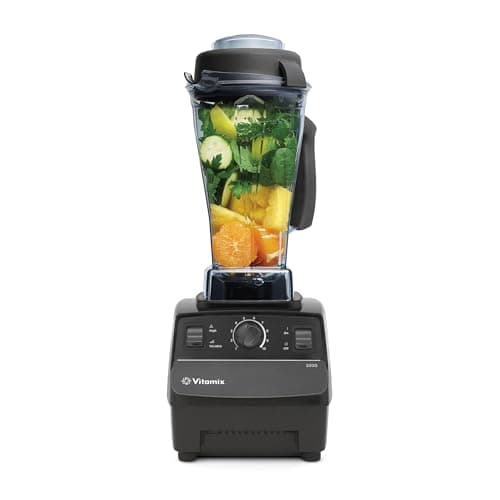
Buy the Vitamix 5200 if you are buying a blender anyway: the tamper and the fully variable dial are exactly what a thick, low-liquid load needs, and whipped cottage cheese is the definition of one. But the budget pick is the Hamilton Beach Power Elite, and it is a serious recommendation rather than a consolation — a 40 oz glass jar is the right size for a tub of cottage cheese, and this is one of the few blending jobs where the cheapest machine in the catalog gets genuinely close to the dearest.
Who each one is for, in one line
- Vitamix 5200— for anyone who whips cottage cheese weekly and wants a tamper to push the load back into the blades instead of stopping to scrape.
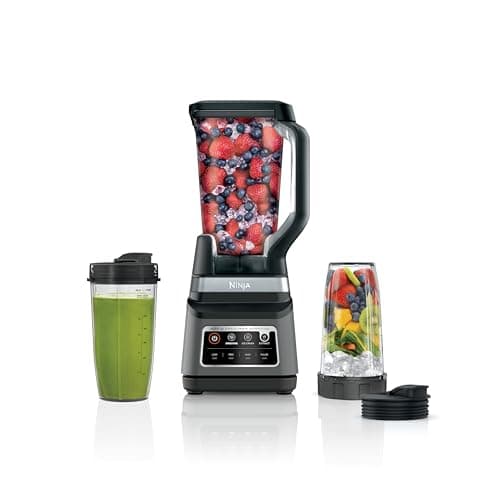
- Ninja Professional Plus DUO BN751— for making it one portion at a time in a single-serve cup on a 1,200 W continuous base.
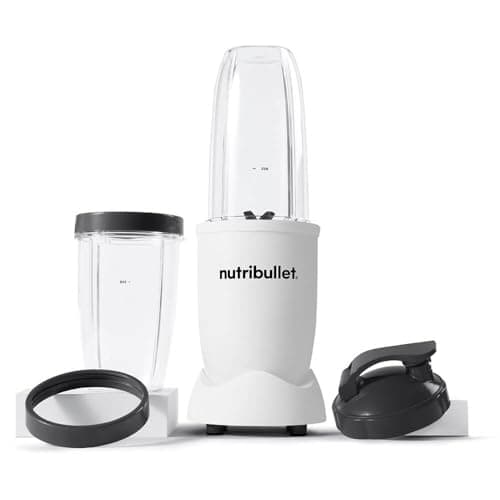
- NutriBullet Pro— for the smallest possible batch: 900 W into a 32 oz cup, blended inverted so gravity does the feeding.
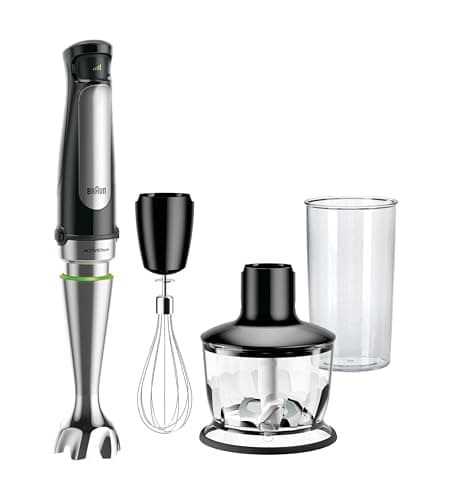
- Braun MultiQuick 7— for whipping it in the tub it came in, with nothing to wash but the shaft.
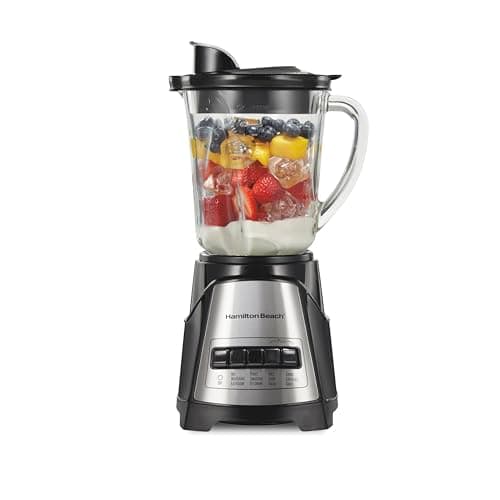
- Hamilton Beach Power Elite— the budget pick: a 40 oz glass jar for about the price of two tubs of cheese.
Why wattage is the wrong thing to shop on here
Cottage cheese is not a hard load. There is nothing in it to break down — no ice, no frozen fruit, no nuts, no fibrous stalks. Whipping it is a texturejob: you are shearing curds into a smooth emulsion and folding in air. A 250 W motor can do that. What cannot do it is a motor that never gets to touch the food, and that is the real failure mode with cottage cheese:
- The load is too thick to flow. It does not circulate, so the blades spin in a pocket of air with the cheese banked up the sides. This is cavitation, and it is the thing a tamper exists to defeat.
- The batch is too small for a family jar.A 16 oz tub in a 64 oz pitcher sits below the blade in a wide, shallow smear. A 72 oz Ninja pitcher is worse still. Vessel size beats motor size on this task every time.
- High speed from a standing start makes it worse. It throws the load outward and sets the pocket. Start low, build up, and the curds feed themselves in.
Which is why this page ranks on vessel size and speed control rather than published power, and why a stick blender used directly in the tub is a genuinely competitive answer rather than a compromise. The full method is on how we pick.
The three honest routes to whipped cottage cheese
1. A full-size jar with a tamper.The 5200’s tall narrow 64 oz jar is the wrong shape for 16 oz of anything — except that the tamper lets you drive the load down onto the blades through the lid while it runs, which turns the wrong shape into the right one. No other machine on this page ships a tamper. What a blender tamper is used for explains the mechanism, and the Vitamix range is where the three machines in this catalog that ship one all live.
2. A single-serve cup, blended inverted.This is what bullet blenders are genuinely good at and it is underrated for thick mixtures: the cup screws onto the blade assembly and runs upside down, so the whole load sits on top of the blades and gravity feeds it. The NutriBullet Pro’s 900 W into a 32 oz cup, or the BN751’s 1,200 W continuous base into its single-serve vessel, both work without any technique at all. The same trick is why nut butter in a small cup works better than nut butter in a big pitcher.
3. An immersion blender, in the tub.The Braun MultiQuick 7 at 500 W goes straight into the container the cheese came in. Nothing to decant, nothing to scrape, one shaft to rinse. Its limitation is the same as every stick blender’s: you have to keep the bell submerged or you will spray cottage cheese up your arm. Our sauces and dressings roundup covers that technique in more detail.
What it costs to run, and why that is not the interesting number
At 18.16¢ per kWh and 3 minutes a day, 365 days a year, the 1,200 W machines on this page cost about $3.98 a year, the 900 W NutriBullet Pro about $2.98, the 500 W Braun about $1.66, and the Hamilton Beach about $1.47on its true rating-plate draw of 3.7 A rather than the 700 W peak figure on the box. Full arithmetic here. The whole spread is under a dollar a year, which is the point: on a task this easy, running cost and wattage are both noise. Vessel size, speed control and what you have to wash afterwards are the real differences.
A note on the glass jar
The Hamilton Beach and the Oster Pro are the two glass-jar machines in this catalog, and glass is a real advantage for dairy: it does not hold smell, it does not stain, and it does not haze the way polycarbonate does after a hundred washes. If you blend cottage cheese several times a week, that is worth more than 500 watts you will never use. Best blenders with glass jars and glass vs plastic jars both go further into it.
What we have not done
We have not whipped cottage cheese in any of these machines, and we are not going to tell you we have. Everything above is mechanical reasoning from published specifications — motor ratings, vessel sizes, speed controls and what is in the box, each cited to the manufacturer’s own document below. No ratings, no taste tests, no awards.
How to get smooth cottage cheese out of the blender you already own
1. Match the vessel to the tub, not to the family
A 16 oz tub wants a vessel of roughly 16 to 32 oz. If all you have is a 64 oz pitcher, double the batch rather than halving the vessel — it will blend better at 32 oz in a big jar than at 16.
2. Add nothing, then add a spoonful
Cottage cheese is already about 80% water by weight, so it usually needs no liquid at all. If it will not catch, a single tablespoon of milk or yogurt is enough to start it circulating. More than that and you have made a drink.
3. Start slow and climb
This is the single biggest difference between a variable dial and a preset. Going straight to maximum sets an air pocket; ramping up lets the load fold in on itself. If your machine only has presets, pulse it four or five times first.
4. Scrape once, at thirty seconds
On any machine without a tamper, stop at about thirty seconds, scrape the sides down with a spatula, and run it again. Two short runs with a scrape between them beat one long run every time, and they put less heat into the dairy.
5. Do not run it for three minutes
Prolonged high-speed blending warms the mixture through friction, and warm whipped dairy goes loose and weeps. Thirty to sixty seconds in total is the target. If it is still grainy after that, the problem is the vessel, not the time.
6. If you do this daily, buy for the washing-up
A stick blender is one shaft. A single-serve cup is a cup and a blade assembly. A full-size pitcher is a jar, a lid, a gasket and a blade. Over a year that difference will decide whether you keep making it — the easiest blenders to clean ranks the catalog on part count for exactly this reason.