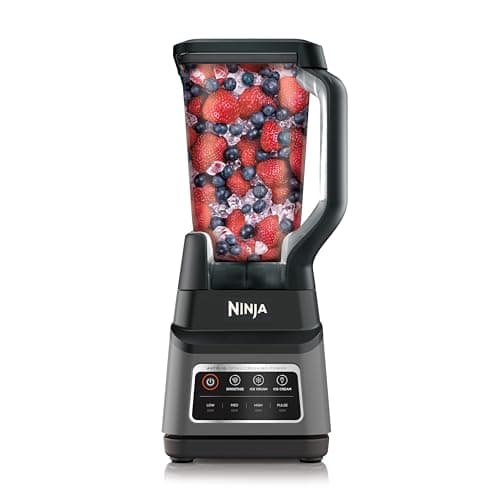
The Ninja Professional Plus BN701is the pick, because a household that wants a milkshake blender almost always wants a smoothie blender too, and this is the one machine on the page that does both without compromise: a 64 oz maximum liquid fill for a round of shakes, a published 1,200-watt continuous figure for the frozen fruit on the other days, and a price a fifth of the premium machines. If milkshakes really are the whole job, the Hamilton Beach Power Eliteis the more honest answer — less power than anything else here and, for this load, exactly enough.
Why this is a different question from the smoothie page
A smoothie is a hard load: frozen fruit and ice with as little liquid as you can get away with, which is why our smoothie ranking and the ice ranking are decided by motor and by whether a tamper is in the box. A milkshake is the opposite. The ice cream is already soft by the time it hits the jar, the milk is liquid from the start, and the whole thing is finished in well under a minute on a low speed. Almost any blender in our catalog will make one.
So the things that separate the machines here are the ones that get ignored on a frozen-fruit page: whether the lowest speed is actually low, because a milkshake over-blended at full power turns thin and warm; whether the jar pours cleanly, because a milkshake is served, not drunk from the blender; whether it is glass or plastic, because dairy is the load most likely to leave an odor in plastic; and how much it costs, because paying for a two-horsepower motor to stir ice cream into milk is the least efficient thing you can do with the money. If you also make ice cream itself from frozen fruit, that is a hard load and a different page.
What a milkshake actually asks of a blender
A genuinely slow speed
The classic milkshake texture is thick and cold, and both of those are lost by over-blending. Every second the blades spin, they add friction heat and beat air into the mix. A machine with a real low setting — the Vitamix’s variable dial, the Ninja’s low speed, the Hamilton Beach’s stepped buttons — lets you stop at “just combined.” A machine with one speed, like most bullet blenders, gives you one texture, and it is thinner than you want.
A jar you can pour from
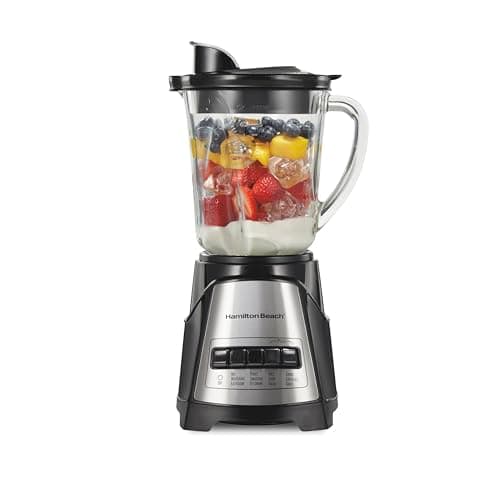
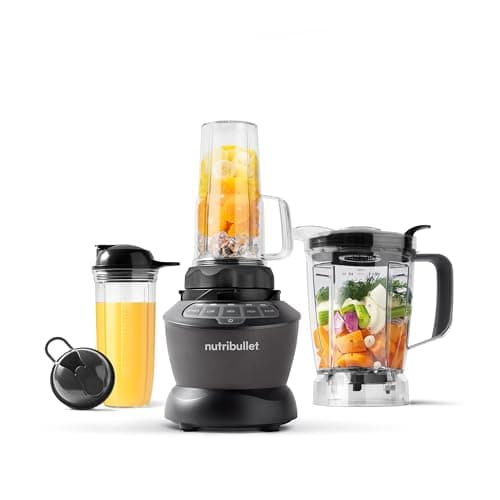
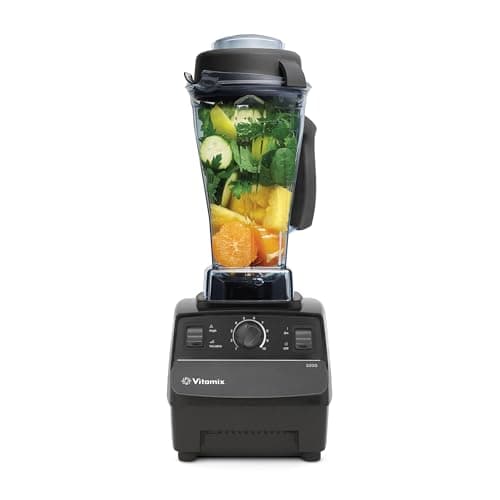
The pitcher-style jars on the Ninja and the NutriBullet Combo have a spout; the Hamilton Beach jar is designed to pour without running down the outside, which Hamilton Beach makes a point of and which sounds trivial until you have wiped a counter after every shake. The tall Vitamix container pours cleanly too. A bullet cup does not pour at all; it is the glass, which is a different way of solving the problem.
Enough capacity for a round
A single shake is 12 to 16 oz. Two or three at once is where a 40 oz glass jar starts to feel tight and a 64 oz pitcher earns its size. This is the one place a family should read the capacity figure carefully — and note that the Ninja’s 72 oz is the total, with 64 oz as the published liquid maximum.
Not much power at all
This is the part most roundups get backwards. The Hamilton Beach draws 3.7 A on its own rating plate — 444 W, a third of the Ninja — and it makes a milkshake without complaint, because softened ice cream and cold milk are not a load that stalls anything. Where the extra power matters is the day the same jar gets frozen strawberries and no milk. Buy the power for that day if you have that day; do not buy it for the shake.
What each pick costs to run for a year at 3 minutes a day, 365 days a year, at the EIA average residential rate — milkshake use is well under this, so treat these as ceilings| Machine | Published power | Annual running cost |
|---|
| Ninja BN701 | 1,200 W continuous | $4.02 |
| Hamilton Beach Power Elite | 3.7 A rating plate (444 W) | $1.49 |
| NutriBullet Blender Combo | 1200 W | $4.02 |
| Vitamix 5200 | 11.5 A nameplate (1,380 W) | $4.62 |
| Oster Pro 1200 | Not verifiable — page delisted | — |
The ranking
1. Ninja Professional Plus BN701 — the milkshake-and-everything-else machine
It is first for the reason the whole page is built on: nobody buys a blender only for milkshakes, and this is the machine that handles the shake on Saturday and the frozen fruit on Monday at a price that makes the Vitamix hard to justify for either. The 64 oz liquid maximum is a round of four shakes. Ninja publishes 1,200 watts continuous and 1,400 peak as separate figures, which is candor almost nobody else in the category shows. The low speed is genuinely low, and the Auto-iQ programs stop on their own.
The deductions are real and they are the same ones we make everywhere: a one-year warranty against the three years on the two cheapest machines here, a plastic pitcher that is BPA-free and dishwasher-safe on Ninja’s spec table but will carry a dairy odor longer than glass, and a stacked blade tower that is more to wash. Skip it if you make nut butter or thick bowls regularly — it has no tamper. The full write-up is in the BN701 review.
2. Hamilton Beach Power Elite — if milkshakes are the whole job
The cheapest machine in our catalog, a glass jar, a three-year warranty, and a manufacturer that defines its own “peak watts” in the manual and prints the real amperage beside it. For a milkshake, the 3.7 A motor is not a limitation; it is the correct amount of motor. The 40 oz glass jar takes two generous shakes, does not hold odors, and goes in the dishwasher without the anxiety a clouding plastic jar brings.
Why it is second and not first: the moment the same jar gets a frozen load with little liquid, it stalls, and no amount of pulsing changes that arithmetic. It is the milkshake machine for someone who is honest that milkshakes are what they make. See the Power Elite review.
3. NutriBullet Blender Combo — the single shake, in the cup you drink from
One 1200-watt base, a 64 oz pitcher for the round, and 32 oz and 24 oz cups for the one-person shake that never touches the pitcher. For a household where one person wants a shake at ten at night and nobody wants to wash a jar, the cup is the feature. NutriBullet publishes its watt figure plainly, with no peak qualifier.
The deductions: one year of warranty that excludes cups and accessories, no tamper, and a single speed on the cups, which is the thin-shake problem described above. Skip it if you will only ever use the pitcher. Full detail in the Combo review.
4. Vitamix 5200 — the best low speed on the page, at a price the job cannot justify
The fully variable dial is the ideal milkshake control: start at one, bring it to three, stop when it is combined. The tall container pours cleanly and the 7-year full warranty is the longest here by years. It is fourth because the thing you pay for — a two-horsepower motor and a tamper for loads that fight back — is irrelevant to ice cream and milk. Buy it for the frozen-dessert job or the nut-butter job and the milkshake comes free. See the 5200 review.
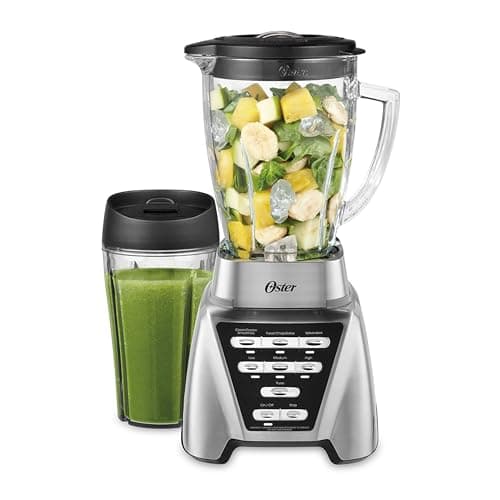
5. Oster Pro 1200 with glass jar — glass and three years, with a documentation gap
A glass jar and a three-year warranty at a mid-range price is a good milkshake specification. It is last because Oster has withdrawn the product page for this exact model, so the wattage in its name cannot be traced to a manufacturer document and the warranty remedy is replacement rather than repair. Still widely stocked; buy it with the delisting understood. See the Oster Pro 1200 review.
Technique, which matters more than the machine here
- Let the ice cream sit out for five to ten minutes. Rock-hard ice cream is the one way to make a milkshake into a hard load.
- Milk in first, then ice cream. Liquid at the blades means the motor starts against nothing.
- Lowest speed, and stop as soon as it is smooth. Every extra second is thinner and warmer.
- For a thicker shake, less milk — not more ice cream. Roughly a cup of milk to three scoops is the usual starting point; adjust from there.