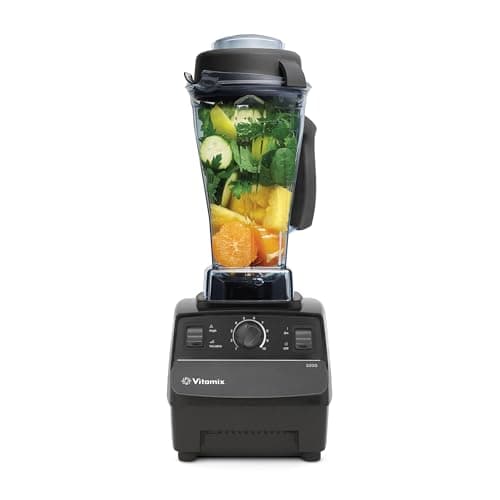
The Vitamix 5200 is first here, and not because it is the most powerful machine on the list — Vitamix publishes no watt figure for it at all. It is first because the warranty runs seven years, the specification table is still live, the tamper is in the box, and every one of those is a fact you can check before you spend anything. Second is the Ninja BN701, which is the only machine in this group whose manufacturer publishes a continuous wattage alongside the peak one, and which costs a fraction of the price.
How this list is ordered
Not by wattage, because — as the wattage guide sets out at length — the four brands here describe motor power in four incompatible ways, and a column that stacks them on top of each other is a column that misleads. Instead the order comes from three things that are directly comparable across all five: the warranty term as written in the manufacturer’s own warranty document, whether the manufacturer still publishes a specification for the machine at all, and the container geometry that decides whether a frozen load actually reaches the blades.
That last one deserves a sentence. A tall narrow jar with a tamper beats a bigger motor in a wide jar on exactly the load people buy a high-power blender for, because the failure mode on frozen fruit is not lack of power — it is cavitation, the blades spinning in a pocket of air with the frozen mass bridged above them. Power does not clear a bridge. A tamper does.
1. Vitamix 5200 — the warranty is the product
Vitamix’s specification table for the 5200 lists a 2 HP motor and a nameplate of 120 V, 50/60 Hz, 11.5 amps. It does not list watts anywhere. That is unusual and it is worth noticing rather than papering over: the number most buyers use to compare blenders is a number this manufacturer declines to publish for its best-known machine.
What Vitamix does publish, in a separate legal document, is a seven-year full warranty covering parts, labor and shipping both ways. Seven years is longer than every other term on this page and longer than most terms in the category at any price. It is also the clearest possible statement of what you are buying, because a warranty is not marketing — it is a company writing down how long it expects its own motor to survive and agreeing to pay if it does not.
The 64 oz container is tall and narrow, and the tamper is included. That combination is the reason this machine handles smoothie bowls and low-liquid loads that stall wider jars. There are no presets, no timer and no self-clean cycle, which is the honest trade: the money went into the motor and the warranty, not the panel.
Skip it if your honest use is a smoothie four times a week. Most of what you are paying for is the seven-year term, and a hundred-dollar machine will make that smoothie indistinguishably well. Also measure first: the 64 oz jar is tall, and standard US worktop-to-cabinet clearance is 18 inches.
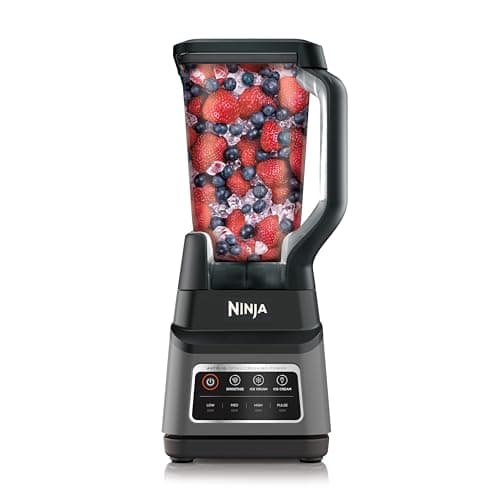
2. Ninja Professional Plus BN701 — the only comparable number here
SharkNinja’s specification table for the BN701 gives two motor figures: 1,200 watts continuous and 1,400 watts peak. Publishing both is rare enough in this category to be the single strongest reason this machine ranks second. A continuous rating is what the motor draws while it is doing the work; a peak rating is a momentary number measured under conditions the manufacturer chooses. A brand that publishes only the second one has told you something that cannot be compared to anything.
The pitcher is published as 72 oz total with a 64 oz maximum liquid fill, which is enough for a family batch in a single run and is more usable capacity than Blendtec publishes for the WildSide+ jar. The Auto-iQ programs stop on their own. For everyday frozen fruit and protein shakes, this does the job at roughly a fifth of the premium price.
The warranty is one year. That is the whole price argument in this category compressed into a single line: seven years against one, on machines that will both make a perfectly good smoothie tomorrow morning. Whether that gap is worth several hundred dollars depends entirely on how long you intend to keep the thing, and that is a question about you rather than about the blender.
Skip it if you make nut butter or thick smoothie bowls regularly. There is no tamper, so a low-liquid load means stopping, scraping and restarting, and a one-year term is thin comfort under that kind of sustained load.
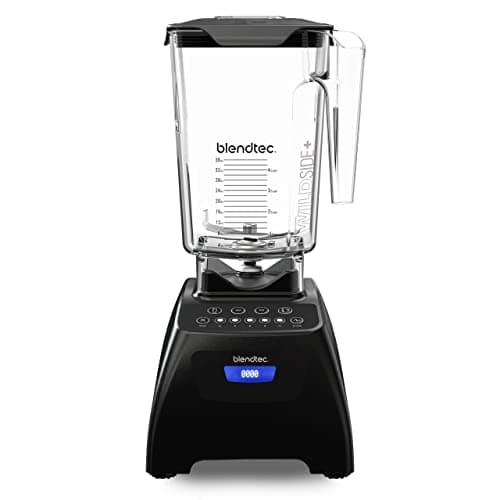
3. Blendtec Classic 575 — buy it for the fit, not for the warranty
Blendtec’s product page states a 1,560 watt motor with no peak-or-continuous label attached, while Blendtec separately publishes a sitewide disclaimer that peak horsepower does not denote operational horsepower. Those two facts sit oddly together, and the honest way to handle them is to quote the watt figure exactly as published and add nothing.
What the 575 genuinely offers is a blunt, fixed blade — safer to wash than a sharp removable assembly, and impossible to install wrong — and a short jar that clears a standard 18-inch cabinet gap that several full-size rivals do not. Preset cycles stop on their own. If your worktop has a cabinet over it, this is a real and underrated advantage, and it is why the machine is third rather than fourth.
The warranty is two years, not eight.Blendtec’s own schedule puts the Classic 575 at 2 years parts and 2 years labor, residential use only. The eight-year term that gets repeated across this category belongs to the Designer 625-725 and Professional 750 lines, not to this machine. The full schedule is tabulated on the warranty comparison.
Two further things to know before buying. Blendtec publishes a maximum liquid fill of 36 oz for the WildSide+ jar and does not publish a total capacity, so the 90 oz figure that circulates for it is not a manufacturer number and does not appear on this site. And the warranty presumes residential use: above roughly 3,000 cycles a year it treats the machine as commercial, which voids the term.
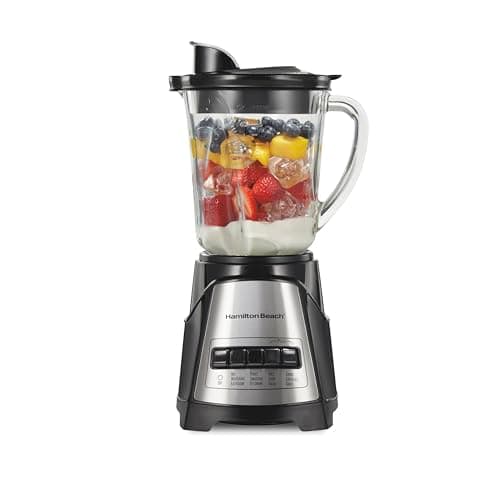
4. Hamilton Beach Power Elite — the floor, and the most candid spec sheet
This machine does not belong in a high-power list on power, and it is here anyway, at fourth, for a reason worth stating plainly: it is the only entry whose manufacturer defines its own marketing number and then prints the real one next to it.
Hamilton Beach advertises 700 watts of peak blending power. Its use and care manual defines peak power as the draw during the first seconds of operation, and the rating plate reproduced in that same manual reads 120 V, 60 Hz, 3.7 A max. Multiply it out and the continuous draw is about 444 watts. No premium brand on this page shows that much of its working. That candor is worth ranking, because on a site whose entire claim is traceability, a manufacturer that hands you the arithmetic is doing something the others are not.
The warranty is three years in the US and five in Canada — triple what Ninja offers at several times the price. The jar is 40 oz glass, which does not cloud, does not hold odors, and survives a dishwasher without anxiety.
Skip it if you blend frozen fruit without added liquid. At 3.7 amps this machine will stall, and no amount of pulsing changes the arithmetic. 40 oz is also small for a family batch, and the glass jar is heavy.
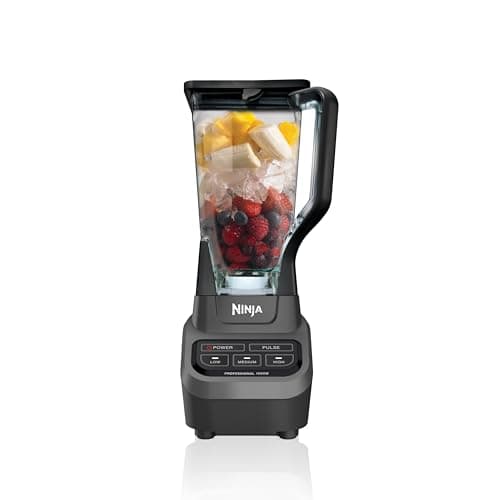
5. Ninja Professional BL610 — cheap, capable, undocumented
The BL610 was the default budget recommendation of the last decade and it is still the least you can reasonably spend on a full-size machine that handles frozen fruit. It ranks last here on a single criterion, and it is the criterion this site exists to apply: SharkNinja no longer publishes a product page for it.
The 1,000 W figure in the spec table comes from SharkNinja’s own listing for the replacement motor base for this model. That is a manufacturer source, and it is weaker evidence than a live specification table — it is a parts listing, not a spec sheet. The pitcher capacity that circulates for the BL610 cannot be traced to any live manufacturer document at all, so this site leaves that cell empty rather than repeating a number everyone else repeats. The full argument is in the BL610 review.
What a year of electricity costs on each
Nobody in this category publishes this, so here it is, on the same assumption for every machine: three minutes of blending a day, every day, at the US average residential rate of 18.34¢ per kWh from the EIA’s Electric Power Monthly. Three minutes a day is 18.25 hours a year.
Blendtec 575 1,560 W × 18.25 h ÷ 1000 = 28.47 kWh × 18.34¢ = $5.22 a year
Vitamix 5200 1,380 W × 18.25 h ÷ 1000 = 25.19 kWh × 18.34¢ = $4.62 a year
Ninja BN701 1,200 W × 18.25 h ÷ 1000 = 21.90 kWh × 18.34¢ = $4.02 a year
Ninja BL610 1,000 W × 18.25 h ÷ 1000 = 18.25 kWh × 18.34¢ = $3.35 a year
Hamilton Beach 444 W × 18.25 h ÷ 1000 = 8.10 kWh × 18.34¢ = $1.49 a year
The spread between the most and least expensive machine to run is under four dollars a year. That is the useful conclusion: running cost should not move your decision at all, and knowing a number is small is as valuable as knowing it is large. The Vitamix figure is our arithmetic on Vitamix’s own nameplate amperage rather than a published watt rating, and the Hamilton Beach figure uses the rating plate rather than the advertised peak — both substitutions are shown above so you can disagree with them. The full running-cost method lets you swap in your own tariff.
Noise: what nobody here will tell you
Not one of these five manufacturers publishes a decibel figure for these machines. Not Vitamix, not Blendtec, not SharkNinja, not Hamilton Beach. High-power blenders are loud, and in an apartment or an early-morning household that is a genuine buying criterion — but there is no published number to rank them on and this site will not invent one. Where a spec cell says “not published” on this page, that is the actual state of the information rather than an omission.
Who should skip this category entirely
If you blend one single-serving shake a day and drink it from the vessel you blended it in, a full-size machine is the wrong purchase and a personal blender is the right one. If most of what you blend is hot and already in a pot, buy a stick blender instead — it is safer, cheaper and far easier to wash. And if the price of the top two entries here made you flinch, that is a reasonable reaction: the under-$200 roundup is where the sensible version of this decision lives.