HUB 03 · Personal Blenders
Can Personal Blenders Handle Hot Liquids?
Short answer: no, and it is a safety issue rather than a performance one. A sealed bullet cup and hot liquid are a pressure problem, and the fix is a different tool, not a bigger motor.
We earn a commission if you buy through our links. It does not change the price you pay, and it does not decide our picks — our selection criteria are published in full. How this works.
No. A personal or bullet blender should not be used with hot liquids, and it is a safety matter, not a question of whether the motor is strong enough. The single-serve cup seals against a blade base, and hot liquid releases steam that has nowhere to go — the pressure can force the cup off the base or blow the lid, throwing scalding liquid. Blend hot food with an immersion blender or a vented full-size jar instead.
The pressure problem, plainly. When you seal hot liquid inside a rigid cup and then agitate it, steam expands and builds pressure with no vent to relieve it. In a bullet blender that pressure acts on the two weakest seals: the threaded blade base and the drinking lid. Either can let go suddenly, and the result is hot liquid under pressure aimed at whoever is holding it. This is why manufacturer manuals for single-serve blenders specify cold ingredients.
Why a personal blender is the wrong shape for hot
A bullet blender is built around a sealed, invertible cup — that is the entire point of the format, because it lets you drink from the vessel you blended in. But a sealed vessel is exactly what you do not want with something hot. There is no vented lid, no gap for steam to escape, and the cup is designed to lock tight. The same feature that makes it convenient for a cold shake makes it unsafe for hot soup. More motor power does not help; the problem is the seal, not the blade.
What the manuals actually say
Single-serve blender manuals broadly specify cold or room-temperature ingredients and warn against hot liquids, precisely because of the steam-pressure risk above. Full-size blenders that cantake hot liquid say so explicitly and ship a vented lid with a removable center cap to release steam — the presence of that vented lid is the signal that a machine is rated for hot use. A bullet cup has no such vent, and its silence on hot liquids is not permission.
The right tools for blending something hot
An immersion blenderis the safest option, because there is no sealed vessel at all — you blend the soup in the pot it cooked in, so steam simply rises off the surface as it always would. It is also less to wash. The Braun MultiQuick 7 is the machine we would reach for here, and the whole category is on the immersion-blender hub.
A full-size jar blender with a vented lidis the other safe route, provided you follow the hot-liquid rules: fill well below the maximum, remove the lid’s center cap to vent steam, cover the hole with a folded towel, hold the lid down, and start slow. The full procedure is on the hot-liquid safety guide, and it applies to every jar blender, not just the ones marketed for soup.
What about letting it cool first?
If a personal blender is genuinely all you have, the only safe path is to let the liquid cool to room temperature before it goes anywhere near a sealed cup — and even then, blend in short bursts and open the cup carefully. But this is a workaround, not a solution, and if you blend hot food with any regularity the right answer is an immersion blender. It is inexpensive, safer, and the correct tool for the job.
The bottom line
A personal blender and hot liquid are a pressure hazard, full stop. Use an immersion blender in the pot, or a full-size jar with a vented lid and the proper technique. Never seal hot liquid into a bullet cup and blend it, whatever the wattage — the danger is the seal, and no amount of power makes a sealed hot vessel safe.
The hardware
The hardware this guide is about
The products this guide refers to, with prices pulled live from Amazon and dated on every card. Full rankings live in the roundups linked above.
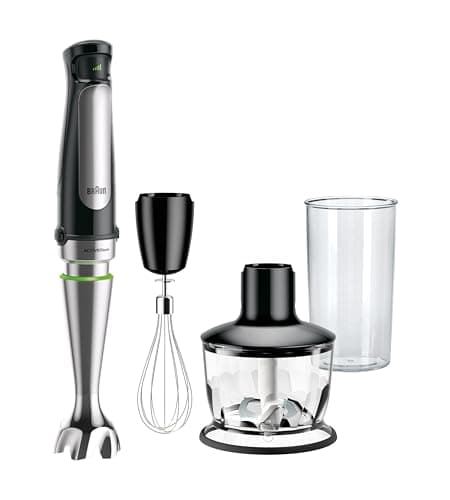
Soup, most weeks
Braun MultiQuick 7 MQ7035X
Three years of US warranty on a hand blender — triple what most rivals offer — and Braun publishes an input-power figure rather than a peak number.
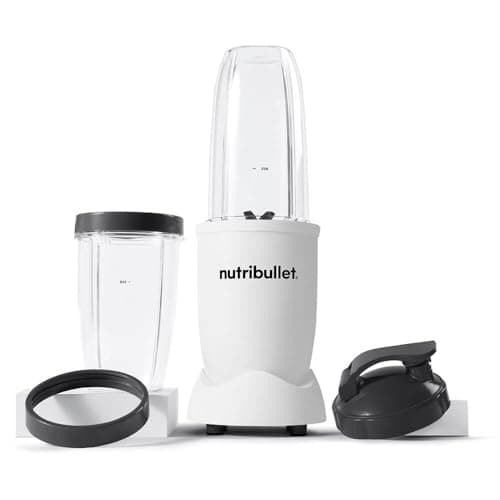
Everyday shakes
NutriBullet Pro (900 W)
The default bullet blender, and a good one. Note that NutriBullet's own product page contradicts itself about which cups are in the box.
#ad · As an Amazon Associate we earn from qualifying purchases.
Questions
Frequently asked
Can you put hot soup in a NutriBullet or bullet blender?
No. A sealed single-serve cup traps steam, and the pressure can force the blade base or lid off and throw scalding liquid. Personal-blender manuals specify cold ingredients for exactly this reason. Blend hot soup with an immersion blender in the pot, or a full-size jar blender with a vented lid and the correct technique.
Why is hot liquid dangerous in a sealed blender cup?
What should I use to blend hot soup instead?
Can I blend hot liquid if I let it cool first?
Keep reading
Related
- Blending hot liquids safelyThe full vented-lid procedure for a jar blender, step by step.
- Immersion blendersThe safe tool for hot soup: no sealed vessel, blended in the pot.
- Blender vs immersion blenderWhich format wins hot food, and why it is not close.
- Bulletproof coffee in a blenderThe most common hot-liquid mistake in a sealed cup, and the right tool.
Receipts
Sources
- NutriBullet — Pro product page (single-serve cup design)
- Braun Household — MultiQuick 7 MQ7035X product page (immersion alternative)
We do not run a testing lab and we do not pretend to. Specifications come from the manufacturer's own published documents and from published standards; prices come from the live Amazon API. Where a figure is not published, the page says “not published” rather than guessing. Read the full method.