The Beast GO Cordless is the pick, on two years of warranty, a published blending capacity stated separately from total volume, and concrete battery figures — 13 blending cycles of 30 seconds per charge, under two hours to recharge. The Ninja Blast BC151 is the cheap alternative. And if you are honest about where you actually blend, the third and fourth picks are corded machines that will do the job better for less.
Nobody can tell you which of these is more powerful, including us. Beast publishes no wattage for the GO Cordless at all — only a three-cell, 11.1 V battery. SharkNinja’s own specification table for the Blast lists the wattage as 0 watts and the peak wattage as 0 watts, and gives only a 7.4 V USB-C rechargeable base. Those are the manufacturers’ published figures, and neither is a power rating. Any comparison of these two machines on watts came from somewhere other than the people who built them.
Why a protein shake is the right job for a battery
Every cordless blender trades power for portability, and the trade is not small: a battery motor draws a fraction of what a mains one does. That matters enormously for frozen fruit and not at all for the load most people put in a portable.
Protein powder in liquid is nearly the easiest load in blending. There is no ice to fracture, no frozen fiber to break down, no thick low-liquid mass to keep moving. The work is dispersing a powder that wants to clump, and that is a mixing problem rather than a cutting one. A modest motor with a decent blade and a narrow vessel does it fine.
Where it stops working is ice and frozen fruit.Add either and you are asking a battery to do what a 1,000 watt mains motor is for. It will stall, or it will grind through slowly and flatten the charge. If your shake includes frozen banana, you want a corded machine — see can personal blenders handle ice, which is about exactly this limit.
And never hot. A blend-and-go cup is a sealed vessel with a lid designed to be watertight for carrying, which is the worst possible container for a hot liquid. Most personal blender manuals prohibit it outright. The mechanism is in can personal blenders handle hot liquids.
How this page is ranked.Warranty terms from each manufacturer’s own warranty document; blending capacity as published, preferring makers who state usable capacity separately from total volume; and how concretely the battery is specified. Where a manufacturer publishes no figure, the cell says so rather than carrying an estimate. The full method.
Running cost for the corded machines assumes 3 minutes a day, 365 days a year at 18.34¢ per kWh (US EIA, Electric Power Monthly — average residential price, US total, retrieved September 2026). It cannot be computed for a battery machine with no published wattage, and we do not invent one.| Machine | Power | Published motor | Capacity | Warranty | Cost / year |
|---|
| Beast GO Cordless | Battery, 11.1 V | Not published | 17 oz blending / 22.6 oz total | 2 years | Not computable |
|---|
| Ninja Blast BC151 | Battery, 7.4 V | Listed as 0 W | Makes up to 18 oz | 1 year | Not computable |
|---|
| NutriBullet Pro (900 W) | Mains | 900 W, no qualifier | Two 32 oz cups | 1 year, excludes cups | $3.01 |
|---|
| NutriBullet 600 | Mains | 600 W, no qualifier | 24 oz and 18 oz cups | 1 year, excludes cups | $2.01 |
|---|
The ranking
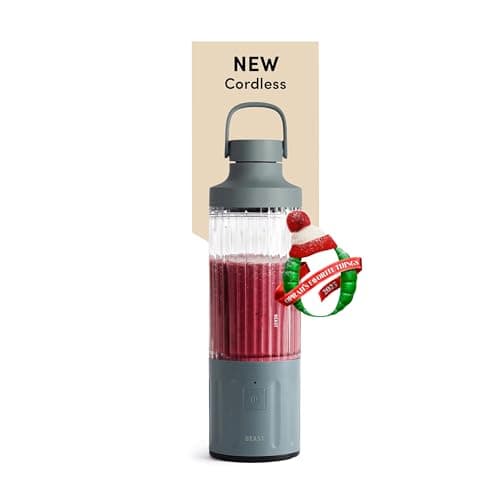
1. Beast GO Cordless — the one that publishes real numbers
It wins on documentation and cover, which are the only two things you can actually verify in this category. Two years of warranty against the one year the Ninja carries. A stated blending capacity of 500 ml (17 oz) alongside the 670 ml total, so you know what you can fill it to rather than guessing from a brim figure. And battery claims given as countable quantities — 13 cycles of 30 seconds per charge, under two hours to charge — rather than a vague “all-day battery”.
Beast’s decision to publish no wattage is, unusually, a point in its favor once you think about it: there is no meaningful watt figure for a battery blender, and most rivals print one anyway. What you are buying is a well-specified small machine, not a powerful one. 17 oz of usable capacity is small even by personal-blender standards, and it is for soft fruit, powder and liquid — not a cup of frozen fruit. Full detail in the Beast GO review.
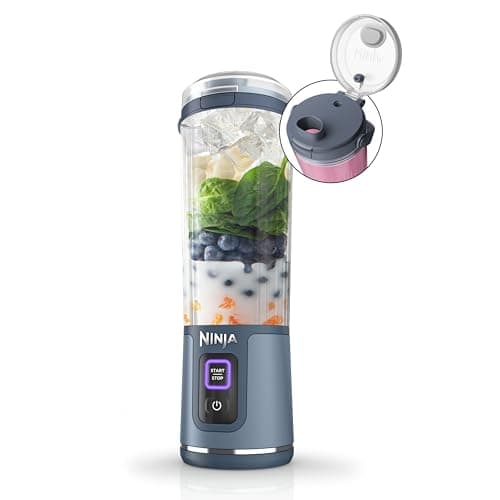
2. Ninja Blast BC151 — the cheap way in, with a documentation hole
Among the least expensive cordless blenders sold by a brand with a real service operation behind it, and 18 oz is a sensible single serving that you drink from the vessel you blended in. USB-C rather than a proprietary charger. Ninja’s blade geometry handles soft frozen fruit better than the price suggests.
The reason it is not first: SharkNinja’s specification table lists both the wattage and the peak wattage as 0 watts. That is a data-entry failure rather than a claim, but the consequence is real — there is no published power figure for this machine anywhere, so it cannot be compared with anything. Add a one-year warranty and a 7.4 V battery, half the Beast’s voltage, and it is the budget option rather than the better one. See the Blast review.
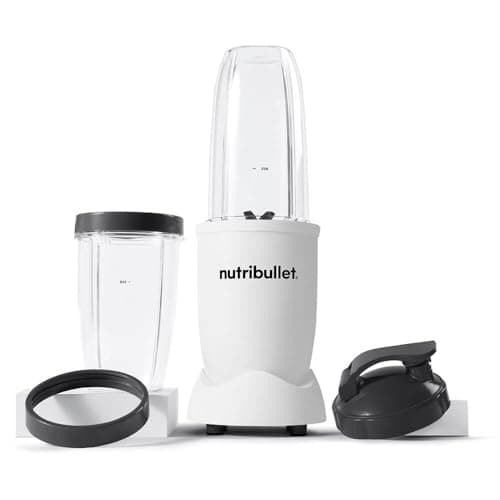
3. NutriBullet Pro — the corded machine you probably actually want
Worth asking honestly: where do you blend? If the answer is “my kitchen, and I carry the cup out”, then you do not need a battery at all — you need a blend-and-go cup, and the corded ones are stronger and cheaper. The Pro publishes 900 watts, comes with 32 oz cups, and its inverted-cup design puts gravity on the blades’ side, which is genuinely why bullet blenders handle frozen fruit better than their wattage suggests.
The warranty is one year and NutriBullet’s terms exclude cups and accessories, which matters because the gasket in the blade assembly is the usual failure. Replacement cups and blades are widely sold, so it is a cost rather than a catastrophe. Detail in the Pro review.
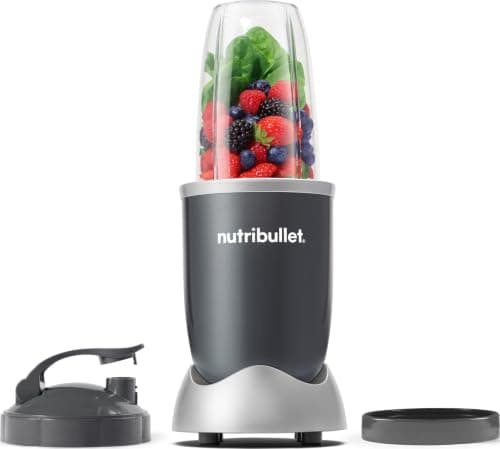
4. NutriBullet 600 — if one modest shake is the whole job
600 watts, a 24 oz cup and an 18 oz cup, at the lowest price here. For protein powder in milk or water it is entirely sufficient, and the 18 oz cup is a genuinely small vessel rather than a token one, which suits a single serving better than a 32 oz cup you fill a third of the way.
Its limit is stated plainly by the machine itself: at 600 watts in a narrow cup, a load of frozen fruit with little liquid will stall, and pulsing repeatedly at a stalled load is how a small motor gets cooked. Keep it to powder, liquid and soft fruit and it will last.
The short version.Genuinely blending away from a socket — a gym, a van, an office with no counter? Beast GO Cordless, or the Ninja Blast if price decides it. Blending at home and carrying the cup? Buy corded: more power, lower price, no charge to remember. The cordless premium is for the socket you do not have, not for performance.
Related reading
The broader single-serve ranking is at best personal blenders for protein shakes, and the portability-first list at best portable blenders. If you are still deciding whether you need a machine at all, read do you need a blender for protein shakes— for a lot of people the honest answer is a shaker bottle.