Nobody searching this wants to be told a Blendtec is bad. It is not, and on two measures it is among the most candid brands in this catalog: Blendtec publishes a plain 1,560 wattmotor figure for the Classic 575 rather than hiding behind peak horsepower, and it publishes the actual threshold at which it presumes commercial use — more than 3,000 cycles in a year, about eight blends a day. Almost no rival does either. The useful question is which of the four things a Blendtec gives you you are trying to keep, and what you want to fix. For most people the answer is the Vitamix Ascent X3: the same blunt fixed blade, the same cabinet clearance, the same timed programs, and ten years of full warranty instead of two.
What a Blendtec is actually known for
- A blunt, fixed blade.Blendtec’s blade does not come out of the jar and is not sharp. You cannot install it wrong, cannot cut yourself washing it, and cannot lose a gasket. For a lot of owners this single design decision is the whole reason they bought one.
- Preprogrammed cycles that stop by themselves. You press a cycle and walk away, rather than standing over a dial.
- A jar short enough to live on the counter. The Classic 575 clears a standard worktop-to-cabinet gap, which several full-size rivals do not. If you have ever had to lift a blender out to use it, you know why this matters.
- A published watt figure.1,560 W, stated plainly. Blendtec also publishes a sitewide note that peak horsepower does not denote operational horsepower — which is a brand correcting the whole category’s favorite marketing number, including its own.
And the thing people most often want to fix: the warranty. The Classic 575 is two years parts and two years labor, residential use only, in Blendtec’s own schedule by model. The eight-year term the internet repeats for this machine belongs to Blendtec’s Designer and Professional lines, not to the 575 — and the residential schedule also presumes commercial use above roughly 3,000 cycles a year, which voids cover. Our Classic 575 review goes through the document line by line, and best Blendtec blenders ranks the range if you decide to stay with the brand after all.
One more honest gap, and it is a documentation one rather than a quality one: Blendtec publishes no total jar capacityon any of its product pages — only a maximum liquid fill of 36 oz for the WildSide+. The widely quoted 90 oz and 96 oz figures are retailer copy, not manufacturer figures. If jar size is how you are comparing machines, that is worth knowing before you compare a Blendtec number with a Vitamix one.
Match it like for like: the Vitamix Ascent X3
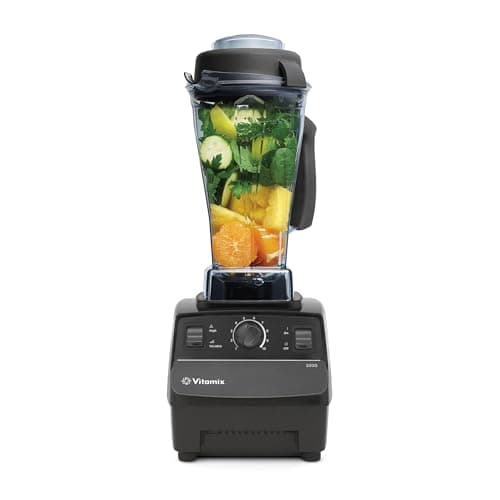
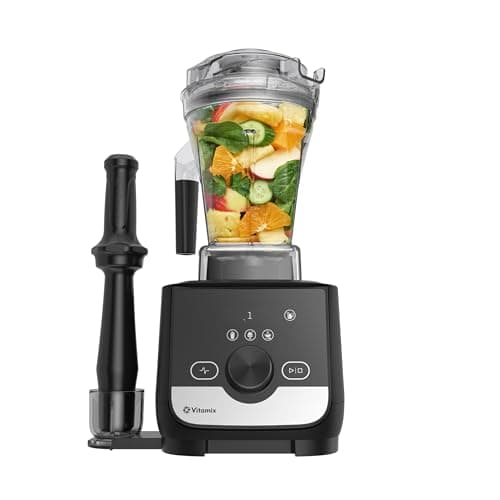
If what you like about a Blendtec is the fixed blade, the short jar and the press-and-walk-away programs, this is the machine that does all three. Vitamix containers also have a non-removable blade assembly— the same no-gasket, no-reassembly proposition — and the Ascent X3 publishes dimensions of 9.75 x 7.75 x 17 in, which is the only full-size machine in our catalog that clears a standard cabinet. It ships three blending programs plus a self-cleaning program, and a low-profile S2 tamper and holder in the box.
The reason it leads this page is the document, though. Vitamix’s 10-year full warranty covers parts, performance, labor and standard two-way shipping, and it is transferable to a new owner. Against two years of parts and labor, that is a five-fold difference in covered time on a purchase you expect to keep.
The honest trade: it is the most expensive household machine in this catalog, its container is 48 oz rather than 64, and Vitamix publishes no decibel figure — these are loud machines and nobody in this category will put a number on it. Our Ascent X3 review has the full specification, and Blendtec vs Vitamix settles the two brands head to head.
Keep the long warranty, lose the price: the Vitamix 5200
The 5200 is the cheaper way to buy the same warranty philosophy. Vitamix publishes 2 HP and a nameplate of 120 V, 11.5 A— an amperage figure, which is the most interrogable power statement any brand here publishes, because you can convert it yourself — under a 64 oz container, with a tamper included. Its 7-year full warranty covers parts, labor and two-way shipping.
What you give up against the Ascent X3 is the cabinet clearance that may be the reason you were looking at a Blendtec in the first place: the 5200 is a tall machine with a tall jar, and it will not live under a standard cupboard. There are no programs either — it is a dial and a switch, which some owners prefer and others find a step backward from a Blendtec cycle button. Our 5200 review is the long version, and is a Vitamix worth it takes the question on directly.
Keep the published power, cut the price by most of it: the Ninja Professional Plus BN701
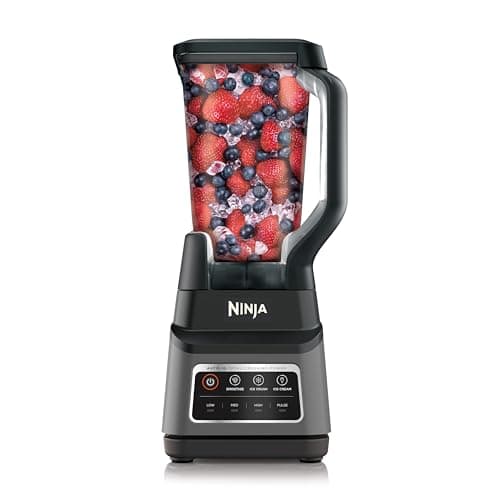
If the thing you valued was Blendtec publishing a real number, Ninja goes one better. The BN701 specification table states 1,200 watts continuousalongside 1,400 watts peak — the only brand in this catalog that routinely publishes both, which makes it the one machine here you can compare with anything. It also brings a 72 oz pitcher with 64 oz usable for liquid, a published figure where Blendtec gives none, and Auto-iQ timed programs that stop on their own, which is the same convenience as a Blendtec cycle at a fraction of the price.
Two honest cons. The warranty is one year limited— shorter than the Blendtec you are replacing, so this is the wrong pick if the two-year term is what sent you looking. And the blade is a sharp, removable stacked tower, which is the exact opposite of the blunt fixed blade some people buy a Blendtec for. Blendtec vs Ninja settles that trade directly.
Beat the two-year term for a tenth of the money: Oster Pro 1200
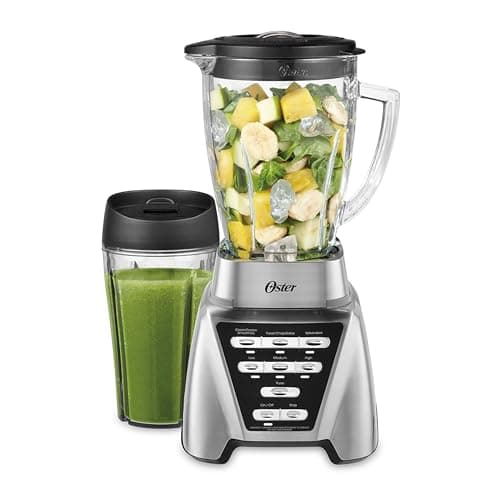
A blunt point worth making: Oster covers kitchen blenders for three years, which is longer than the Classic 575’s term, at a small fraction of the price. If covered years per dollar is your measure, this is the answer on this page and it is not close.
It comes with a real caveat and we are not going to bury it. Oster has withdrawn the product page for this exact model — the URL returns HTTP 410 Gone — so the “1200” in its name is not a figure we can source to a live manufacturer document, and we leave the motor and capacity cells empty rather than reprint the numbers other sites quote. Oster’s remedy under warranty is also replacement rather than repair, so a failure means a different machine, not yours fixed. On a three-year term, a delisted model is a parts gamble. Our Oster Pro 1200 review sets out what is and is not still documented.
The budget pick: Hamilton Beach Power Elite Wave Action
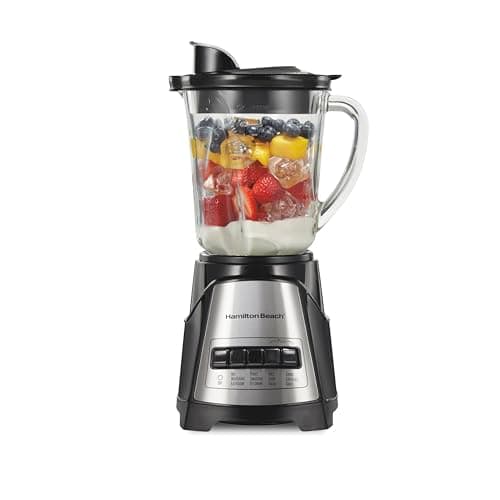
The cheapest machine in the catalog and, on one measure, the most honest. Hamilton Beach publishes 700 watts of peak blending power, then defines peak in its own manual as the draw during the first seconds of operation, and prints the true rating plate next to it: 120 V ~ 60 Hz, 3.7 A max. That is 444 W continuous. No premium brand in this category shows that much candor about its own marketing number, and it is the same instinct that makes Blendtec publish its horsepower disclaimer.
Its blender warranty runs three years in the US and five in Canada, which again beats the Classic 575’s two, and the 40 oz jar is glass rather than plastic. The limitation is exactly what the arithmetic predicts: 3.7 amps is a fraction of what the premium machines draw, and a full jar of frozen fruit with no added liquid will stall it. This is a replacement for a Blendtec only if what you actually needed was a blender for soft ingredients. Our Power Elite review is the full picture.
Which one, by the reason you are leaving
- Because of the two-year warranty— Vitamix Ascent X3 (ten years, full, transferable) or the Vitamix 5200 (seven years, full) for less money.
- Because you want the fixed blade and the short jar kept— Vitamix Ascent X3. It is the only machine here that matches both.
- Because of the price— Ninja Professional Plus BN701, which keeps the timed programs and publishes more about its motor and jar than Blendtec does.
- Because you want covered years per dollar— Oster Pro 1200 at three years, with the delisting caveat above, or the Hamilton Beach Power Elite at three years for even less.
- Because soup was all you ever blended— then this is the wrong category entirely, and a stick blender does that job in the pot for a fraction of any price here. See the best immersion blenders under $100. It will not crush ice or blend a frozen load, which is the trade.
- Because of the noise— nothing on this page, and we will not pretend otherwise. Not one machine in this catalog publishes a decibel figure, Blendtec included, and the only sound claim anywhere in the category is on Blendtec’s own commercial Stealth. See best quiet blenders for what can honestly be said.
What these cost to run
Less than the price difference between any two of them. At 18.16¢ per kWhand this site’s standard assumption of 3 minutes a day, 365 days a year, the Blendtec Classic 575 you are replacing comes to about $5.17a year on its published 1,560 W, the Ascent X3 about $4.97, the Vitamix 5200 about $4.57, the Ninja about $3.98 on its continuous figure, and the Hamilton Beach about $1.47 on its nameplate amperage. The Oster is the one machine here we cannot calculate, because Oster no longer publishes a wattage for it. The arithmetic, and how to substitute your own rate.
What we are not telling you
We have not run a Blendtec against any of these machines. There is no test, no timing, no sound reading and no award behind this page — it is a comparison of published documents: the warranty schedule each brand writes, the motor figure each one states and what kind of figure it is, the capacity each one commits to, and the programs each one lists. Every document is linked below. Where a maker publishes nothing — total jar capacity on any Blendtec, the Oster’s wattage, decibel figures on all of them — this page says so rather than filling the gap with a number from somewhere else.
How to replace a Blendtec without downgrading by accident
1. Write down which of the four things you are keeping
Fixed blunt blade, timed cycles, cabinet clearance, published power. Almost every disappointed switch in this category happens because somebody replaced a Blendtec on price and lost the one attribute they actually used daily. Only the Ascent X3 on this page keeps three of the four.
2. Read the warranty by MODEL, not by brand
This is the lesson the Classic 575 teaches better than any machine in the catalog: the same brand runs two years on one line and eight on another, and the internet quotes the long one for the short machine. Vitamix does the same thing — seven years on the 5200, ten on the Ascent, five limited on the VX1. Find the schedule, find your model. Blender warranties compared has every document in one table.
3. Compare capacity only where both makers publish it
Blendtec publishes a maximum liquid fill and no total volume; Vitamix and Ninja publish container volumes. A 36 oz liquid limit and a 72 oz pitcher are not the same measurement, and comparing them makes the Blendtec look far smaller than it is in practice. Use liquid-fill against liquid-fill where you can get it.
4. Measure the gap under your cabinet before anything else
If a short jar is why you own a Blendtec, this is the first number to collect, not the last. The Ascent X3 publishes 17 in of height; the 5200 and the full-size Ninja do not fit most standard gaps. Our best blenders for small kitchens page ranks on exactly this.
5. Decide whether you want a dial or a button
A Blendtec cycle is a button. The 5200 is a dial and a switch, the Ascent X3 and the Ninja give you programs. Neither is better, but going from a cycle button to a manual dial is the change owners complain about most after a switch, and it costs nothing to notice in advance.
6. Check whether you need the tamper
Blendtec’s case for not shipping one is the jar geometry; Vitamix ships a tamper with both machines on this page and it is genuinely how you blend a thick, low-liquid load. What a blender tamper is used for explains when it earns its place, and can you use a blender without liquid covers the problem it solves.
7. If you are replacing it because it is being used hard, read the 3,000-cycle line
Blendtec’s residential schedule presumes commercial use above roughly 3,000 cycles a year — about eight blends a day. It is the only published threshold of its kind in the whole category, and if you are over it, the answer is not another household machine. See best commercial blenders for a cafe.