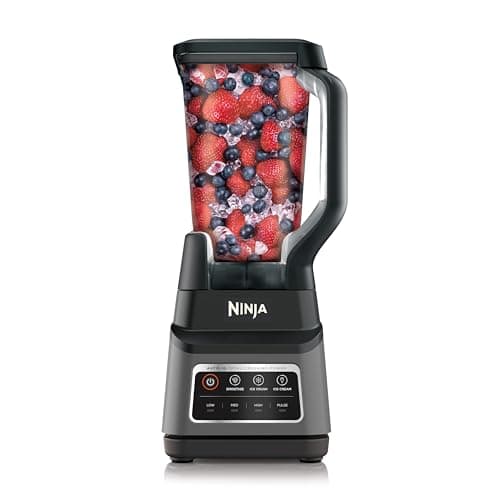
Buy the Ninja Professional Plus BN701. For smoothies under $200 it is for the household blending frozen fruit most days: SharkNinja publishes 1,200 watts continuous and 1,400 watts peakfor it — both figures, which is rare — on a 72 oz pitcher that holds 64 oz of liquid. The budget pick is the Ninja Professional BL610, the cheapest full-size machine here that genuinely does the job at a published 1,000 W. And if you want the warranty rather than the watts, skip to the Oster Pro 1200, which carries three years where the Ninjas carry one.
Who each one is for, in one line
- Ninja Professional Plus BN701— for frozen fruit most days, in a family pitcher, with the best-documented motor in the bracket.
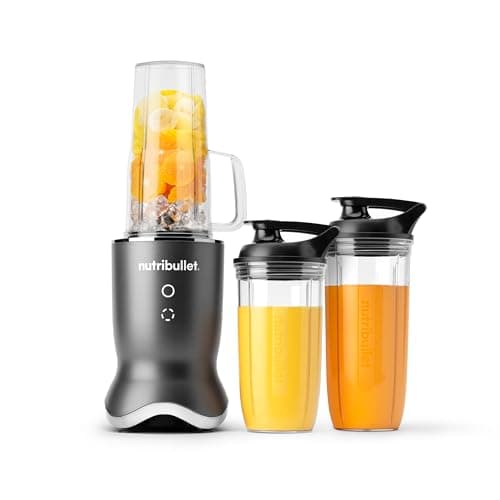
- NutriBullet Ultra— for one drink at a time: 1,200 W into a 24 oz or 32 oz cup, with five years on the blade.
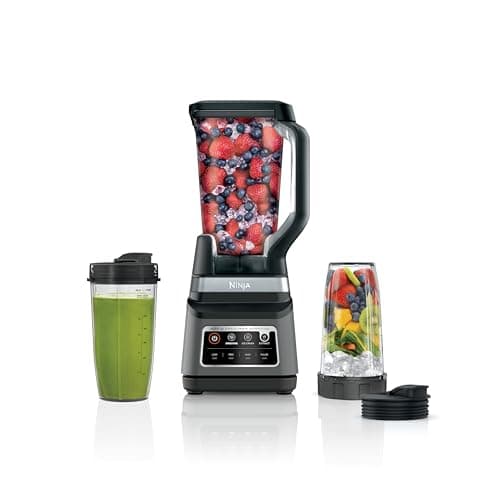
- Ninja Professional Plus DUO BN751— for a household that makes both a family pitcher and single cups off one base.
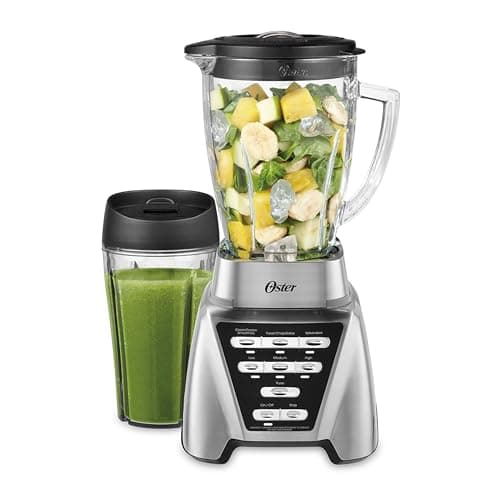
- Oster Pro 1200— for the buyer who wants a glass jar and three years of cover instead of one.
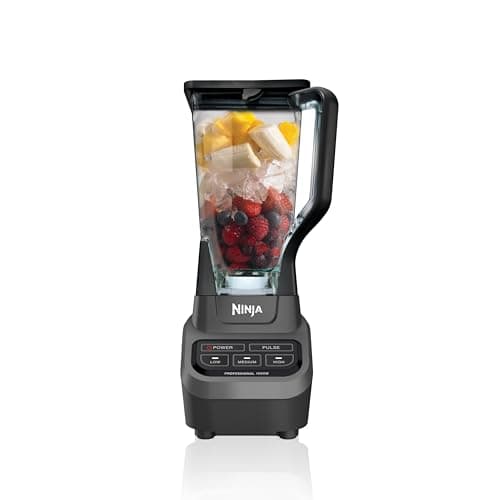
- Ninja Professional BL610— the budget pick: the cheapest full-size machine here that still blends frozen fruit.
Why $200 is the honest ceiling for a smoothie machine
A smoothie is the easiest hard job a blender does. It is frozen fruit, liquid and sometimes greens, and the liquid is the thing that makes it tractable: once the load circulates, the blades do the rest. Somewhere around 1,000 published continuous watts you have everything that task requires, and every machine on this page is at or above that figure.
Which means the extra money above $200 buys you other things entirely — longer warranties, variable dials, tampers, repairability, quieter rooms. Real things, but not a better smoothie. If you only ever make smoothies, this is the bracket to buy in, and the $500 tier is where you go only if you want the seven-year paperwork. For the argument in full, is a Vitamix worth it takes it seriously rather than dismissing it.
Continuous watts, peak watts, and the one number to write down
This is the single most useful thing to understand in this bracket, because it is where the marketing is thickest. Most blenders here are sold on a peakfigure — the draw in the first seconds of operation, before the motor settles. It is not what the machine sustains through a frozen load.
- Ninja BN701 and BN751: 1,200 W continuous, 1,400 W peak.Both published, a modest 200 W gap, and the reason these two lead the page.
- NutriBullet Ultra: 1,200 W, published with no peak or continuous qualifier at all.
- Ninja BL610: 1,000 W, taken from the replacement motor base SharkNinja sells for this model, because the product page itself is no longer published.
- Oster Pro 1200: not verifiable.Oster’s page for this model returns HTTP 410 Gone, so the “1200” in the product name is not a manufacturer-sourced figure and we do not treat it as one. What is verifiable is the warranty: three years on Oster kitchen blenders, by replacement rather than repair.
For comparison with the cheaper bracket below this one: Hamilton Beach sells the Power Elite on “700 watts of peak blending power” while its own rating plate reads 3.7 A at 120 V — 444 W continuous, a 37% gap. Blender wattage explained has the full treatment.
The warranty, which is the real weakness of this bracket
Four of the five machines here carry one year. The Oster carries three, and it is the only long-cover option under $200 in this catalog — with the caveat that Oster honors it by replacement rather than repair, so you get another machine rather than yours back. The NutriBullet Ultra splits the difference in an interesting way: one year on the machine but five years on the Ultra Rapid Extractor blade, which is the part that actually wears on a single-serve blender. NutriBullet’s one-year term excludes cups and accessories by name.
If you blend twice a day, that is the figure to shop on rather than the wattage. Best blenders for daily use ranks the whole catalog on covered years, and blender warranties compared puts the documents side by side.
Pitcher or cup, decided properly
A 72 oz pitcher blends two to four drinks and gives you a jar, a lid, a gasket and a blade to wash. A single-serve cup blends one drink of about 24 oz and gives you a cup and a blade. Neither is better; they are different habits, and the only mistake is buying the pitcher and then running it with 12 oz in it, which blends worse than the cup would have.
The BN751 DUO exists for people who genuinely do both, and it is the one case where paying for the extra vessels is rational — BN701 vs BN751 settles that, and the bullet blender roundup covers the single-serve format on its own terms.
What these cost to run for a year
At 18.16¢ per kWh and this site’s standard assumption of 3 minutes a day, 365 days a year, the 1,200 W machines here come to about $3.98 a year and the 1,000 W BL610 to about $3.31. The Oster has no running-cost figure, because its wattage is not verifiable from any live Oster document. The spread across the whole page is a few cents a year, which is why nobody should buy a blender on efficiency. Arithmetic and how to use your own rate.
What we have not done
We have not blended a smoothie in any of these machines. Every wattage, pitcher size, cup size and warranty term above is read off the manufacturer’s own specification or warranty document, cited below — and where a manufacturer has taken its document down, as Oster has, the page says the figure is unverifiable instead of repeating the number on the box. Prices come live from Amazon with the date they were checked.
How to spend under $200 on a smoothie blender
1. Write down the continuous wattage, or treat the machine as undocumented
Not the peak figure, not the number in the product name. If the manufacturer publishes only a peak figure, or has taken the page down, you do not have a power spec — you have marketing. Two machines on this page are in exactly that position, and both are still good buys; you just need to know which claim you are relying on.
2. Pick the vessel for the drink you make most mornings
One drink means a cup. Two to four means a pitcher. Both means the DUO. A big pitcher running a small load is the commonest mistake in this bracket and no amount of wattage fixes it.
3. Buy the warranty if you blend daily
One year is the default here, and a daily smoothie is roughly 365 blend cycles a year. Three years on an Oster, or five years on the NutriBullet Ultra’s blade, is a materially different proposition from twelve months on the whole machine.
4. Add liquid first, frozen fruit last
Free, and worth more than 200 watts. Liquid at the bottom lets the load circulate immediately rather than stalling the blades in a frozen plug. If it still will not catch, ten minutes of thawing closes most of the remaining gap.
5. Do not expect quiet, and do not pay for it
Not one machine in this bracket publishes a decibel figure — including the NutriBullet Ultra, which is marketed as NutriBullet’s quietest single-serve blender with no number behind the claim. Noise claims under $200 are unverifiable. Best quiet blenders explains why nobody in the category publishes one.
6. Count the parts you will wash 365 times
It decides whether you keep making smoothies more reliably than any spec does. The easiest blenders to clean ranks the catalog on part count.