HUB 07 · Guides
Can You Grind Coffee in a Blender?
Yes, and the honest answer has a brew method attached to it. A blender produces a mixture of dust and chunks rather than a uniform grind - which barely matters for cold brew, matters a little for a French press, and ruins espresso outright.
We earn a commission if you buy through our links. It does not change the price you pay, and it does not decide our picks — our selection criteria are published in full. How this works.
Yes — with a real limitation attached. A blender chops coffee; a burr grinder mills it. Chopping produces a mixture of fine dust and coarse chunks in the same batch, and no amount of extra blending evens that out, because the small particles simply get smaller while the chunks bounce. If you brew cold brew or use a French press, that unevenness costs you very little and you should go ahead. If you pull espresso, stop here: an uneven grind cannot be dialled in, and you will chase a shot that never arrives.
Why a blender grinds unevenly — and why power is not the fix
A burr grinder squeezes beans between two abrasive surfaces set a fixed distance apart. Nothing leaves until it is small enough to pass the gap, so the output is uniform by design. A blender has a blade spinning in open space: a bean is hit when it happens to be in the blade’s path, and it leaves at whatever size that impact left it. Some beans get hit ten times and turn to powder. Others get hit once.
That is a geometry problem, not a motor problem. A 1,500 W machine produces the same mixture of dust and chunks as a 600 W one, just faster. It is also why the only adjustment that genuinely helps is time: shorter is coarser and more even, longer is finer and much more dusty. There is no setting on any blender that produces a uniform grind.
Which brew methods tolerate it
Cold brew — yes, happily. Cold brew steeps for twelve hours or more, which flattens out differences in particle size: the dust finishes extracting early and the chunks catch up over the remaining hours. This is the one method where a blender grind is close to indistinguishable from a proper one. Use a short, coarse grind and filter it well.
French press — yes, with a caveat. A press wants a coarse grind and a metal filter holds back chunks nicely. The dust is the problem: it slips through the mesh and leaves sludge in the cup. Grind coarse, in short pulses, and accept a muddier last mouthful.
Drip and pour-over — passable. A paper filter catches the dust, which helps, but the dust also over-extracts and tastes bitter while the chunks under-extract and taste sour, so the cup carries both at once. Drinkable; not what the beans are capable of.
Espresso — no. Espresso forces water through a compressed puck at pressure, and an uneven puck channels: water finds the loose paths, races through them, and leaves the rest unextracted. This is not a matter of trying harder with the blender. It is the one answer on this page that is a flat no.
Moka pot — borderline. Fine enough to work, uneven enough to be inconsistent cup to cup. Try it; do not expect repeatability.
The technique that gets the best out of it
- Use a small vessel.This matters more than anything else. Two tablespoons of beans in a 64 oz jar sit outside the blade’s reach permanently. A sealed single-serve bullet cup puts the walls close to the blade and keeps the beans in the fight — which is why the small machines below are better at this job than the large ones.
- Pulse, do not run. Short bursts of two to three seconds, five or six of them, shaking the vessel between bursts. A continuous run heats the beans and turns the fine fraction to powder.
- Grind in small batches. One brew at a time. A bigger batch does not grind more evenly, it grinds less evenly, because the top of the pile never reaches the blade.
- Tilt and shake, do not tamp. Pushing the beans down into a spinning blade packs them and makes the problem worse. Shaking redistributes them, which is what you want.
- Grind immediately before brewing.The one real advantage you keep over pre-ground coffee is freshness, so do not grind a week’s worth at once — especially since your grind is uneven to start with.
What it does to the machine
Coffee beans are hard, dry and oily. Three consequences worth knowing before you make this a habit. The hardness is abrasive, and repeated dry grinding will scuff a plastic jar permanently; the oil leaves a residue that holds its smell and will turn up in tomorrow’s smoothie if you do not wash promptly; and dry work with no liquid to carry heat away runs the motor warmer than blending does, so keep the bursts short.
None of that is a reason to avoid it for occasional use. It is a reason to use a small cup you do not mind scuffing rather than the 64 oz jar you serve from, and to wash it straight away — how to clean a blender has the method for the oil. Why the hazing is permanent is on glass vs plastic blender jars.
If grinding is the real reason you are buying
Then buy a grinder. An inexpensive burr grinder beats every blender in our catalogue at coffee and costs a fraction of a premium machine, and the money is better split that way. A blender earns its place for coffee as a fallback— the bag is whole bean, the grinder has died, the holiday rental has a blender and nothing else. For that, it works, and the method above is how to make it work best.
If you want to grind other dry things too — flour, spices, oats — the hardware question is bigger than coffee alone, and the published container compatibility turns out to decide it. That ranking is at best blenders for grinding grains and spices.
What to look for if you will grind in it
A small vessel, first and last
The deciding feature. A machine with a single-serve cup or a 48 oz jar will grind coffee better than a 72 oz pitcher machine with twice the motor, because grinding is about keeping two tablespoons against a blade. If the machine you want has only one big jar, buy the separate small cup if the brand sells one.
Pulse, or a speed you can hold low
Two or three seconds at a time is the whole technique, so a dedicated pulse control or a fully variable dial is worth more here than any wattage difference. A programme that ramps to maximum and runs for forty seconds is the wrong tool.
A jar you do not mind scuffing
Dry grinding hazes plastic permanently. Either accept it on the machine’s main jar, use a cheap second cup, or choose glass. Glass does not haze and does not hold the coffee oil smell either.
A maker that sells replacement vessels
A scuffed or cracked cup should be a part you can buy, not a reason to replace the machine. Which brands actually publish and sell parts is covered on how long blenders last.
The hardware
The hardware this guide is about
The products this guide refers to, with prices pulled live from Amazon and dated on every card. Full rankings live in the roundups linked above.
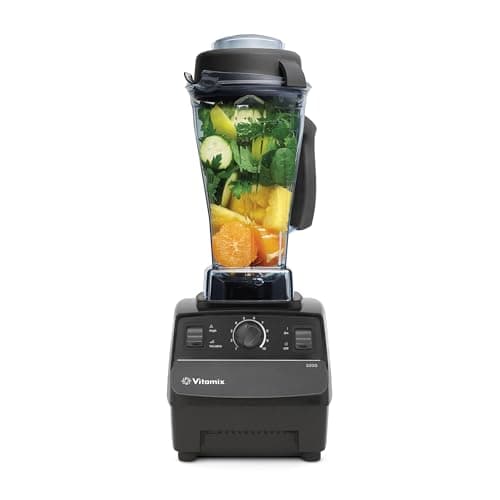
Buying once
Vitamix 5200
The seven-year warranty is the product. A machine with a fully variable dial, a tall narrow jar and a tamper, backed longer than almost anything else at any price.
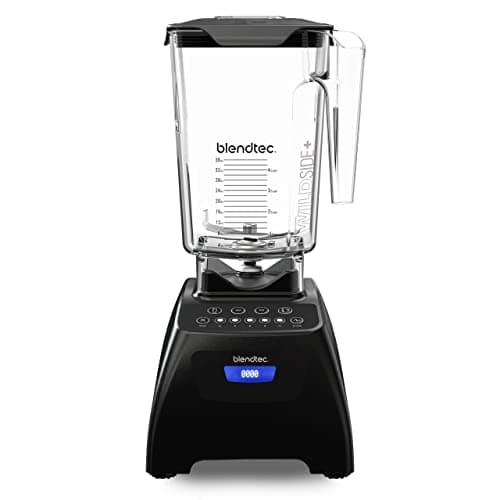
Cabinet clearance
Blendtec Classic 575
A 1,560-watt motor and a blunt, unremovable blade, in a jar short enough to fit under a cabinet. The warranty is two years, not the eight years the internet keeps repeating.
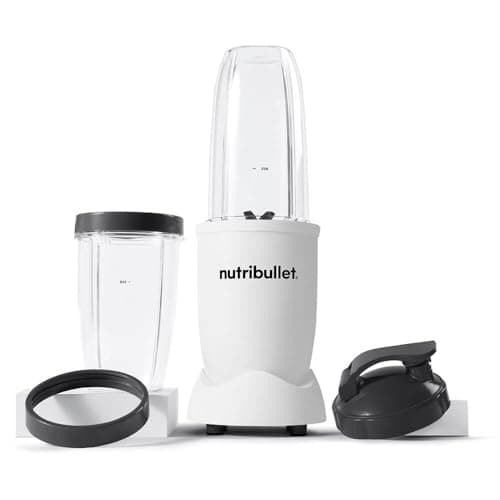
Everyday shakes
NutriBullet Pro (900 W)
The default bullet blender, and a good one. Note that NutriBullet's own product page contradicts itself about which cups are in the box.
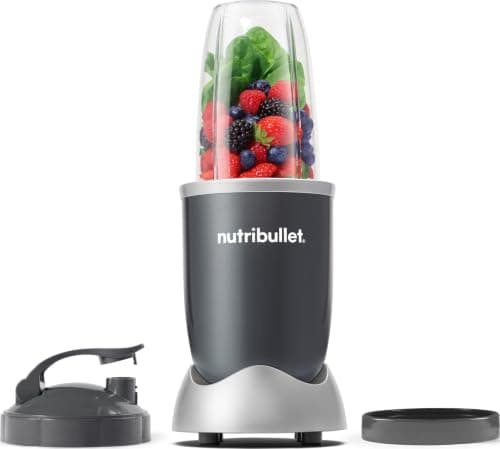
One modest shake
NutriBullet 600
The entry point, and the only machine here that ships a genuinely small cup. 600 watts is enough for the job it is actually bought for.
#ad · As an Amazon Associate we earn from qualifying purchases.
Questions
Frequently asked
Can you grind coffee beans in a Ninja blender?
Mechanically yes, in short pulses and a small batch, with the same unevenness any blender produces. The limitation is the vessel, not the brand: a 72 oz Ninja pitcher is far too large for two tablespoons of beans, so use the single-serve cup if your model has one. Check your own model’s manual for anything it tells you not to put in the jar.
Can you grind coffee in a Vitamix?
Yes, and Vitamix is the one brand in our catalogue that publishes a container made for dry work — its 32 oz Dry Grains Container, whose page lists the Legacy and Explorian series as compatible. In the standard wet jar, use short pulses and a small batch and expect the same uneven grind as any blender.
Can you grind coffee beans in a blender for espresso?
No. Espresso needs a uniform grind so that water meets even resistance across the puck; a blender produces dust and chunks together, so the water channels through the loose paths and the shot comes out thin and sour. This is the one brew method where the answer is a flat no rather than a compromise.
Is a blender or a food processor better for grinding coffee?
Both chop rather than mill, so neither gives a uniform grind; a food processor’s wider bowl usually handles a larger batch and a blender’s narrow cup handles a small one better. For one brew, the blender cup wins. The general comparison is on blender vs food processor.
Will grinding coffee damage my blender?
Occasional grinding will not break it. Repeated dry grinding will permanently scuff a plastic jar, leave an oil residue that holds its smell, and run the motor warmer than wet blending does because there is no liquid carrying heat away. Keep the bursts short, wash promptly, and use a cup you do not mind marking.
How long should you blend coffee beans for?
Short bursts of two to three seconds, five or six of them, shaking the vessel between bursts — roughly fifteen seconds of total run time for a coarse grind. Longer gives you a finer but far dustier result, not a more even one. There is no run length that produces uniformity.
Keep reading
Related
- GuidesThe hub this guide sits in.
- Best blenders for grinding grains and spicesThe hardware ranking for all dry work, coffee included.
- Best blenders for frozen coffeeThe other coffee question: blending the drink rather than the bean.
- Nut butter in a blenderThe same hard, oily ingredients taken all the way to a paste.
- How to clean a blenderGetting coffee oil out before it flavours tomorrow's smoothie.
- Glass vs plastic blender jarsWhy dry grinding hazes one of them permanently.
Receipts
Sources
- Vitamix — 32 oz Dry Grains Container product page and published compatibility list (Legacy Series, Explorian Series)
- Vitamix — 5200 product page and specification table
- Blendtec — Classic 575 product page
- SharkNinja — Ninja Professional Plus BN701 specification table
We do not run a testing lab and we do not pretend to. Specifications come from the manufacturer's own published documents and from published standards; prices come from the live Amazon API. Where a figure is not published, the page says “not published” rather than guessing. Read the full method.