HUB 04
Immersion and Hand Blenders
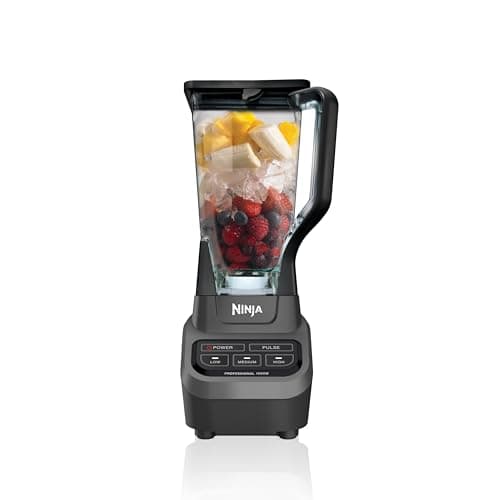
The blender you take to the food instead of taking the food to the blender. It is the safest way to blend something hot, the cheapest way to make soup, and the category with the softest competition in this whole niche.
We earn a commission if you buy through our links. It does not change the price you pay, and it does not decide our picks — our selection criteria are published in full. How this works.
Start here
The best immersion blenders for soup
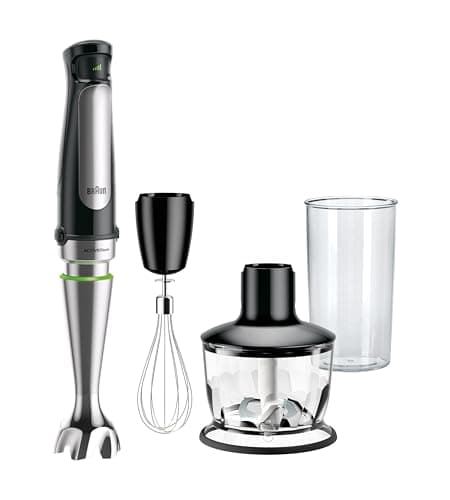
Our top pick: Braun MultiQuick 7 MQ7035X — Three years of US warranty on a hand blender — triple what most rivals offer — and Braun publishes an input-power figure rather than a peak number.
An immersion blender — stick blender, hand blender, same thing — takes the motor to the food instead of the food to the motor. That one difference makes it the safest way to blend something hot, the cheapest way to make a smooth soup, and the easiest blender in the house to clean. It is also the category with the least competent coverage in this entire niche, which is why it gets a full hub rather than a footnote.
Why this is the right tool for hot food
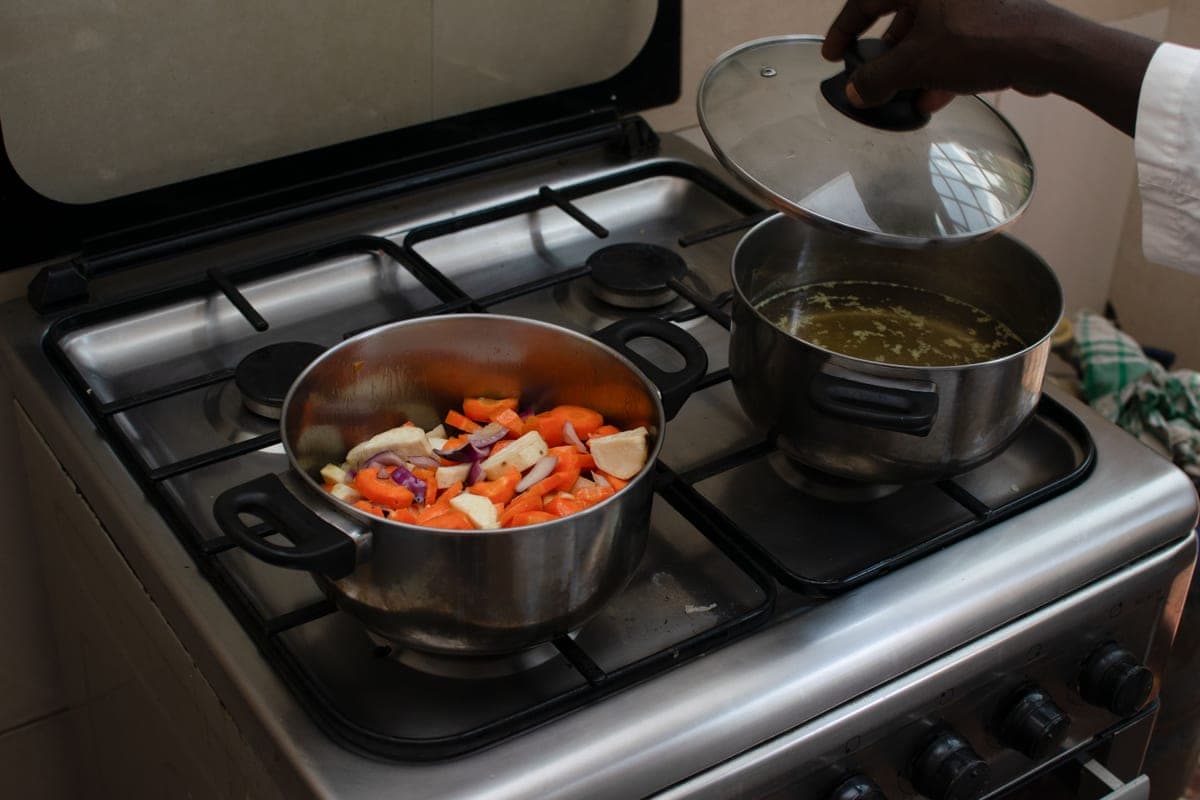
Blending hot liquid in a sealed jar is genuinely hazardous: steam expands, pressure builds under a clamped lid, and the lid leaves — along with the contents. Every countertop blender manual addresses this, and the good ones are specific about maximum fill levels and vented lids. An immersion blender sidesteps the problem completely because there is no sealed vessel: you blend in the open pan the soup is already in. The safety rules that remain are about splashing and depth rather than pressure, and they are covered in the hot-liquid safety guide, which cites a manufacturer manual for every claim it makes because this is a burn-risk topic and not one to be casual about.
The specs that matter here are not the ones you expect
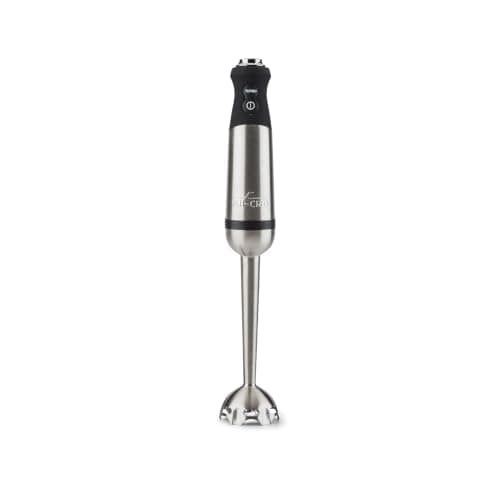
Shaft length and material. A shaft too short for your stockpot means your knuckles go where the steam is. Stainless shafts tolerate heat and staining better than plastic ones, and they are usually the marker of the more serious models. Check the shaft length against the depth of the pot you actually own, not against a generic saucepan.
The bell shape at the business end. The guard around the blade determines how much suction the blender generates and how badly it splashes. A bell with an escape vent — several manufacturers now build one deliberately — stops the head suction-locking to the bottom of the pan, which is the most common complaint about cheap stick blenders.
Speed control that you can actually reach. Variable speed matters more here than on a countertop machine because you are holding the thing over hot liquid. A trigger you can modulate with the hand already gripping the body beats a dial you have to reach for mid-blend.
Wattage matters less than you think.Stick blenders draw a fraction of what a countertop machine draws, and it is enough, because they are not fighting a jar full of frozen fruit — they are working in liquid that is already soft and already hot. Judging one against a countertop blender’s wattage is comparing two different problems.
What they are genuinely bad at
Ice. Frozen fruit straight from the freezer. Nut butter, mostly — the load is too thick for the blade to move and the motor is not designed to sit at stall. Dry grinding. And any large volume of thick mixture, because you are holding the motor and your arm gives out before the machine does. If those are your jobs, buy a countertop blender and use the stick blender for what it is excellent at. The full comparison lays out where the line falls.
Attachments: useful, or box-filler?
Most immersion blenders are sold in kits with a whisk and a chopper bowl, and the honest assessment is that the whisk is a genuine convenience for small jobs while the chopper is a small food processor that will disappoint anyone who owns a real one. The attachment worth paying for is a masher, if you make mashed potato — it is the one job a stick blender does badly on its own, because blades turn potato to glue. The attachments guide goes through each one and says which are worth the kit premium.
The cleaning advantage is not a small thing
A countertop blender has a jar, a lid, a gasket and a blade assembly to wash. A stick blender has a shaft you run under a tap, or dip in a jug of soapy water and pulse. Over a year of weekly soup this difference is the reason one machine stays on the counter and the other stays in the cupboard, and it is worth weighting more heavily than a spec sheet suggests.
Everything in this hub
All of Immersion Blenders
Roundup
The best immersion blenders for soup
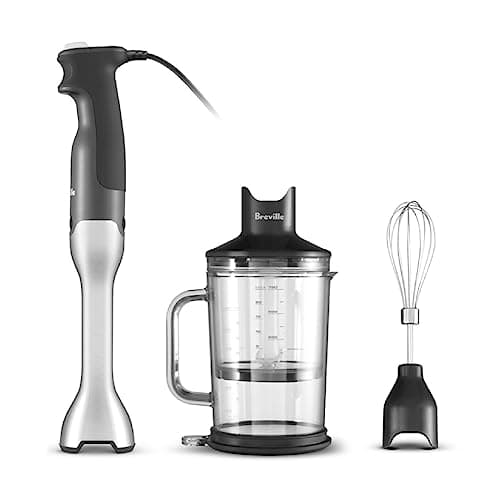
Braun's MultiQuick 7 wins on a three-year US warranty despite sitting in the middle on published power. All-Clad brings 600 W, Breville brings a vented bell and one year of cover.
Top pick: Braun MultiQuick 7 MQ7035X · 3 ranked, 3 with live prices
$109.95on AmazonRoundup
The Best Immersion Blenders With a Chopper
Ranked on the chopper first, then warranty and motor. Braun leads on a 3-year term and a chopper-plus-whisk; the most powerful stick blender here ships no chopper and ranks last for it.
Top pick: Braun MultiQuick 7 MQ7035X · 3 ranked, 3 with live prices
$109.95on AmazonRoundup
The Best Immersion Blenders for Protein Shakes
A stick blender does make a shake - in the right vessel, with the right attachment. When it is the correct call, and when a $30 bullet beats it.
Top pick: Braun MultiQuick 7 MQ7035X · 3 ranked, 3 with live prices
$109.95on AmazonRoundup
The Best Blenders for Mashed Potatoes
Blend potatoes too long and you get glue, not mash. Four machines ranked on speed control and bell design rather than watts, with an honest word for the ricer that beats them all.
Top pick: Braun MultiQuick 7 MQ7035X · 4 ranked, 4 with live prices
$109.95on Amazon
Filed elsewhere, written for you
Also worth reading
These live under a different section of the site but answer the same question a immersion blenders buyer is actually asking.
Comparisons
Blender vs immersion blender
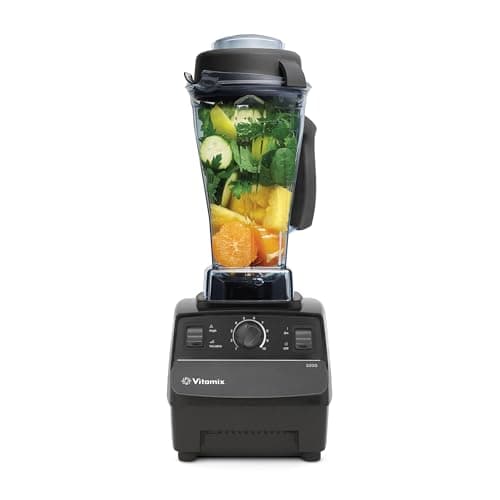
Blending hot food in a sealed jar is a pressure problem: steam expands under a clamped lid until the lid leaves. An immersion blender has no sealed vessel, so the problem does not exist — but it cannot touch ice, frozen fruit or nut butter.
Top pick: Braun MultiQuick 7 MQ7035X
$109.95on Amazon